Coffee Station Organizer Setup for Daily Use
A coffee station organizer setup is the process of placing and loading a coffee station organizer so daily use stays simple, reachable, and contained. The organizer should keep the coffee machine area workable by keeping pods, cups, condiments, and other supplies within easy access without turning the counter into overflow storage.
Unnecessary reaching, repeated searching, and counter clutter often happen when supply volume, item frequency, and machine position are treated separately. A usable setup starts by deciding which supplies belong in the active daily area, where the organizer can sit without blocking the coffee machine, and how pods, cups, and condiments should be contained for the routine that happens most often.
In a typical morning routine, the setup should support the order of making coffee: reach the pod or filter, pick up a cup, use condiments, then reset small items after use. The right arrangement depends on counter space, coffee machine access, household use, and how often each item is needed, so the organizer should follow the daily coffee area rather than a fixed display formula.
Daily-use supplies and access needs for a coffee station organizer
Daily-use supplies are the coffee essentials that a coffee station organizer should keep within easy access without crowding the coffee machine. The active area should prioritize the items used most often, while less frequently used supplies can stay outside the immediate workspace.
The example below shows daily-use supplies grouped around a coffee station organizer to clarify which items belong in active reach and which can stay nearby without interrupting the counter workflow.
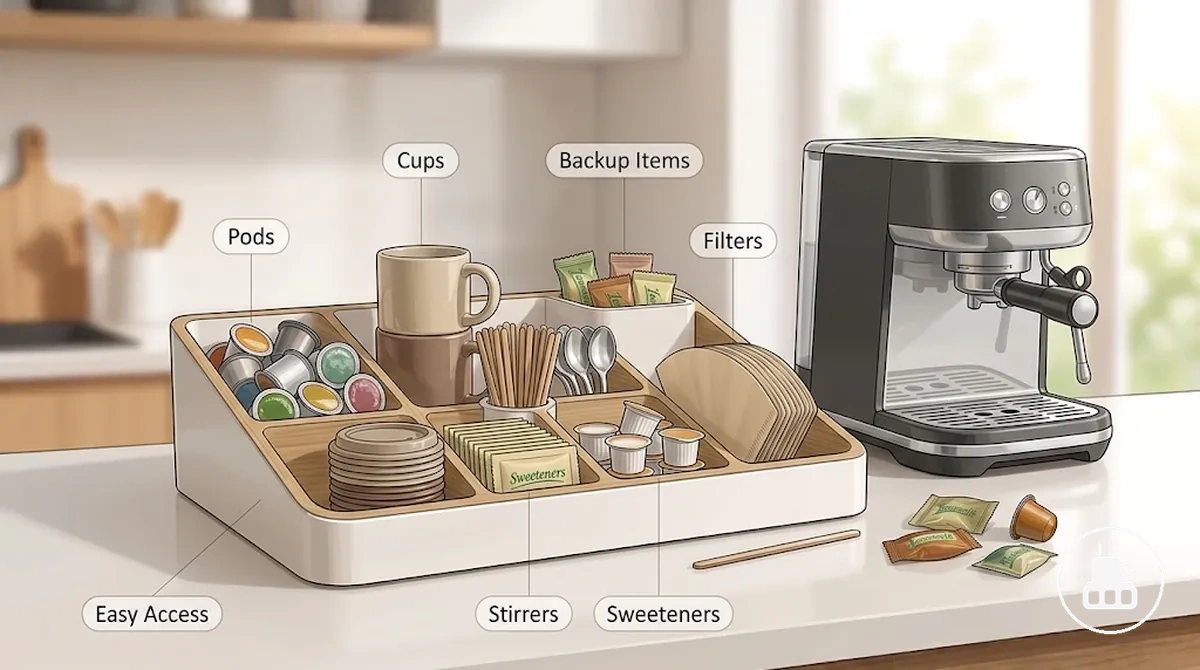
During a typical coffee routine, the main daily-use supplies can be organized as follows:
- Pods: High access frequency; keep them in the highest-priority area for easy access.
- Cups, lids, and stirrers: Used with most drinks; place them close to the coffee machine.
- Sweeteners, creamers, and spoons: Used after brewing; group them together where they are easy to reach.
- Filters and small backup items: Lower access frequency; store them nearby but outside the primary daily-use zone unless they are needed regularly.
Keeping active daily items separate from backup items helps reduce unnecessary searching and limits counter clutter. The exact mix of coffee supplies may vary with daily routines, household size, and coffee machine type, so the active stock should reflect what is used most often.
Styling and organizer type comparisons remain secondary to daily access because this section focuses on what belongs in the active daily zone. For broader organization topics beyond this setup, see coffee station organizers.
Choose the counter position around the coffee machine
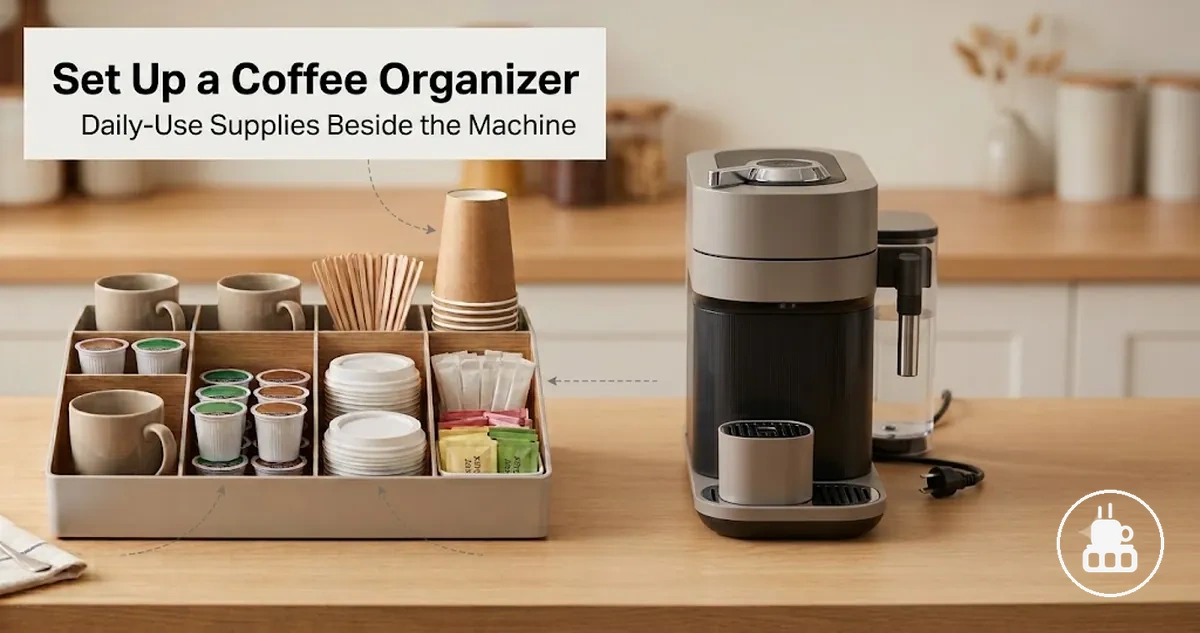
The organizer should sit where the coffee machine remains easy to use while daily supplies stay within comfortable reach. The right counter position depends on the coffee machine layout, counter depth, organizer footprint, and whether water access, controls, and cup pickup remain clear during daily use.
The image below shows how the organizer can be positioned beside the coffee machine to keep important access points open and support a smoother workflow before any supplies are loaded.
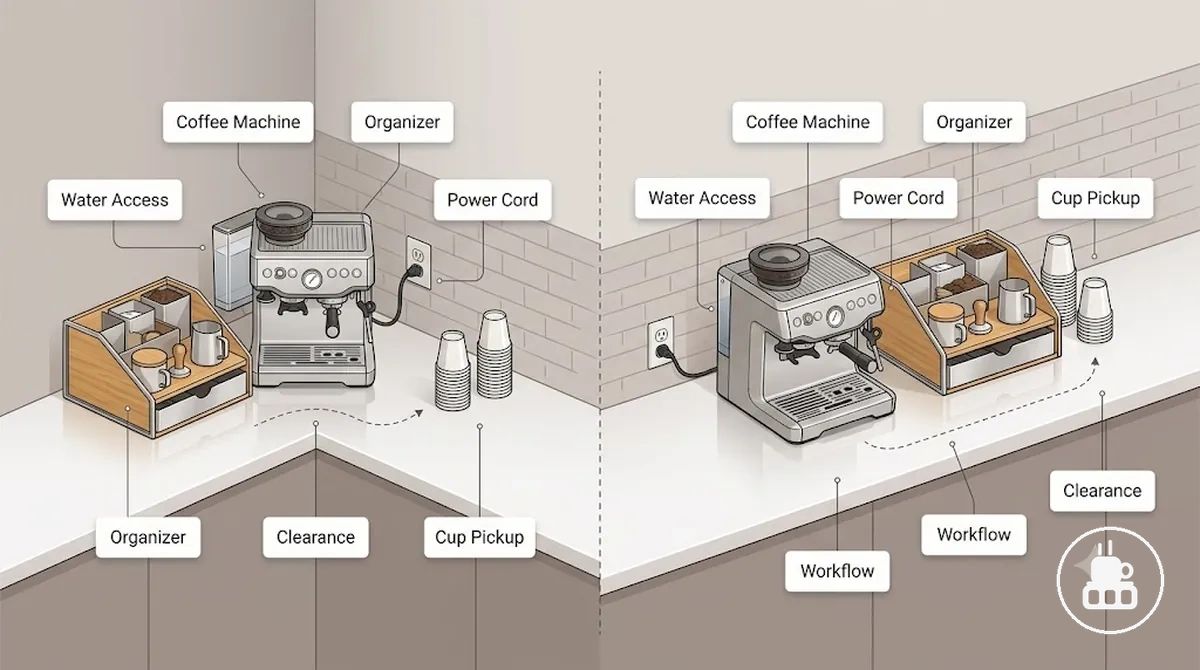
Before placing the organizer, check these conditions:
- Confirm water access stays clear so refills remain convenient.
- Keep the power cord area unobstructed to reduce tangles and unnecessary movement.
- Maintain enough clearance to reach machine controls without moving the organizer.
- Check the cup pickup direction so cups can be removed without crossing over other supplies.
- Use the available counter depth to support workflow and reduce crowding around the machine.
- Keep nearby storage accessible for backup supplies used during the day.
In a compact corner setup, the organizer may work best beside the coffee machine if refills and controls remain easy to reach. On a wider counter, the organizer can often sit slightly farther away to create a more open workflow. Before finalizing the placement, compare the counter depth, organizer footprint, and machine layout to confirm fit before setup.
Keep water refills, machine controls, and cup pickup clear
Keep water refills, machine controls, and cup pickup easy to reach after placing the organizer. These access points should remain usable throughout daily use so refills, brewing, and serving are less likely to be interrupted.
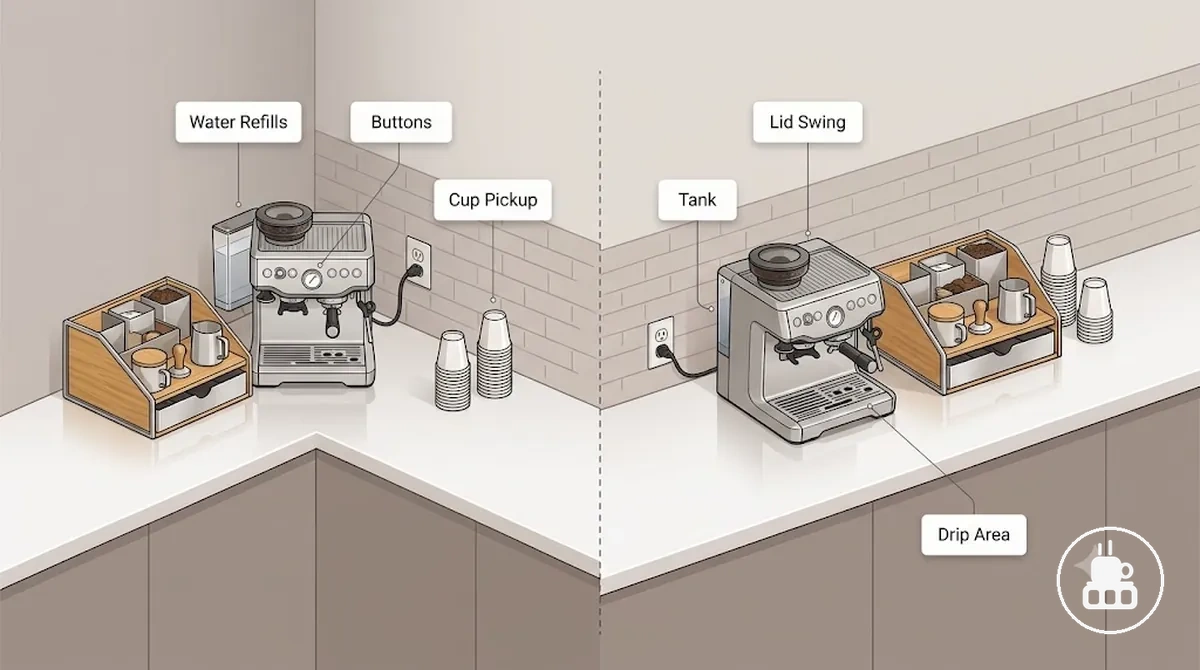
The image below labels the key machine access points. Check each area before loading supplies to reduce the chance of blocked access or unnecessary spills.
- Tank: Keep the refill path open if the tank is removed from the rear or side so water refills remain convenient.
- Lid swing: Leave enough space for the lid to open fully so filling or cleaning is not obstructed.
- Buttons: Keep machine controls visible and reachable to avoid moving the organizer during use.
- Mug path: Leave a clear path for cup pickup so mugs can be placed and removed without awkward movement.
- Drip area: Keep the drip area unobstructed so minor spills are easier to notice and clean if they occur.
Use tight counter space without blocking the coffee workflow
Tight counter space can interrupt the coffee workflow if the organizer restricts everyday movement. A compact setup works best when the organizer footprint fits the available surface while leaving enough room for routine coffee preparation.
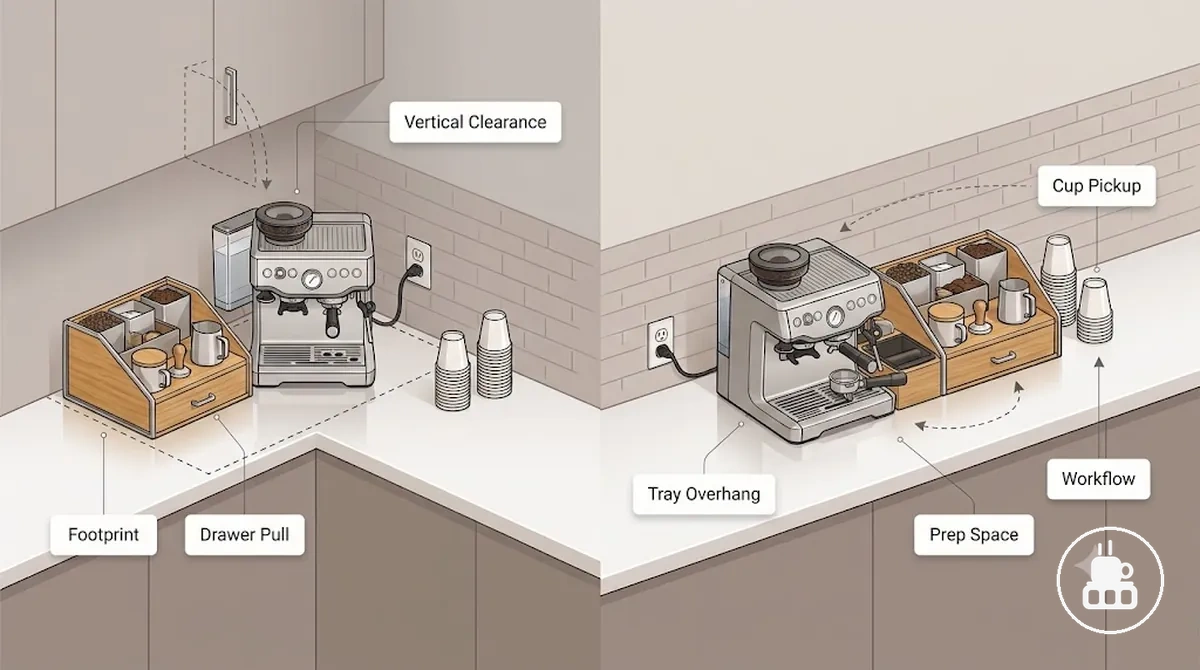
If the coffee station uses a small counter or corner setup, use the checklist below to verify that limited space still supports the coffee workflow before loading supplies.
- Footprint: Check that the organizer fits the available surface without restricting movement around the coffee area.
- Vertical clearance: Leave enough space above the organizer if shelves or cabinets could limit access.
- Drawer pull: Confirm nearby drawers can open fully without striking the organizer.
- Tray overhang: Keep trays within the counter edge so cups and accessories remain easier to reach.
- Shared prep space: Leave part of the counter available if the area is also used for other kitchen tasks.
Sort coffee supplies by use frequency before loading
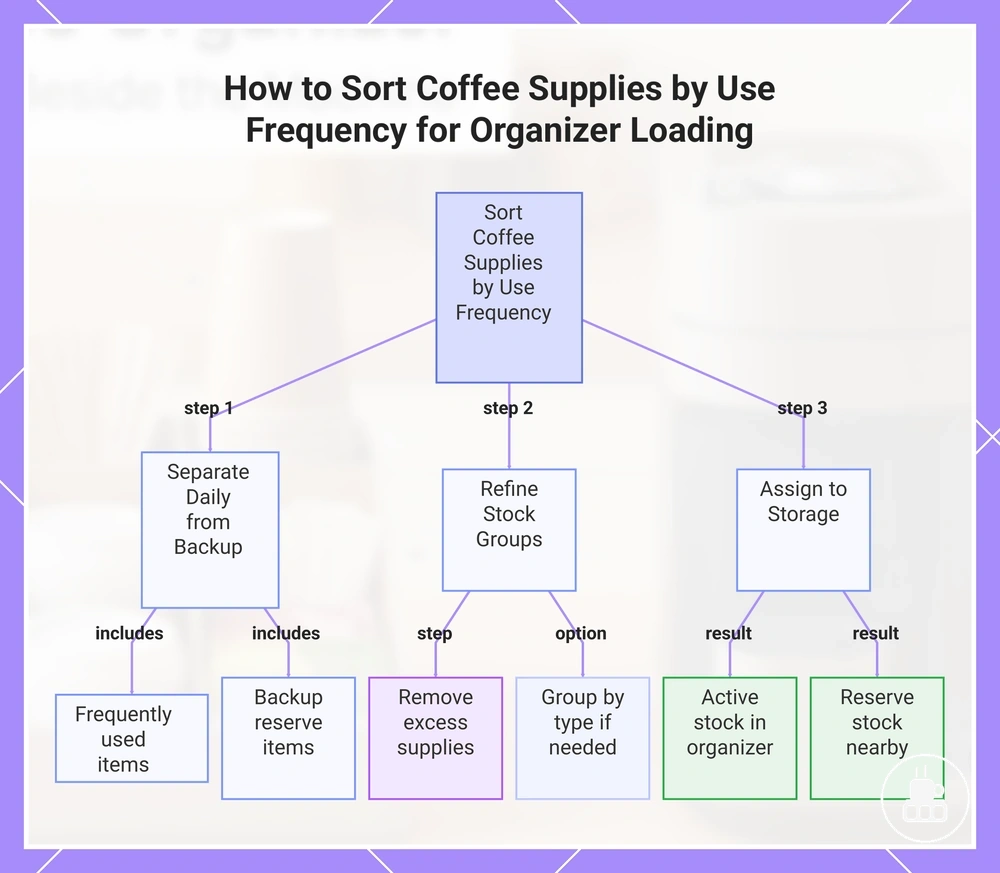
Sort coffee supplies before loading the organizer so the layout reflects daily use rather than the total inventory. Use frequency should separate daily items from backup stock before anything is placed in the organizer.
Group coffee supplies into active stock and reserve items. Active stock should include the pods, cups, condiments, and other supplies used most often, while reserve items can stay nearby for refills instead of occupying everyday space.
A weekday setup may keep only the supplies used during a normal routine within easy reach, while a guest-ready setup can include additional cups, pods, or condiments if they are expected to be used. The amount kept active depends on use frequency rather than the total quantity available.
After sorting is complete, assign each supply group according to how often it will be used before deciding where it belongs inside the organizer. If pods, cups, or condiments need more detailed storage planning, use the same sorting criteria before you organize pods cups and condiments.
- Group supplies such as pods, cups, and condiments by type so each group can be assigned to active use or reserve storage.
- Separate daily items from backup stock based on use frequency, moving occasional items into reserve.
- Remove excess supplies from the active group so only items used regularly remain ready for loading.
- Assign active stock to the organizer and keep reserve supplies in nearby storage for later refills.
This chart shows the steps to separate coffee supplies into active daily items and reserve backup stock, refine the active group, and assign them to the organizer or nearby storage.
Separate daily pods, cups, lids, stirrers, sweeteners, and creamers
Separate daily pods, cups, lids, stirrers, sweeteners, and creamers by containment need before placing them in compartments. Loose packets and unlike items are easier to use when each supply group has a clear role in the daily setup.
Grouping by containment and daily quantity helps prevent small items from mixing together or pushing frequently used supplies out of reach. The exact placement can vary by routine, but the separation should keep active drink supplies visible, contained, and easy to remove.
| Supply group | Containment need | Daily amount | Placement effect |
|---|---|---|---|
| Pods | Separate compartment or small section | Based on use frequency | Keeps coffee portions easy to identify and reach |
| Cups | Grouped area | Based on serving routine | Supports cup pickup without mixing loose items |
| Lids | Stacked or contained area | Based on daily serving needs | Keeps lids near cups without crowding other supplies |
| Stirrers | Narrow container or divider | Small active quantity | Reduces scatter across the organizer |
| Sweeteners | Packet compartment or small container | Based on drink habits | Keeps packets contained and easy to remove |
| Creamers | Small compartment or grouped section | Based on daily use | Keeps condiments together without crowding pods or cups |
Keep backup stock away from the active coffee station
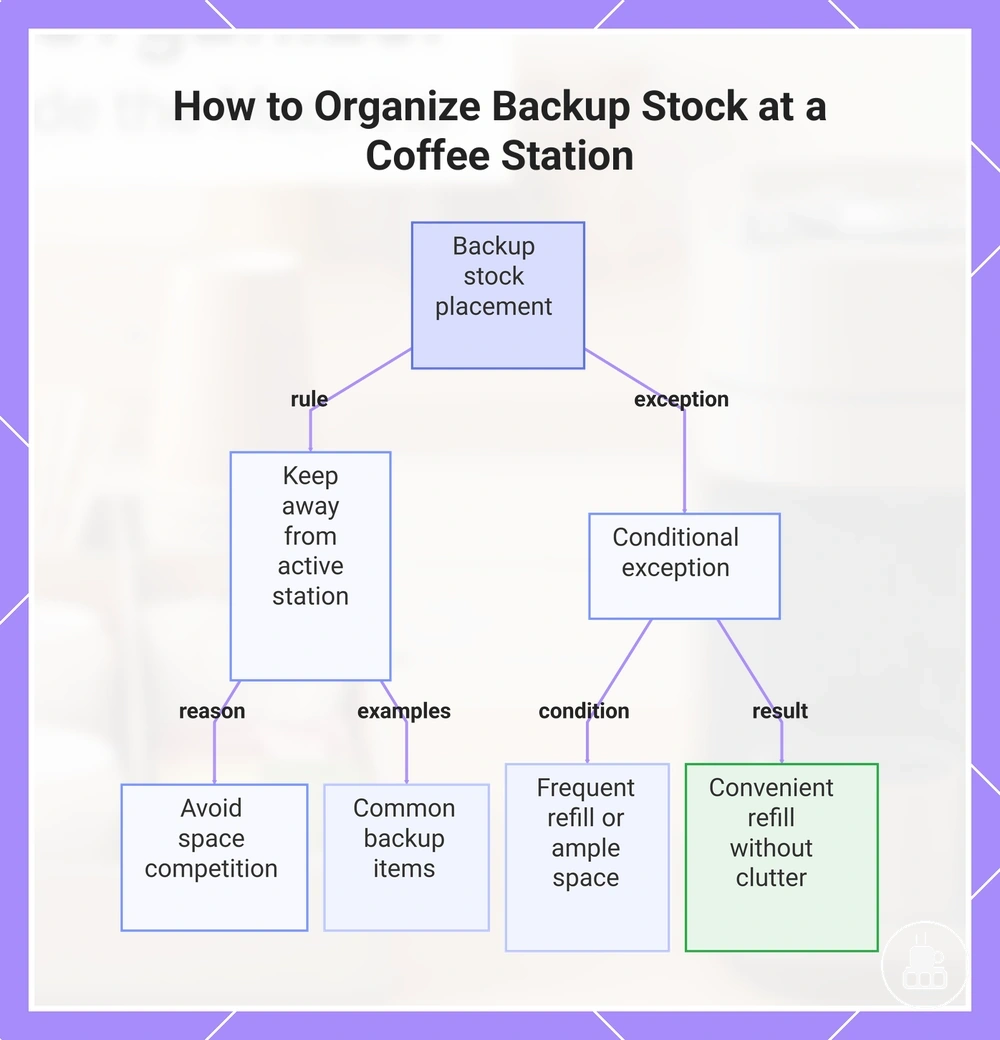
Backup stock should usually stay outside the active coffee station so reserve supplies do not compete with the items used during daily coffee making. Extra pods, spare cups, unopened condiments, and bulk packets belong in nearby reserve storage when they would otherwise create counter clutter or reduce working space for active supplies.
If refilling happens often or space allows, a small reserve may stay nearby for convenient refilling without taking over the main coffee-making area. The active coffee station should remain focused on daily-use items, while backup stock stays secondary until additional supplies are needed.
This chart shows the main rule for placing backup stock away from the active coffee station, the reason for this separation, and a conditional exception allowing a small reserve nearby.
Arrange organizer zones for the coffee-making sequence
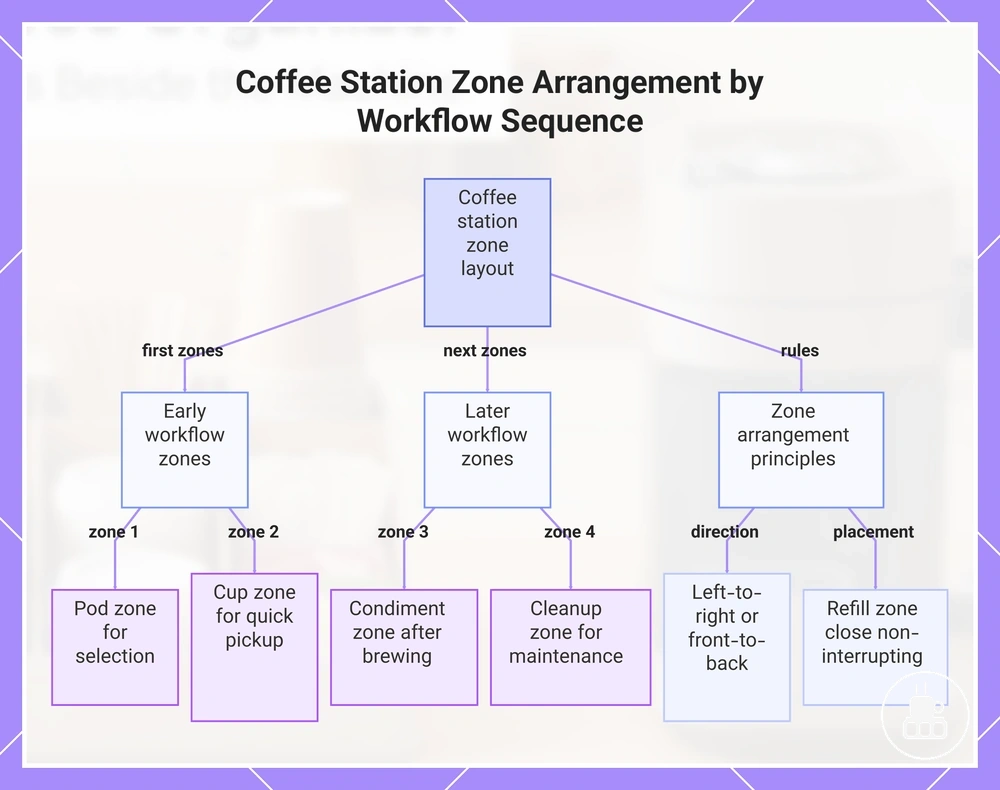
Organizer zones should follow the coffee-making sequence so each item is reached in the order it is used. The layout may run left to right or front to back, depending on the available space, but the access order should support pods, cup pickup, condiments, cleanup, refill, and spill control with minimal interruption.
When item groups are placed without a clear workflow, reaching across the station can slow preparation and increase the chance of spills. Assign compartments to each stage of making coffee so every organizer zone has a defined item group, clear access order, and a practical workflow result.
Zone arrangement depends on compartment size and how often supplies need refilling. Before finalizing the layout, arrange compartments and capacity so organizer zones match both the coffee-making sequence and expected refill needs. For example, a typical sequence may be pod selection, cup pickup, condiment use, and cleanup.
- Pod zone: Place pods in the first organizer zone so coffee selection happens before brewing begins.
- Cup zone: Position cups beside or immediately after the pod zone to support quick cup pickup.
- Condiment zone: Store condiments in separate compartments after the cup zone so they are easy to reach after brewing and may help improve spill control.
- Cleanup zone: Reserve a compartment for napkins, used stirrers, or other cleanup items so the station stays easier to maintain during use.
- Refill zone: Keep refill supplies close enough for convenient access without interrupting the primary coffee-making sequence.
This chart shows how to organize coffee station zones in workflow order, with placement rules to minimize interruption.
Use drawers, trays, tiers, and open compartments by access need
Format choice should follow access need rather than appearance. Drawers, trays, tiers, and open compartments each support different parts of the organizer layout based on daily reach, visibility, and how often items are used.
Hidden storage keeps less frequently used supplies out of the main workspace, while visible storage keeps everyday items within daily reach. Matching hidden storage and visible storage to the intended access need helps organize supplies without treating any format as a universal solution because the right balance depends on the coffee-making routine.
| Format | Best access use |
|---|---|
| Drawers | Hidden storage for reserve supplies or small items used less often; the trade-off is reduced visibility. |
| Trays | Visible storage for frequently used supplies that benefit from quick daily reach; the trade-off is greater exposure on the counter. |
| Tiers | Grouped access when vertical space is available; the limitation depends on how easily upper and lower levels can be reached. |
| Open compartments | Visible storage for everyday items needing immediate access; the trade-off is that contents remain exposed and may require more frequent tidying. |
Contain loose packets, pods, and spill-prone items
Loose packets, pods, and spill-prone items should be contained so they are less likely to spread across the counter during normal use. Using dividers and small containers keeps related items together and makes everyday cleanup easier when minor spills or scattered packets occur.
Contain loose items before filling the remaining organizer zones, then place the most frequently used groups where they stay easy to reach without creating unnecessary mess. Give priority to active supplies that are used during the coffee-making routine.
Use the following containment guide for common coffee supplies:
- Sugar packets: Keep them in a small container or divided section to reduce scatter and simplify cleanup.
- Stirrers and spoons: Store them upright in small containers or narrow dividers so they remain grouped instead of spreading across the organizer.
- Pods: Place pods in dedicated dividers or compartments to keep capsules contained and easy to select.
- Creamers: Group creamers in a separate small container so individual portions stay together and are easier to manage if one leaks.
- Syrups: Keep syrup bottles in a stable section where minor drips can be easier to notice and clean, depending on the bottle design and how they are used.
Adjust the setup for home, guest, or shared-counter use
A coffee station setup should change according to how it is used. Home setup, guest setup, and shared counter arrangements differ in supply volume, visibility, refill responsibility, and access priority, even when the same organizer layout is used.
When multiple people use the same coffee station, refill responsibility and shared access can become less predictable. Keeping frequently used supplies visible while reserving backup items for refills helps the organizer stay consistent during daily use without changing the overall setup method.
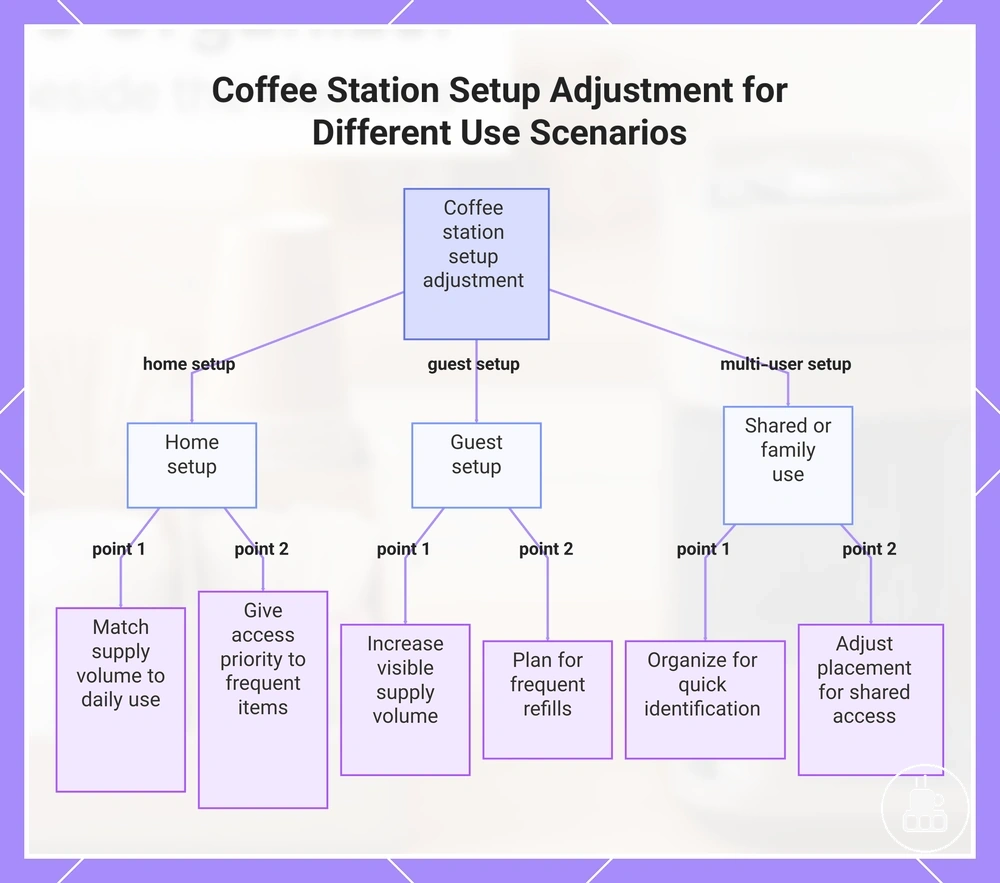
The same organization principles can be adapted to different situations by adjusting supply volume, visibility, and access priority instead of redesigning the entire coffee station. Organizer adjustment depends on daily use, household routines, and how often supplies need replenishing.
- Home setup: Match supply volume to normal daily use, give access priority to frequently used items, and adjust the organizer so everyday supplies remain easy to reach.
- Guest setup: Increase visible supply volume when visitors are expected, keep cups and condiments easy to find, and plan for more frequent refills if needed.
- Shared counter: Organize supplies so multiple users can identify items quickly, give access priority to commonly used essentials, and assign refill responsibility when practical to help maintain the setup.
- Family use: If daily routines vary, adjust supply placement to match shared access patterns while keeping reserve items separate from active supplies.
This chart shows how to adjust a coffee station setup for home, guest, and shared or family use by modifying supply volume, visibility, and access priority.
Setup mistakes that create clutter or slow access
Most setup mistakes come from overfilling the organizer, blocked machine access, or mixed daily and backup supplies. A diagnostic checklist helps separate clutter causes from slow-access causes so each issue can be checked and adjusted without repeating the entire setup.
Clutter usually develops when supply volume exceeds the available organizer space or when loose packets and decorative crowding compete with everyday coffee supplies. In these cases, the problem often comes from excess inventory rather than the organizer itself.
Slow access is more likely when frequently used items are difficult to reach, drawer direction interrupts the workflow, or blocked machine access forces supplies to be moved before making coffee. Small organizer adjustments may improve access, depending on the counter layout and supply volume.
If repeated adjustments do not improve the workflow because the counter remains overcrowded or the available space is limited, the issue may extend beyond setup order. In that situation, fix clutter and space problems before changing the organizer layout again.
| Mistake | Symptom | Check | Likely fix |
|---|---|---|---|
| Overfilling | Clutter and crowded compartments | Check whether active supplies exceed available space. | Reduce active stock and move reserve items to nearby storage if appropriate. |
| Blocked machine access | Water refills or controls are difficult to reach | Confirm the organizer is not obstructing key access points. | Reposition the organizer to keep machine access clear. |
| Mixed supplies | Daily items are harder to locate | Check whether backup stock is stored with active supplies. | Separate daily-use items from reserve supplies. |
| Loose packets | Packets scatter across the organizer or counter | Check whether small items are stored without dividers or containers. | Use dividers or small containers to keep loose packets grouped. |
| Poor drawer direction | Workflow delays during coffee preparation | Check whether drawers open away from the normal access path. | Adjust placement if drawer movement interrupts routine use. |
| Decorative crowding | Less working space around the coffee station | Check whether decorative items reduce access to daily supplies. | Keep decorative items secondary to the coffee-making area. |
Reset and maintain the organizer after daily use
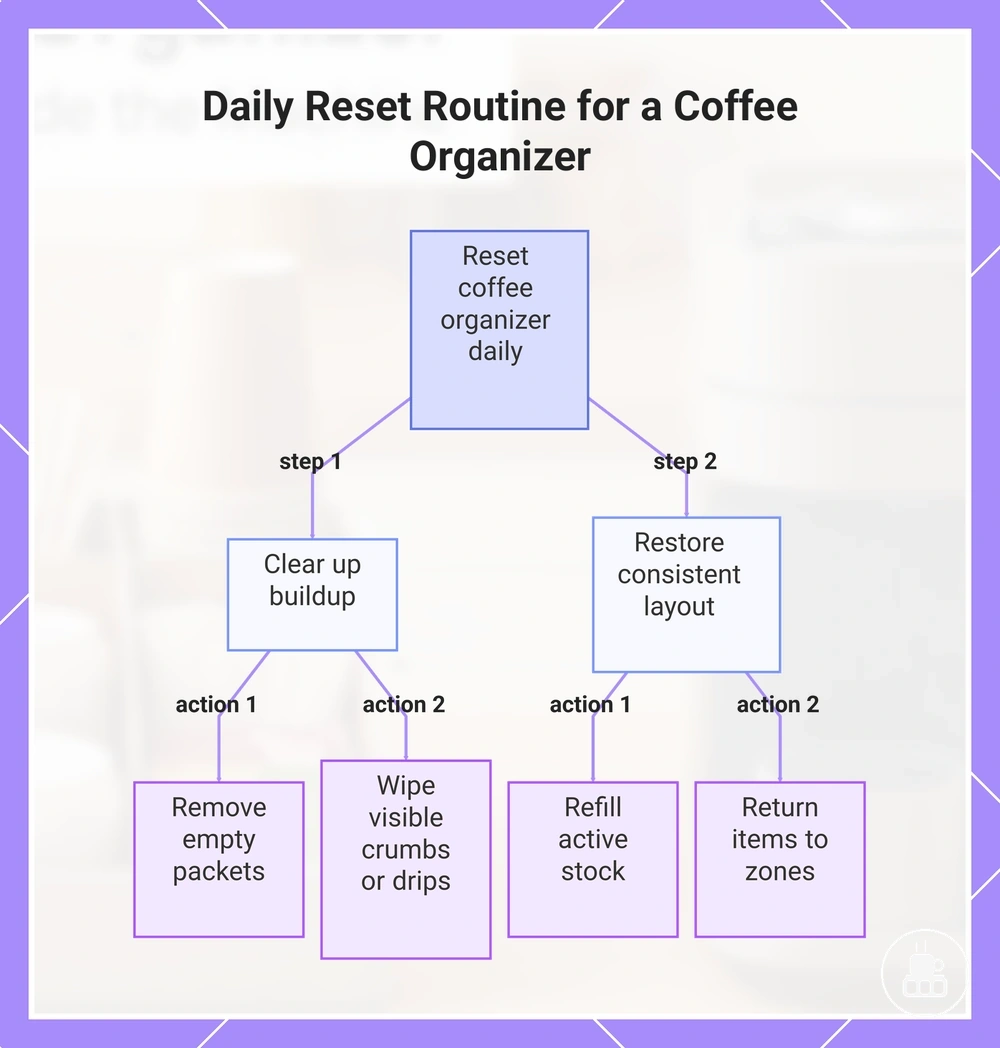
A small reset after daily use keeps the organizer usable for the next coffee routine. Removing empty packets, wiping obvious crumbs or drips, refilling active stock, and returning supplies to their assigned zones helps maintain a consistent setup.
Empty packets, crumbs, and visible drips can build up during normal coffee making. Remove empty packets and wipe away obvious crumbs or drips before they accumulate around each organizer zone.
Refill active stock when frequently used supplies become depleted so everyday items remain ready for the next use. Keep reserve supplies separate until they are needed.
Return pods, cups, condiments, and accessories to their assigned zones after each reset. A consistent layout makes frequently used items easier to find during daily use.
After the daily reset is complete, more detailed cleaning may depend on the organizer material, removable dividers, and spill exposure. For additional care guidance, see clean and maintain the organizer.
Follow this short daily reset routine:
- Remove empty packets to keep organizer zones clear for the next use.
- Wipe away visible crumbs or drips to reduce everyday mess.
- Refill active stock when commonly used supplies run low.
- Return items to their assigned zones so the layout remains consistent.
- Check removable dividers when needed, using a cleaning method that suits the material and spill exposure.
This chart shows the two main steps of the daily reset routine: clearing buildup and restoring a consistent layout.