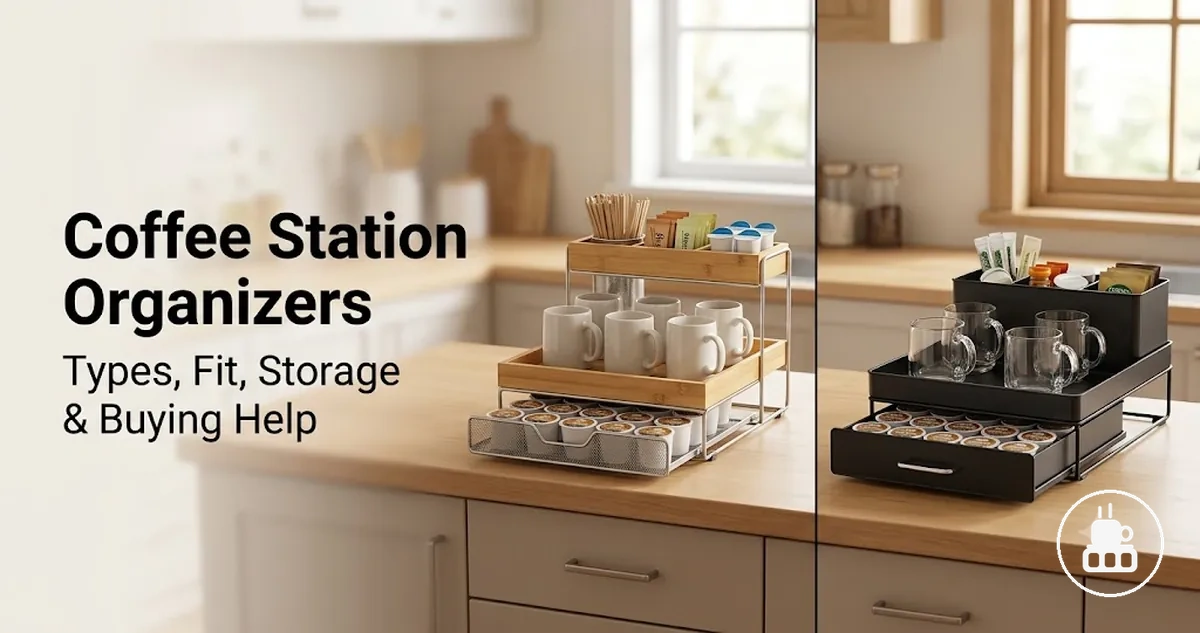
Coffee Station Organizers for Coffee Bar Storage and Selection
A coffee station organizer is a countertop storage unit that groups coffee supplies in one defined area instead of leaving them spread across the coffee bar. It can hold cups, pods, stirrers, condiments, and small supplies in compartments, drawers, trays, or caddy-style sections so daily items are easier to see and reach. This makes coffee bar storage more structured and can reduce clutter when the organizer fits the available counter access.
On a busy countertop, cups may need vertical space, pods may need divided storage, stirrers may need a narrow compartment, and backup supplies may need a drawer or lower-access area. The right fit depends on counter size, clearance, placement beside the coffee machine area, and how many supplies a household or shared space keeps visible. A compact organizer may support a small counter, while a larger compartment layout may only work when the counter has enough depth and daily reach space.
This page helps you evaluate a coffee station organizer by storage role, format, fit, capacity, material, and daily access without treating the page as a product catalog. A coffee station organizer can improve storage clarity, but it cannot replace a full coffee station setup, cabinetry, or appliance planning. Start with what the organizer does, then use the following sections to judge whether the storage format matches the way your coffee supplies are used.
What a Coffee Station Organizer Does
A coffee station organizer is a storage unit that keeps coffee supplies organized near a coffee-making area on a countertop. It groups everyday items into one accessible location so they are easier to find and use. Its primary purpose is to provide organized storage and convenient access while helping reduce countertop clutter.
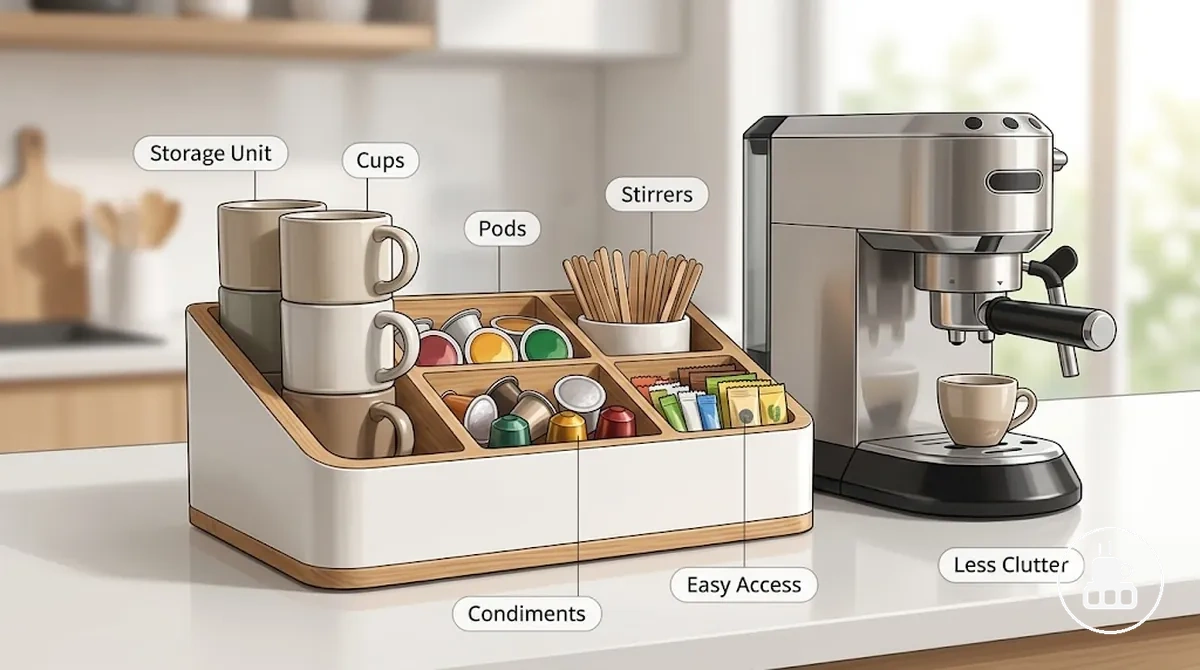
What a Coffee Station Organizer Does is easiest to understand by looking at how common coffee supplies are arranged. The image shows the organizer's storage function by grouping frequently used items into clearly separated areas. A coffee station organizer commonly holds coffee supplies rather than brewing equipment, and it supports a coffee station without replacing cabinets, appliances, or a complete setup plan.
- Cups or mugs for everyday serving.
- Pods or capsules stored in grouped sections.
- Stirrers and condiments such as sweeteners or cream portions.
- Other small coffee supplies kept together for easier access and a tidier countertop.
Organizer Types, Formats, and Storage Boundaries
Organizer types differ because each storage format changes how coffee supplies are grouped, how much counter space they use, and how easily items can be reached. Organizer Types, Formats, and Storage Boundaries are best compared by storage form, access pattern, footprint, and intended use.
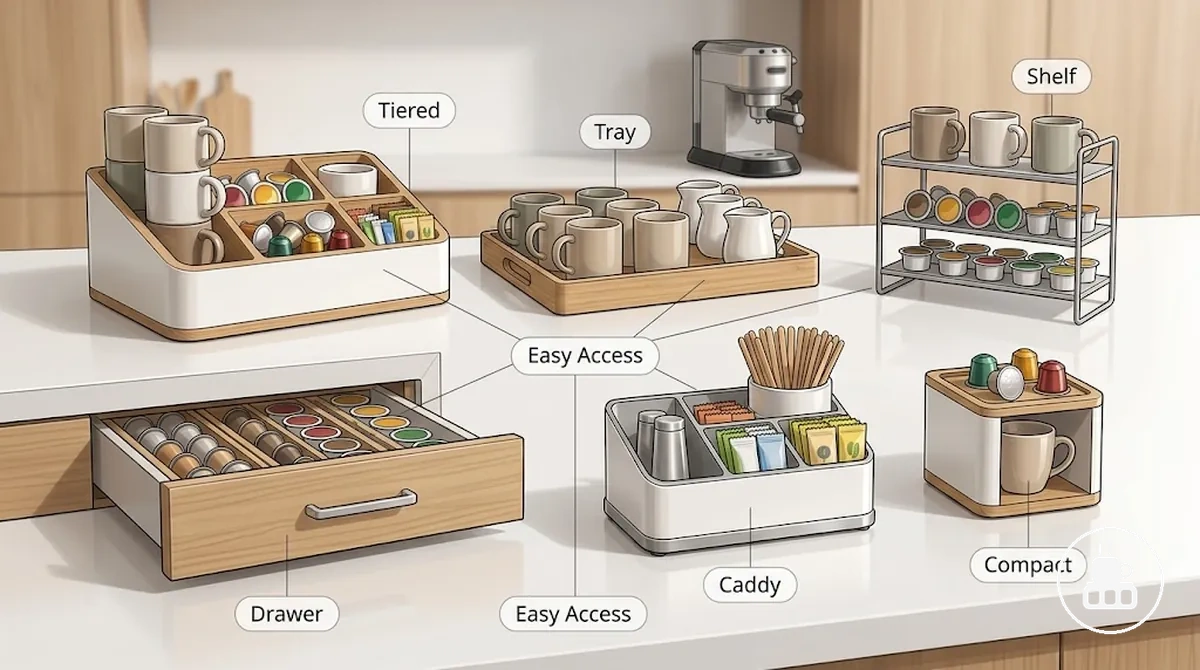
Organizer Types, Formats, and Storage Boundaries become easier to understand by comparing how each format affects storage form, access pattern, and counter space. The table below compares the main organizer formats without ranking one above another.
| Format | Main storage attribute | Space effect | Best use case |
|---|---|---|---|
| Drawer | Hidden storage for pods and small supplies | Keeps more of the countertop clear | When concealed storage is preferred |
| Tiered | Vertical storage with improved visibility | Uses upward space | When cups and supplies should remain visible |
| Tray | Grouped supplies in one storage area | Defines a dedicated countertop zone | Portable everyday access |
| Caddy | Compartments for stirrers and packets | Compact organized layout | Shared coffee stations |
| Shelf | Open layered storage | Adds vertical organization | Frequently used supplies |
| Compact countertop | Space-saving storage format | Uses less counter space | Smaller coffee areas |
When pods and accessories are stored in a drawer organizer, they stay out of sight while remaining close to the coffee-making area. A tiered organizer raises cups and supplies into view, which may improve visibility when vertical storage is practical. The main distinction is whether hidden storage or quicker visual access better matches the available counter space.
Tray, caddy, shelf, and compact countertop formats organize supplies in different ways instead of serving the same storage role. A tray groups frequently used items, a caddy separates stirrers and condiments into compartments, a shelf keeps supplies visible, and a compact countertop format may suit limited space. These examples explain the main storage boundaries without expanding into a complete format guide.
If you need more detail about individual storage formats, continue to coffee station organizer types. That page expands on each organizer format while this section remains focused on category-level differences.
Counter Fit, Dimensions, and Placement Conditions
Counter fit depends on both the organizer's dimensions and the surrounding clearance where it will be used. Counter Fit, Dimensions, and Placement Conditions should be checked by comparing the organizer footprint with available countertop space, nearby obstacles, and daily access. Even when the organizer dimensions appear suitable, surrounding placement conditions may still affect accessibility.
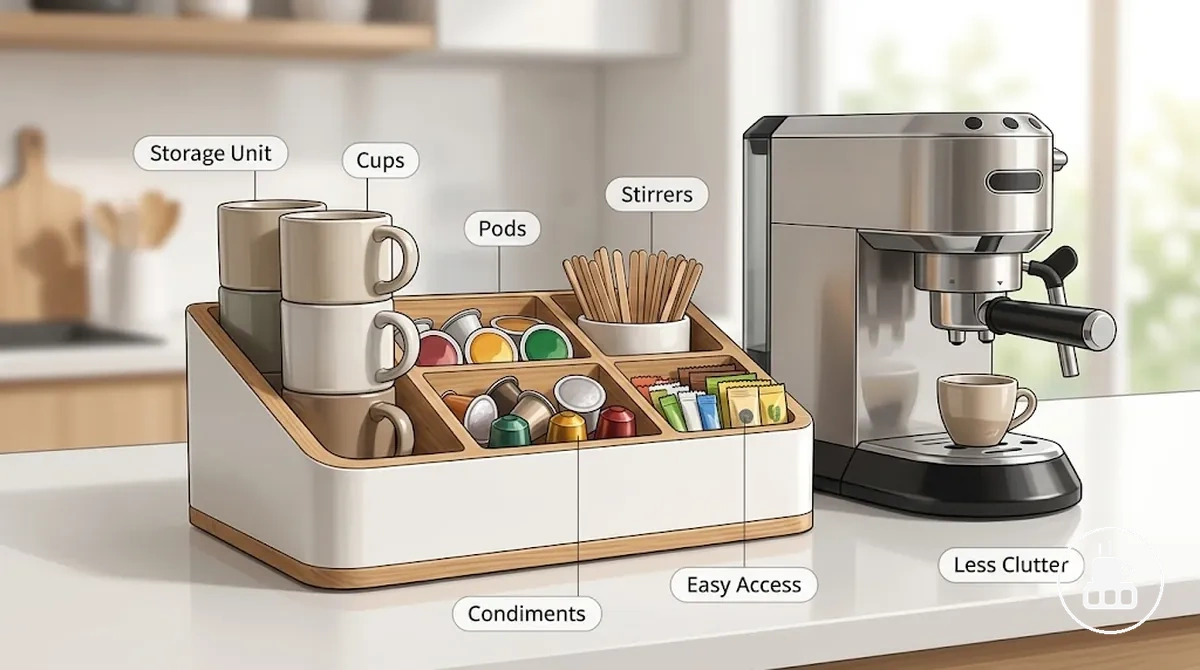
Counter Fit, Dimensions, and Placement Conditions become easier to verify before choosing an organizer. Use this checklist to confirm that organizer dimensions and surrounding clearance support the intended placement zone.
- Check that the organizer width fits the available countertop space.
- Compare the organizer depth with the usable counter depth.
- Confirm the organizer height leaves enough room beneath nearby cabinets when applicable.
- Make sure cabinet clearance allows comfortable access to stored supplies.
- Keep outlets accessible if the organizer is placed near a power source.
- Leave enough space around the coffee machine area for normal use.
- Verify that the organizer does not block the usual reach path across the countertop.
If the countertop is small, located in a corner, or shared with a coffee machine, placement may require more careful measurement. A larger organizer footprint can reduce usable counter space, while limited depth, nearby cabinets, or outlet locations may affect access. Measuring the placement zone before selection can help reduce the risk of blocked access or awkward positioning.
For more detailed measurement planning, see coffee station organizer dimensions and fit. It explains how organizer dimensions and surrounding clearance work together when evaluating physical fit.
Compartments, Capacity, and Supply Matching
Supply matching depends on how well a coffee station organizer's compartments and capacity match the items you store and how often you use them. Compartments, Capacity, and Supply Matching should be evaluated by comparing supply type, compartment layout, quantity, and access frequency. A larger organizer is not automatically a better choice if much of its storage remains unused or difficult to reach.
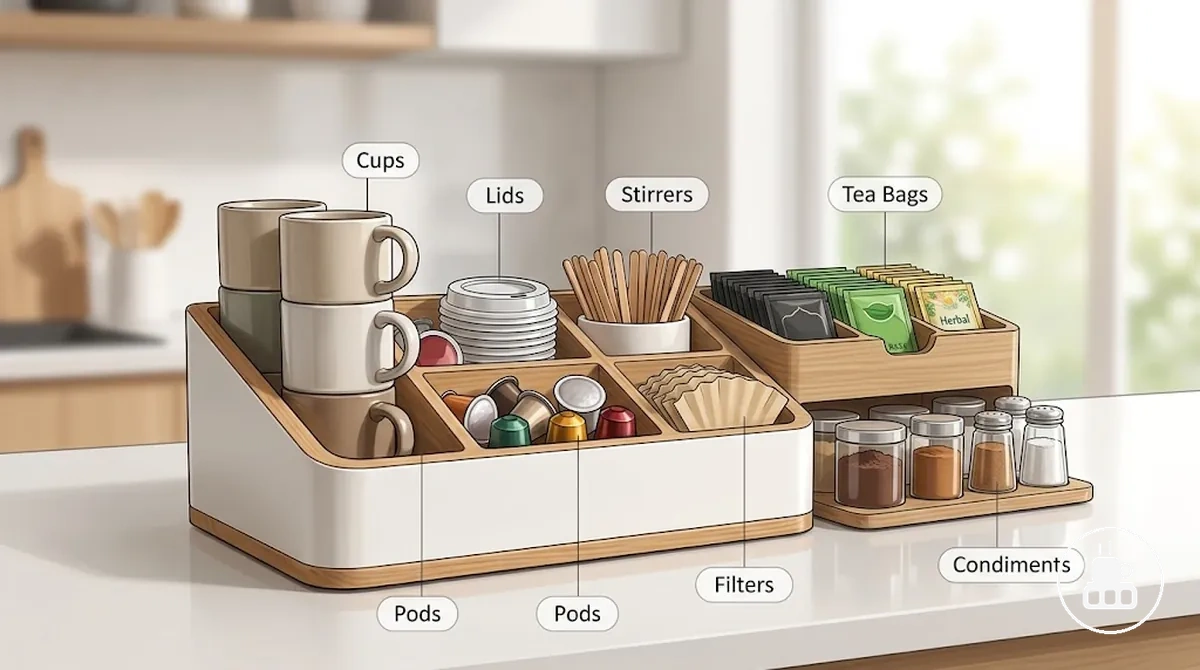
Compartments, Capacity, and Supply Matching become easier to judge when each supply group is matched to the storage space it needs. The table below connects common coffee supplies with compartment conditions and possible storage outcomes.
| Supply entity | Compartment attribute | Quantity or condition | Storage outcome |
|---|---|---|---|
| Pods | Divided compartments | Frequent daily use | Easier sorting and access |
| Cups | Larger storage section | Cup size varies | More organized storage when the section matches cup size |
| Lids | Flat compartment | Stored with matching cups | Reduced mixing with other supplies |
| Stirrers | Narrow compartment | Small supplies | Quicker retrieval |
| Sweeteners | Small divided section | Individual packets | Separate supply groups |
| Filters | Flat storage area | Regular use | Less crowding when stored flat |
| Tea bags | Separate compartment | Shared beverage station | Clear separation from coffee supplies |
| Small condiments | Compact divider section | Frequent refills | More organized access |
A single-user coffee station may need only a few compartments, while a family kitchen or shared-use station may benefit from a compartment layout that separates more supply groups. Divider flexibility can help when cup sizes, pod styles, or refill habits change over time. Overfilling compartments may reduce access because frequently used supplies can become harder to reach.
Capacity planning works best when storage space matches the supplies you actually keep available. For more detailed planning, see coffee station organizer compartments and capacity to compare compartment layouts with different supply needs.
Materials, Durability, and Finish Trade-Offs
Material choice affects how a coffee station organizer handles cleaning, moisture tolerance, weight, durability, and visual fit. Materials, Durability, and Finish Trade-Offs should be compared by considering everyday use rather than appearance alone. The most suitable material depends on where the organizer is placed, how often it is handled, and the surrounding kitchen conditions.
| Material | Useful attribute | Trade-off | Better condition |
|---|---|---|---|
| Wood | Warm finish | May require more careful wiping around moisture | Visible coffee bars with moderate use |
| Bamboo | Natural appearance | Moisture exposure may increase maintenance needs | Dry countertop areas with routine cleaning |
| Acrylic | Clear visibility of supplies | Surface marks may become more noticeable with frequent cleaning or handling | When supply visibility is important |
| Plastic | Lightweight construction | Appearance and rigidity can vary by design | Everyday storage and frequent repositioning |
| Metal | Sturdy construction | Often weighs more than other materials | Shared counters with regular handling |
On a visible coffee bar, wood or bamboo may suit users who prefer a warmer finish and are comfortable with regular wiping. Acrylic can make stored supplies easier to see, although surface marks may become more noticeable over time. Plastic is often selected when lighter weight supports easier movement, while metal may suit organizers that remain in one location despite the added weight. These differences illustrate how material choice changes cleaning effort, moisture tolerance, and everyday handling.
Cleaning and durability depend on both the material and the kitchen environment rather than the finish alone. A coffee station organizer placed near moisture or used throughout the day may benefit from a material that matches those conditions, while less frequently handled organizers may place greater emphasis on visual fit. Comparing materials through daily handling, cleaning effort, and expected kitchen conditions usually provides a more practical basis for selection than appearance alone.
Daily Access, Clutter Control, and Setup Limits
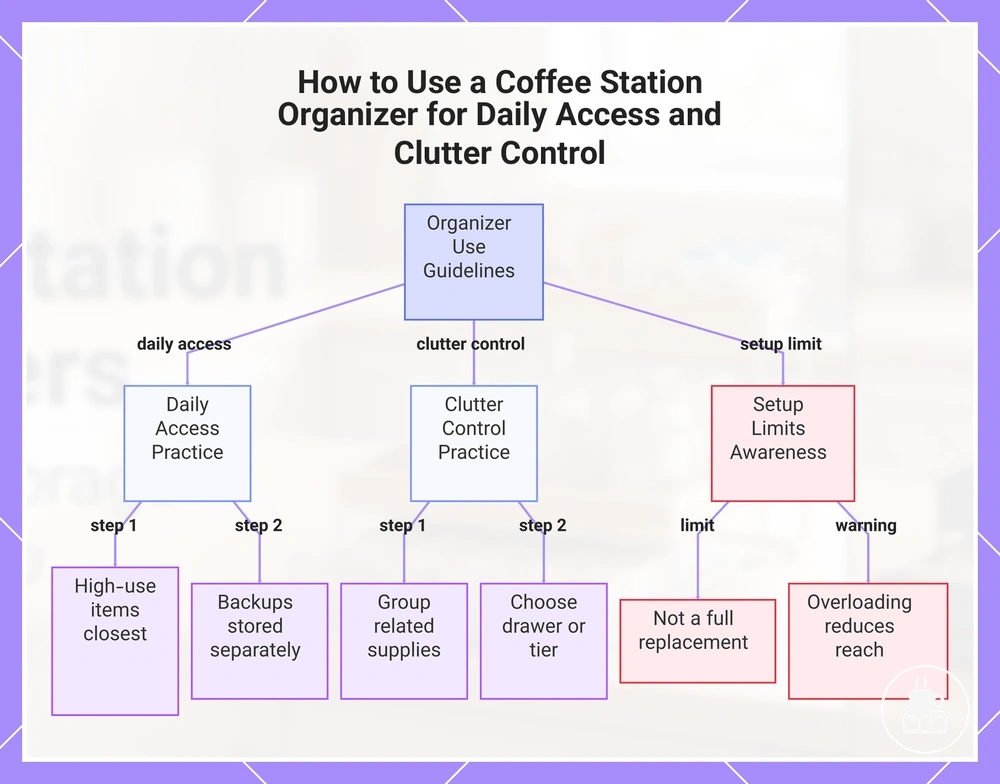
Daily access depends on supply order, reach distance, and refill habits rather than the number of items stored. Daily Access, Clutter Control, and Setup Limits are easier to manage when a coffee station organizer keeps frequently used supplies within easy reach while reducing visible clutter. An organizer can improve everyday workflow, but it does not replace a complete coffee station setup.
- Keep high-use items closest to the coffee-making area for easier daily access.
- Store backups separately so they do not interrupt the normal supply flow.
- Maintain a clear refill path for supplies that need regular replenishment.
- Group related items to reduce visible clutter across the countertop.
- Choose drawer access or tier visibility according to reach distance, daily routine, and display balance.
On small counters, placing high-use items close to the coffee machine can reduce unnecessary reaching during everyday use. Backups may be stored farther away because they are accessed less often. The most practical supply order depends on daily routines and the available reach distance.
Clutter control often improves when related supplies are grouped instead of scattered across the countertop. Organizing refill items together can support a smoother refill rhythm while keeping the supply flow easier to follow. Overloading the organizer may reduce visibility and make frequently used items harder to reach.
Setup limits are defined by the organizer's role in supporting daily access rather than creating a complete coffee station layout. For a broader setup process, see how to set up a coffee station organizer.
In shared kitchens or on visible coffee bars, display choices may need to be balanced with everyday function. For example, coffee station organizer ideas can complement practical organization without replacing the focus on daily access and efficient use.
This chart shows the main practices for using a coffee station organizer to improve daily access, reduce clutter, and recognize its setup limits.
Buying Criteria for a Better Coffee Station Organizer
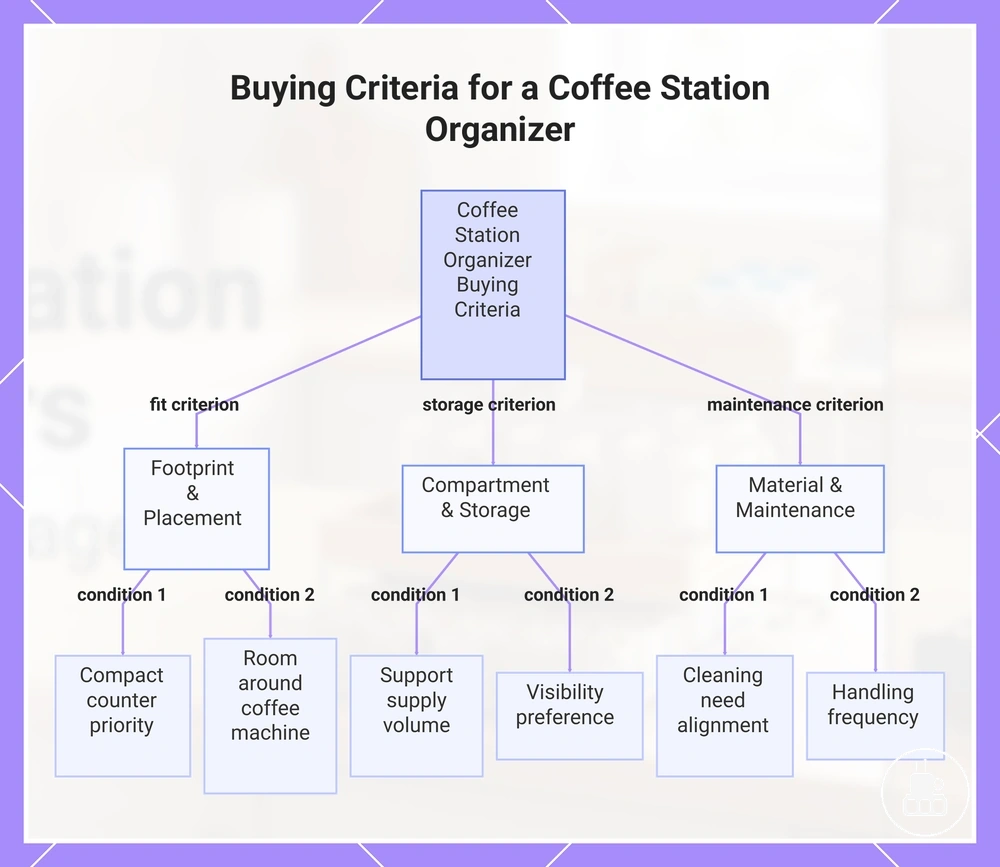
Buying criteria should align the organizer with available fit, capacity, material, and daily access needs. Buying Criteria for a Better Coffee Station Organizer are easier to apply when footprint, compartment layout, cleaning need, and supply volume are considered together. The goal is to narrow selection by practical conditions rather than by a merchant catalog.
- Choose an organizer type that matches the available footprint and placement area, especially on a compact counter.
- Select a compartment layout that supports supply volume and pod-and-cup storage without unnecessary crowding.
- Match the material to cleaning need, handling frequency, and kitchen conditions.
- Consider drawer storage when a clearer countertop is preferred, or tier visibility when high-use supplies should remain visible.
- Balance footprint, supply volume, and daily access so the organizer supports regular use instead of limiting it.
If counter space is limited, footprint becomes an early decision signal because a larger organizer may reduce usable work space. Placement should also leave enough room for access around the coffee machine area. Ignoring those fit conditions may create a storage choice that looks suitable but feels awkward in daily use.
For pod-and-cup storage, the compartment layout should match the supplies that stay on the counter most often. A visible coffee bar may benefit from cleaner supply grouping, while drawer storage may suit users who prefer less exposed storage. Material choice adds another trade-off because cleaning need and handling frequency can change what feels practical.
Selection becomes clearer after the main buying factors have been compared. For deeper criteria, see how to choose a coffee station organizer.
A practical buying decision brings together organizer type, footprint, compartment layout, material, cleaning need, supply volume, and daily access. When these criteria match the intended coffee station, the organizer is more likely to support everyday use without unnecessary compromise. Partner offer context should be read as decision support, not as a predefined recommendation.
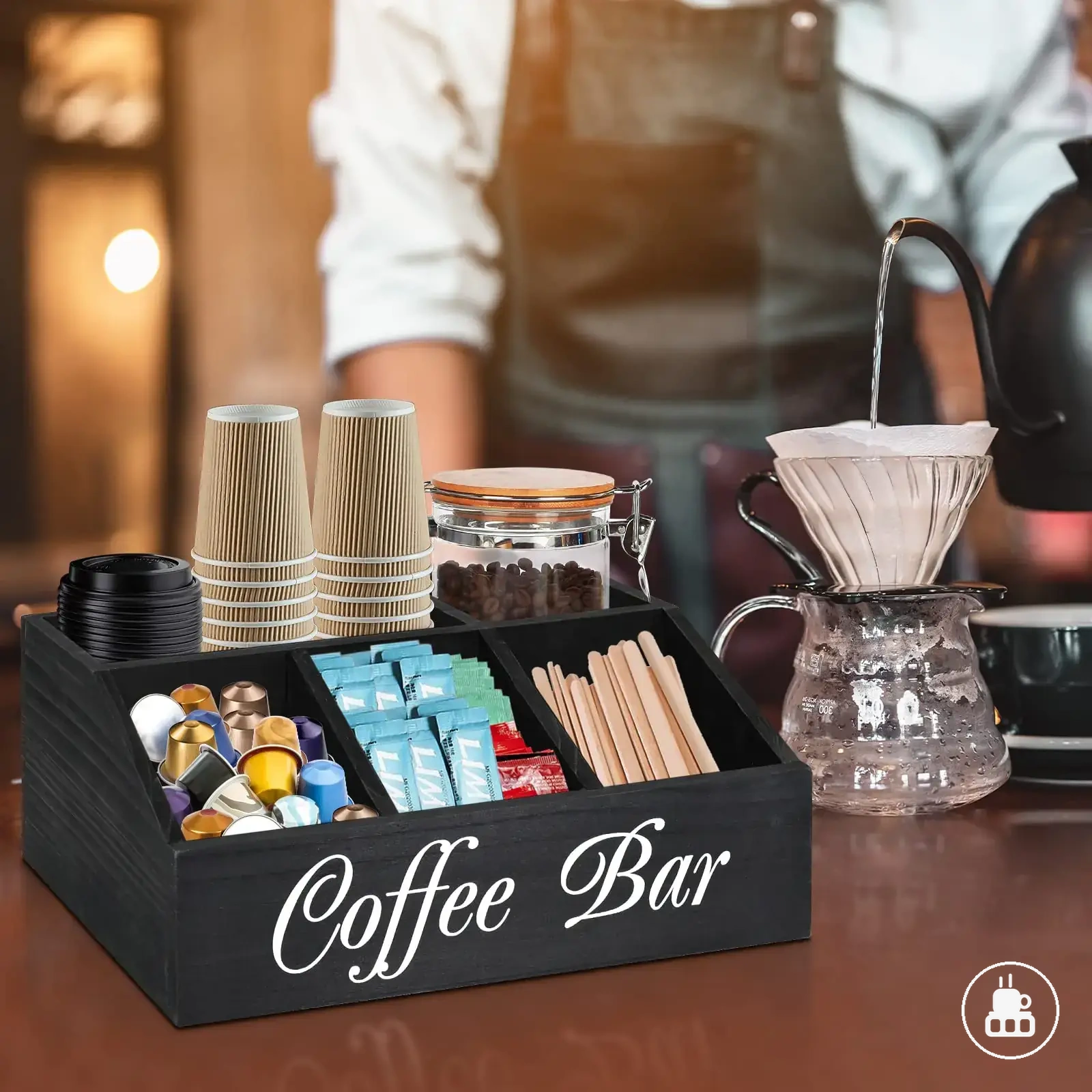
The products below are useful examples for comparing available options. Before buying, check that the compatibility criteria, key features, and product details match your needs.
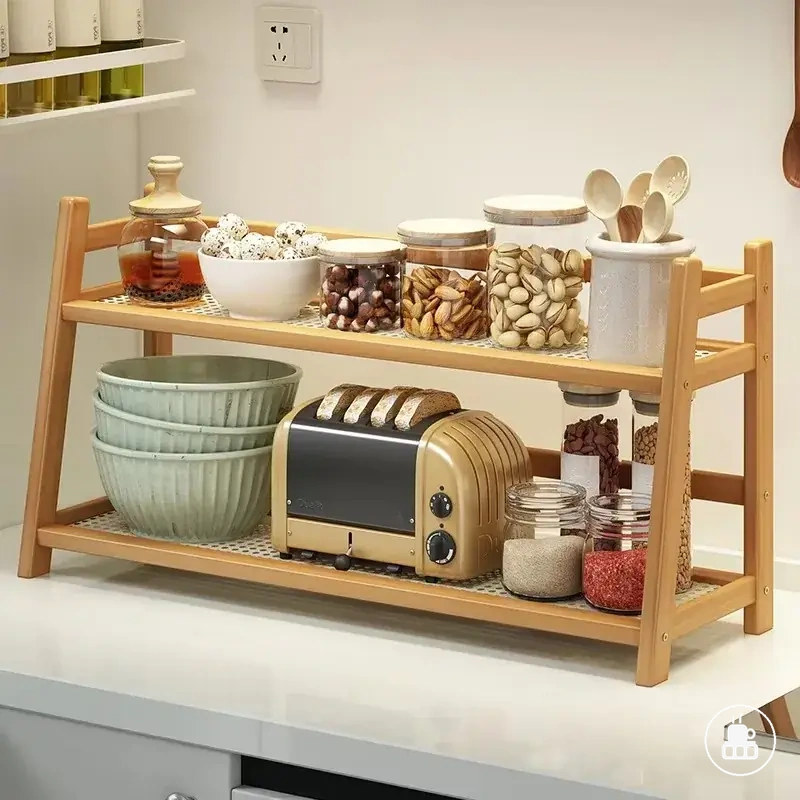
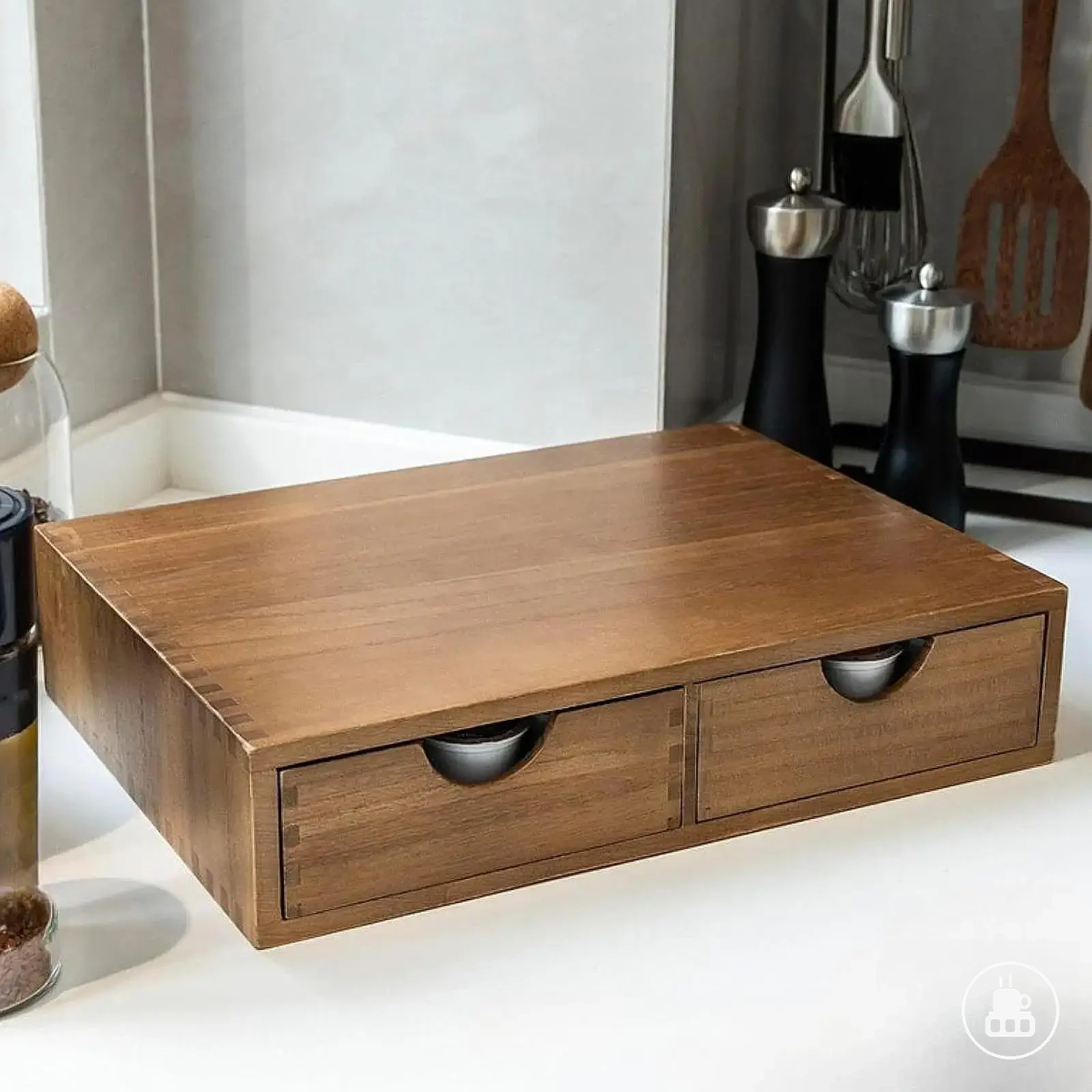
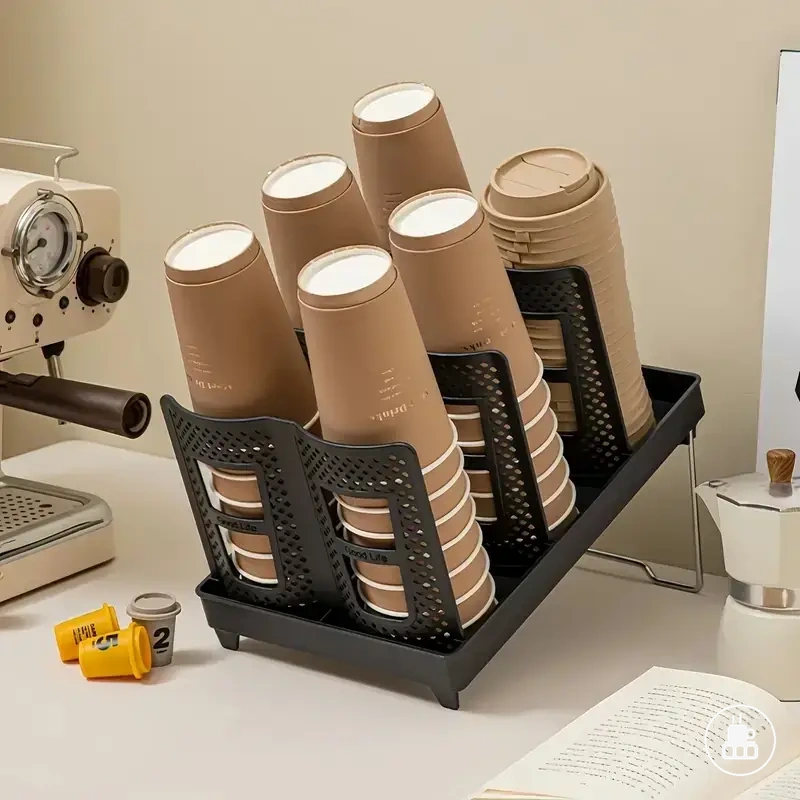
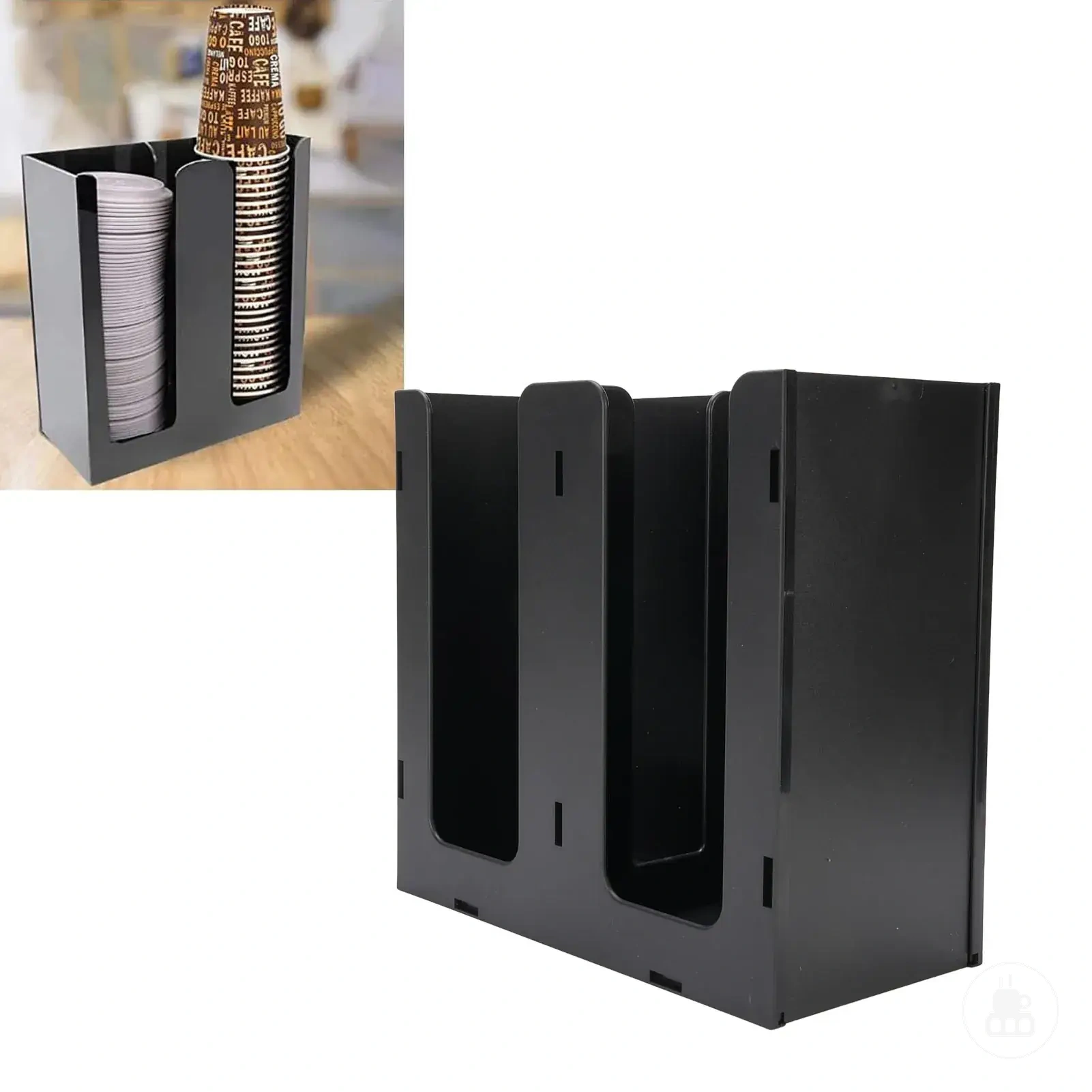
This chart shows the key buying criteria for a coffee station organizer, focusing on fit, storage, and maintenance factors to guide a practical selection.