Coffee Station Organizer Ideas for Clean, Usable Counters
Coffee station organizer ideas are counter-level layout patterns for keeping coffee gear, pods, cups, condiments, and small accessories contained in one usable zone. A clean counter depends on how well the coffee station organizer supports daily access, storage, and visual order without letting supplies spread across the countertop.
On a small coffee bar, a tray may keep visible items grouped, while a drawer or tiered organizer may suit routines that need hidden storage or vertical access. The right layout depends on counter space, supply volume, and whether the coffee corner needs to stay open for other daily tasks.
This page covers organizer-led ideas for counters, not a full kitchen remodel or product catalog. Decorative choices can help the coffee station setup feel finished, but they should still support access, storage, and cleanup.
Clean Coffee Station Organizer Layout Basics
Clean coffee station organizer layout is a counter arrangement that keeps the coffee routine contained, accessible, and separated from general kitchen clutter. It defines a clear counter zone where daily-use items stay grouped, making containment and access the foundation of the layout.
Layout quality depends on access, organizer footprint, supply grouping, and a clear cleanup boundary. coffee station organizers are the broader category that supports these layouts, while this section focuses on how an organizer works on a counter rather than detailed type selection.
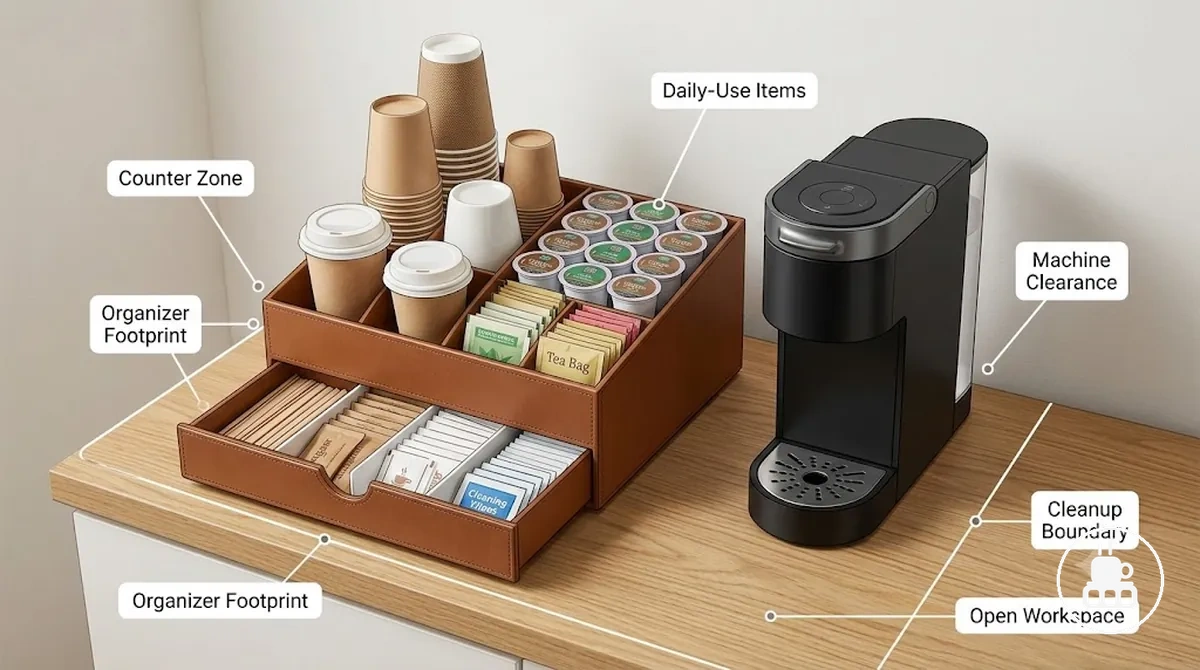
A layout may need adjustment when counter shape, machine placement, or supply volume changes. A tray, drawer, or tiered organizer can improve organization when it matches the available workspace and routine. The checklist below summarizes the core layout conditions for access, footprint, supply grouping, and cleanup boundaries.
- Define one clear counter zone.
- Keep machine clearance unobstructed.
- Match organizer footprint to workspace.
- Group daily-use items together.
- Control spills within a cleanup boundary.
- Reduce visible clutter around the counter edge.
Countertop Coffee Station Layout Ideas for Daily Use
A countertop coffee station works more smoothly when daily-use supplies stay within easy reach instead of spreading across the counter. Countertop coffee station layout patterns help keep the coffee machine, cups, pods, and other essentials contained so daily reach remains simple and consistent.
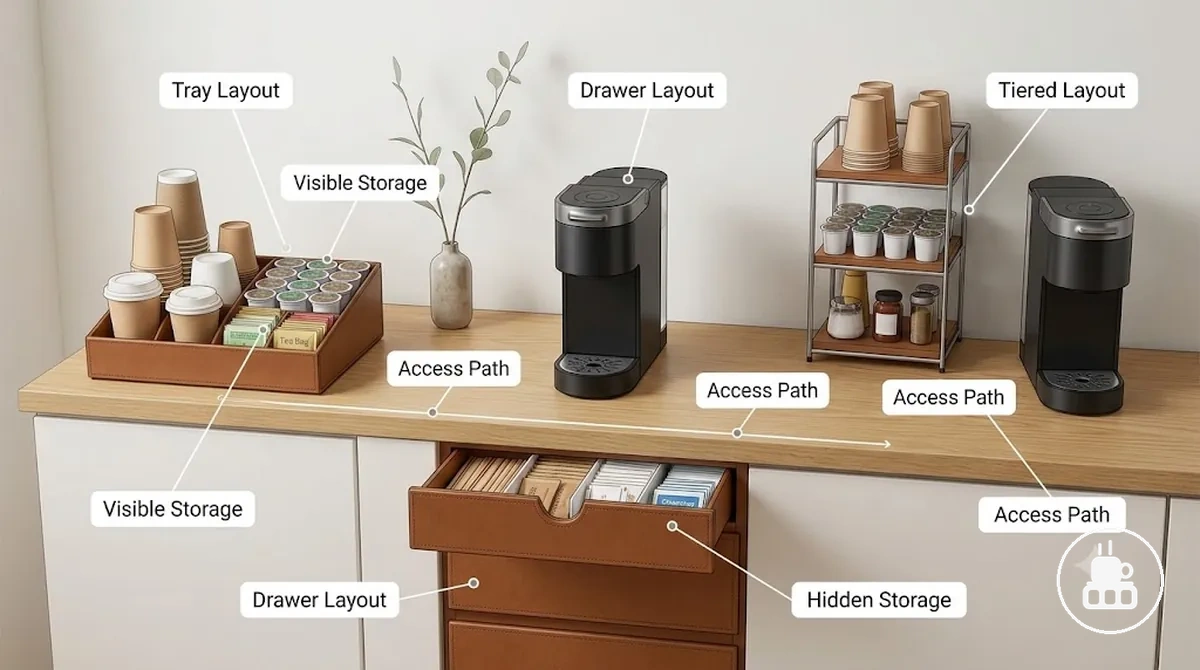
Countertop Coffee Station Layout Ideas for Daily Use compare layout patterns by how they support access, visibility, and cleanup. The organizer types shown in layouts use tray, drawer, and tiered arrangements to organize similar supplies in different ways, while the most suitable option depends on counter position, visible storage preferences, and refill habits.
| Layout pattern | Daily-use strength | Watch point |
|---|---|---|
| Tray layout | Quick access to daily-use items | Uses visible counter space |
| Drawer layout | Hidden storage for supplies | Requires opening the drawer |
| Tiered layout | Makes better use of vertical space | Needs suitable counter height |
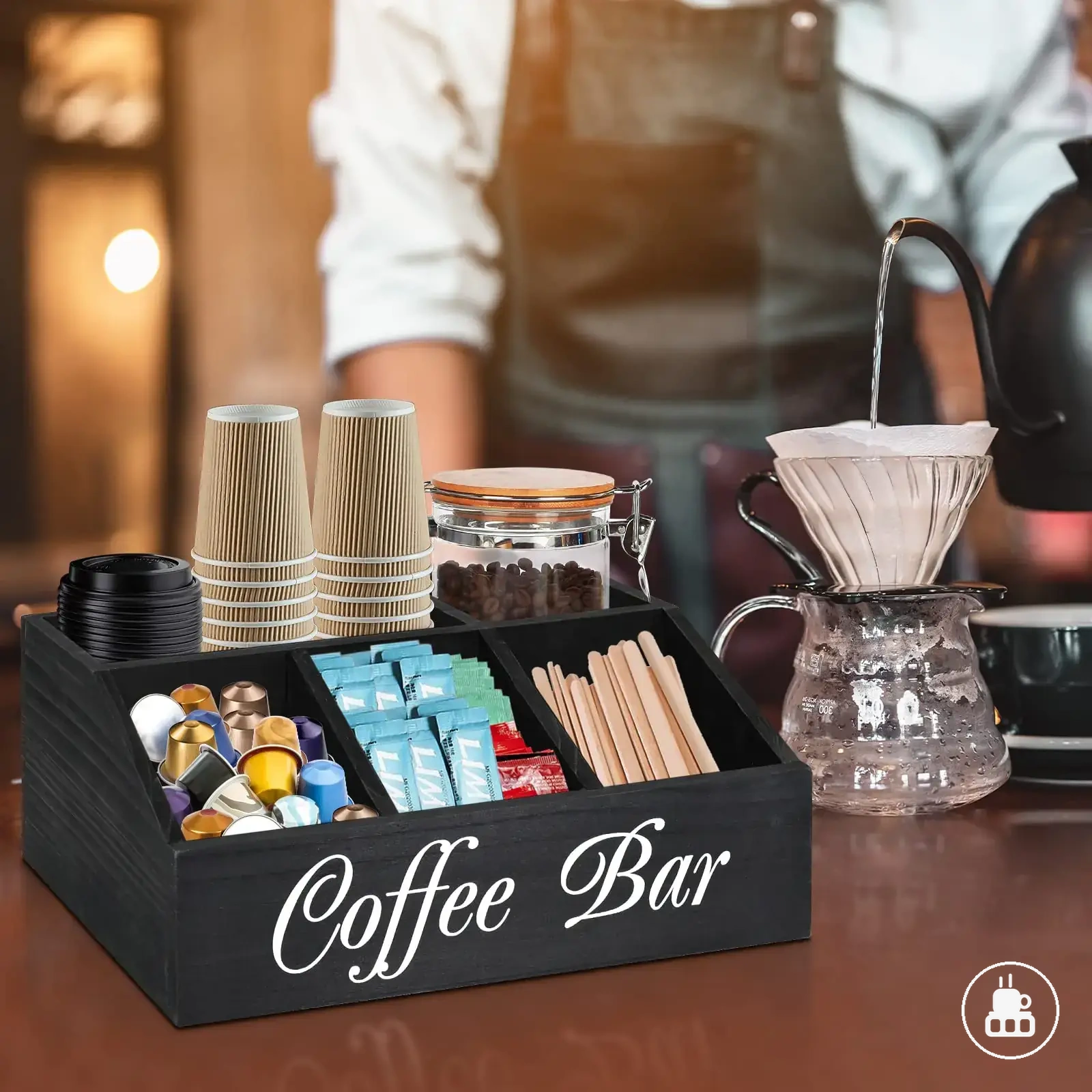
A tray layout keeps the access path short by placing frequently used cups, pods, and condiments beside the coffee machine. This pattern often suits households that prefer visible storage and quick cleanup after each coffee routine.
A drawer layout or tiered layout may suit different routines when counter depth, machine position, or available workspace changes. Hidden storage can reduce visible clutter, while tiered storage may keep supplies accessible without increasing the organizer footprint. After comparing these layout patterns, you can set up your coffee station organizer to match your routine and available counter space.
Tray Layouts for Grouped Coffee Essentials
Tray layouts group loose coffee essentials on one movable surface so daily supplies stay together and easy to manage. A tray layout creates a clear tray boundary that groups loose items, while its usefulness depends on item count, edge height, and spill containment.
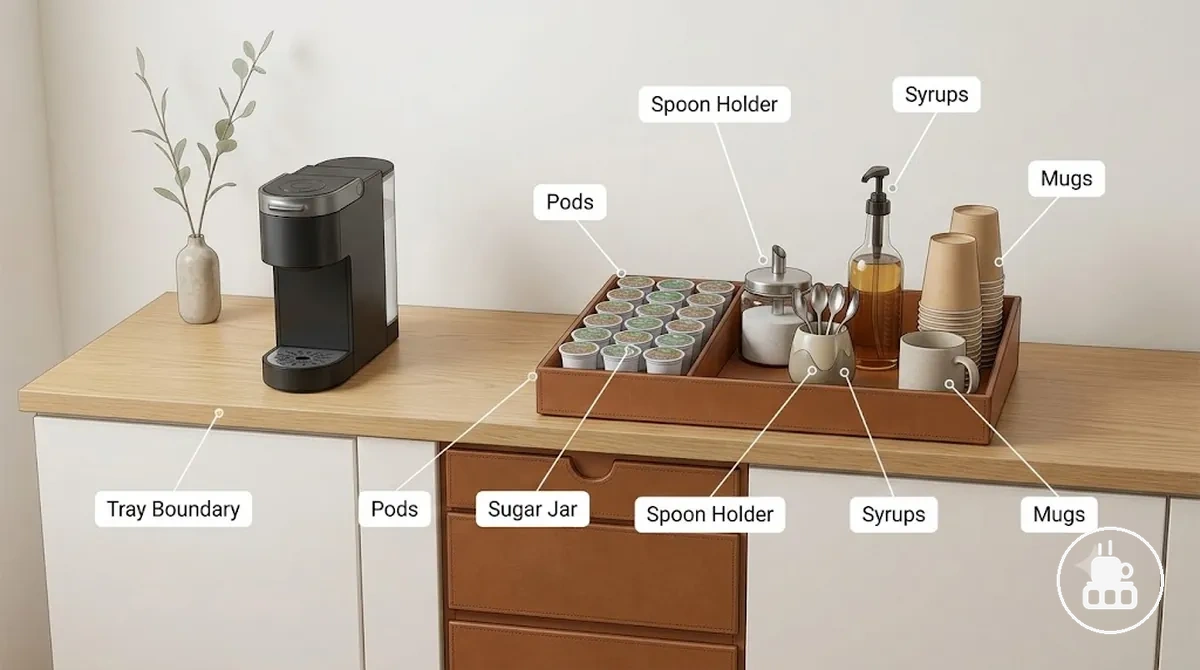
Tray Layouts for Grouped Coffee Essentials work best when only frequently used items fit within the tray boundary. The bullets below organize common coffee tray items by their containment value.
- Pods: Keep daily pods together to reduce loose items beyond the tray boundary.
- Sugar and jars: Group small containers when edge height helps limit movement.
- Spoons: Store spoons in one holder to avoid scattered loose items.
- Syrups: Place syrups on the coffee tray only when they fit without overcrowding.
- Mugs: Keep mugs on the tray only when enough space remains for cleanup.
Drawer and Cabinet Layouts for Hidden Storage
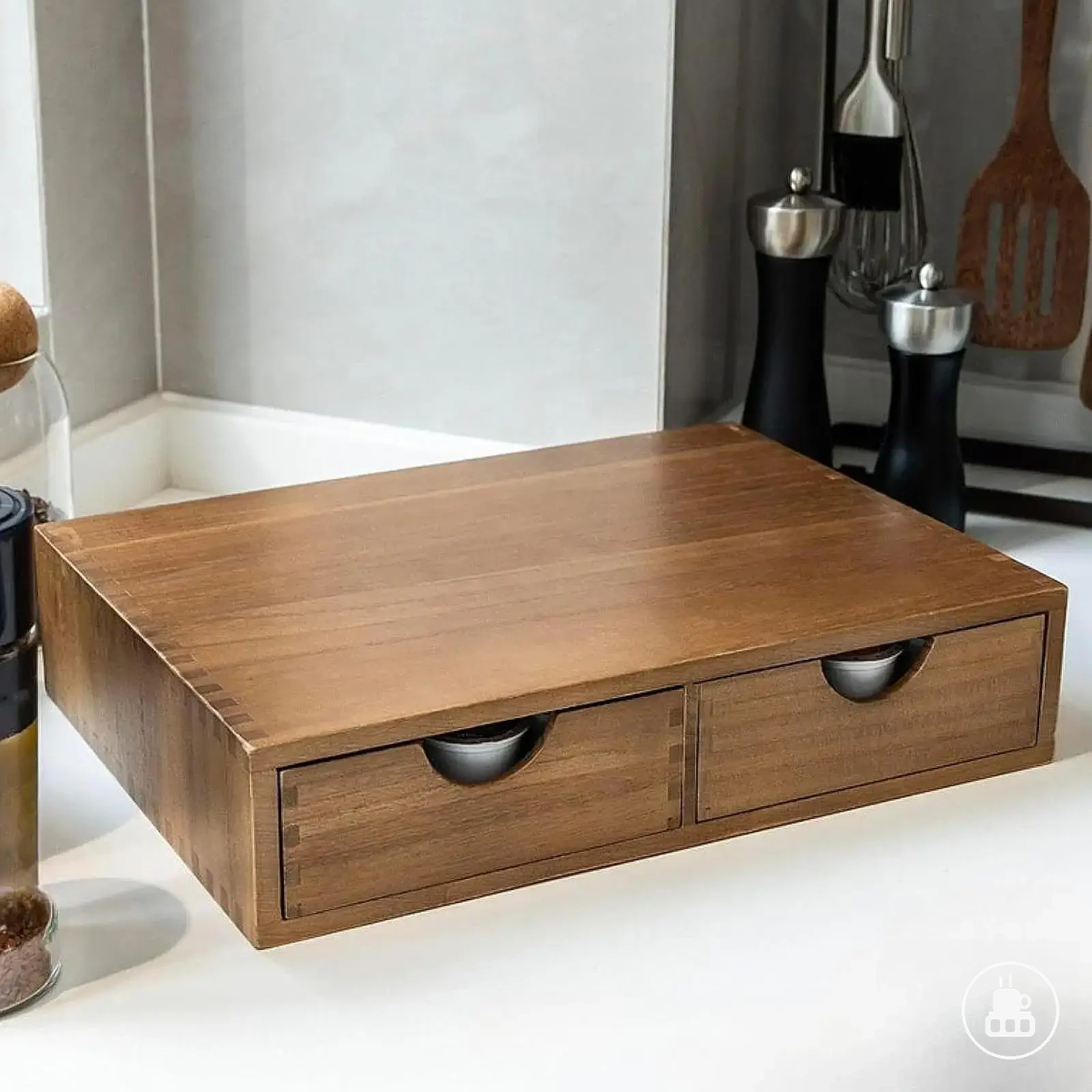
Drawer and cabinet layouts keep coffee supplies in hidden storage while leaving the countertop clearer for daily use. A drawer layout or cabinet layout can reduce visible items, but hidden storage still needs quick access to support an everyday coffee routine.
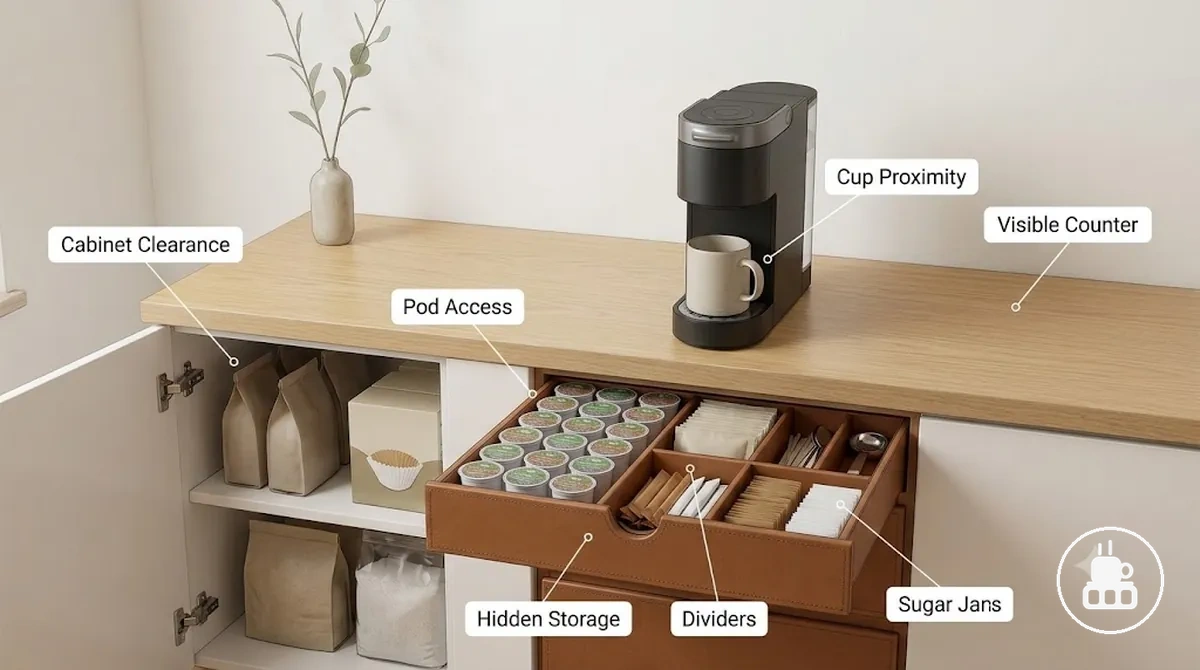
Drawer depth, dividers, and refill frequency affect how well hidden storage works. A storage drawer with dividers can keep pods and small supplies separated, while cabinet clearance and cup proximity may help maintain convenient access without placing frequently used items too far from the coffee machine.
Drawer and Cabinet Layouts for Hidden Storage become easier to manage when visible daily items stay on the counter and extra supplies remain stored. The checklist below separates hidden extras from items that are typically kept within reach.
- Keep extra pods and refill supplies in divided drawers when refill frequency is lower.
- Store spare sugar, filters, or similar items inside cabinets when cabinet clearance allows easy access.
- Leave frequently used mugs close to the coffee machine to maintain cup proximity.
- Keep only daily-use items visible so hidden storage supports, rather than slows, the routine.
Tiered and Shelf Layouts for Vertical Storage
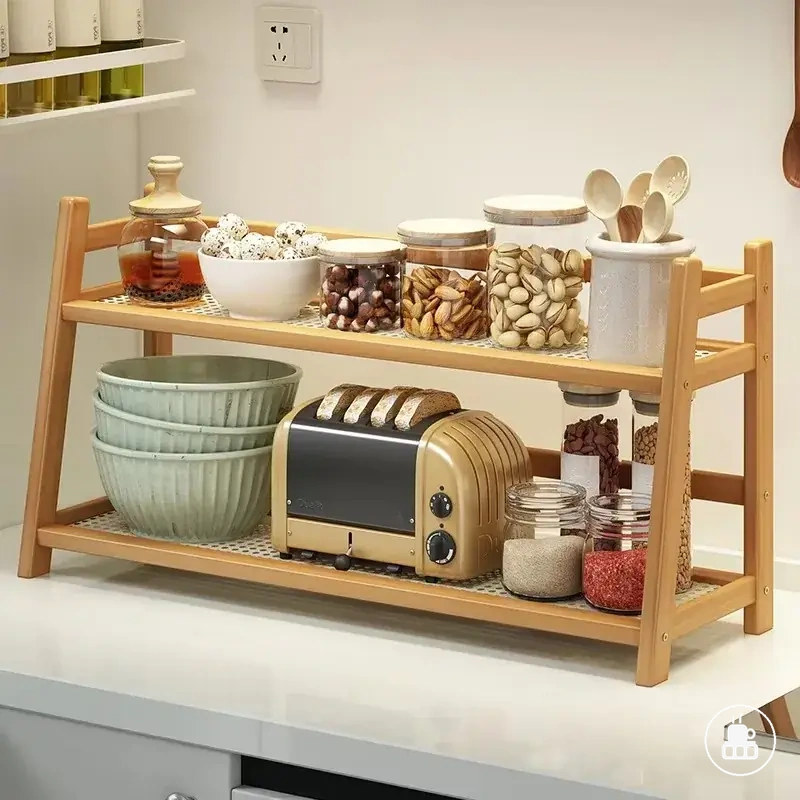
Tiered and shelf layouts use vertical storage to increase capacity without widening the counter footprint. A tiered layout or shelf layout can organize more daily-use items within a small footprint, although reach and visibility still depend on tier height, shelf depth, and under-cabinet clearance.
Tiered and Shelf Layouts for Vertical Storage work best when frequently used items remain easy to reach. Bottom-tier stability, cup height, pod containers, stirrer placement, and shelf depth all influence daily access, while tall or deep storage may reduce visibility or limit machine access when under-cabinet clearance is restricted. The table below summarizes these conditions by clearance, visibility, and reach.
| Feature | Useful when | Watch point |
|---|---|---|
| Tier height | Items remain visible and easy to reach | Tall tiers may reduce visibility |
| Shelf depth | Pod containers and stirrers stay within comfortable reach | Deep shelves may limit access |
| Bottom stability | Cups stay stable during daily use | Unstable stacking can affect access |
| Under-cabinet clearance | The shelf fits beneath cabinets while leaving machine access open | Limited clearance may restrict placement |
Small-Counter Coffee Station Ideas That Preserve Workspace
Small-counter coffee station ideas help preserve workspace by keeping coffee supplies organized without taking over the prep area. The most effective layout depends on footprint, vertical use, and what can remain on the counter, making workspace preservation the primary sizing condition.
A compact coffee bar organizer can work well on a small counter when it uses a narrow tray or a vertical stand instead of spreading supplies across the surface. Under-cabinet clearance, removable containers, and the available prep area influence whether vertical storage improves daily use while preserving workspace.
On a tight counter in a renter kitchen, small apartment, or shared kitchen, the most practical arrangement depends on routine and available space. Corner placement can free more central workspace, while removable containers make it easier to clear the counter when additional prep space is needed.
Small-Counter Coffee Station Ideas That Preserve Workspace stay focused on adapting coffee station organizers rather than solving all kitchen storage needs. For broader compact-layout guidance beyond these sizing conditions, see small-space coffee station ideas.
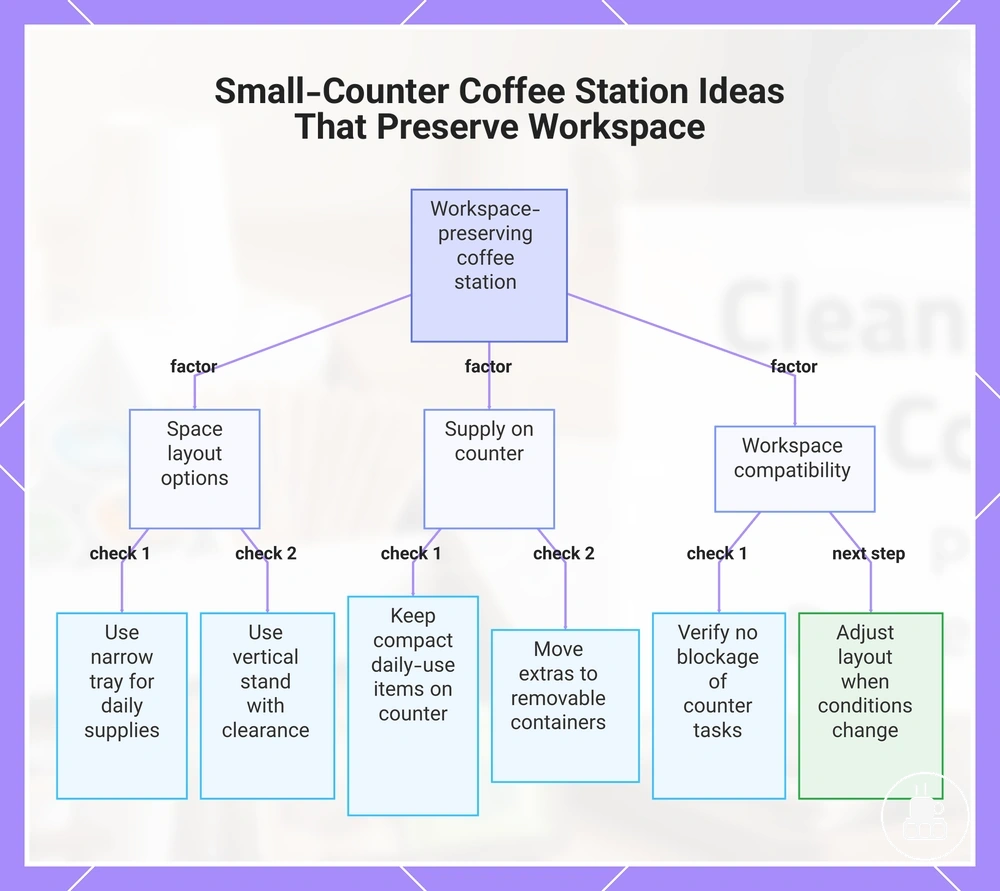
Small-Counter Coffee Station Ideas That Preserve Workspace depend on footprint, vertical use, and movable supplies. Use the checklist below to verify these conditions before choosing a layout.
- Choose a narrow tray when daily supplies fit without reducing the prep area.
- Use a vertical stand when under-cabinet clearance allows comfortable reach.
- Keep only compact daily-use items on the counter and move extras into removable containers.
- Consider corner placement when it leaves more open workspace for food preparation.
- Check that the coffee machine and organizer do not block routine counter tasks.
- Adjust the layout when machine size, counter depth, or daily routine changes.
This chart shows the main conditions and checks for arranging a coffee station on a small counter while preserving workspace for food preparation and other tasks.
Arranging Pods, Cups, and Condiments Without Visual Clutter
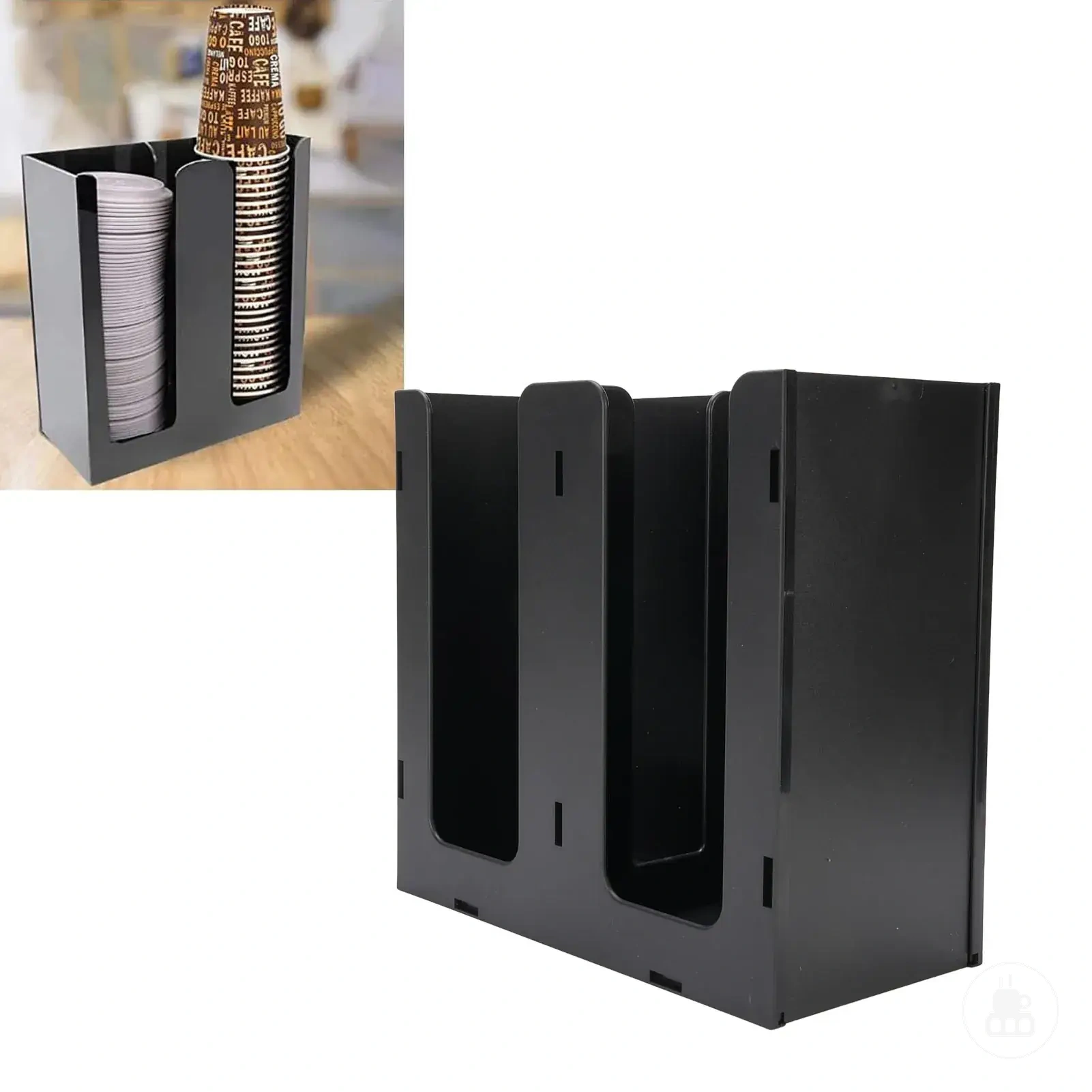
Arranging pods, cups, and condiments without visual clutter starts by giving each supply type a clear storage position based on access frequency. Grouped supplies reduce visual clutter when each container creates a consistent visual boundary between daily-use items and refill extras.
Arranging Pods, Cups, and Condiments Without Visual Clutter becomes easier when storage position, visibility, and container choice match everyday use. The table below organizes each supply type by storage position, visibility rule, and clutter risk so display items, drawer items, and refill extras remain easy to distinguish.
| Supply type | Storage position | Visibility rule | Clutter risk |
|---|---|---|---|
| Pods | Container near the coffee machine | Keep visible when used daily | Higher if left loose |
| Cups or mugs | Open shelf or nearby holder | Display only regularly used cups and lids | Higher when overcrowded |
| Condiments | Small jars or grouped container | Keep sweeteners and syrups visible when used frequently | Higher if containers are mixed |
| Stirrers | Dedicated container | Keep accessible without spreading out | Higher when stored loosely |
| Filters | Drawer or enclosed container | Store out of sight when not needed daily | Lower when contained |
| Refill extras | Drawer or cabinet | Keep off display until refill is needed | Lower when separated from daily supplies |
Keep display items limited to supplies used regularly, while lower-frequency items can move into drawers because they are accessed less often. After grouping the main coffee supplies, pods cups and condiments setup provides more detailed organization guidance without changing the overall layout.
Refill smaller containers instead of keeping large refill quantities on display when visual order is the priority. Separate refill extras from daily-use supplies so the coffee station remains organized without relying on bulk storage.
Decorative Coffee Station Organizer Ideas That Still Function
A decorative coffee station organizer works best when every decorative element also supports access, containment, or visibility. A clean counter depends on decorative choices that protect function rather than adding unnecessary display items.
Material and visibility choices influence whether decoration remains practical during daily use. A wood tray or metal organizer can help group supplies, while acrylic containers may improve compartment visibility when contents need quick identification. Decorative choices still depend on supply volume, routine, and available counter space.
Decorative Coffee Station Organizer Ideas That Still Function compare style choices by their functional value rather than appearance alone. The table below shows how material, color, height, and compartment visibility can affect organization and clutter risk.
| Decorative element | Functional reason | Clutter risk |
|---|---|---|
| Wood tray | Groups daily supplies within one boundary | Higher if overloaded |
| Metal tier | Uses vertical space while keeping items accessible | May reduce visibility if stacked too high |
| Clear container | Improves compartment visibility for coffee supplies | Lower when contents stay organized |
| Jar grouping | Keeps sweeteners or coffee items together | Higher if too many small jars are displayed |
| Mug display | Keeps frequently used mugs within reach | Higher when display exceeds daily use |
| Seasonal accent | Adds seasonal character when it does not block access | Higher if it crowds the counter |
Functional décor supports routine, while decorative clutter can reduce access and make grouped supplies harder to manage. For example, labeled jars may clarify stored supplies, whereas extra signs, unused ornaments, or excessive seasonal accents can add visual distraction without improving organization. Decorative coffee station organizer ideas should keep function ahead of appearance so the counter remains easy to use.
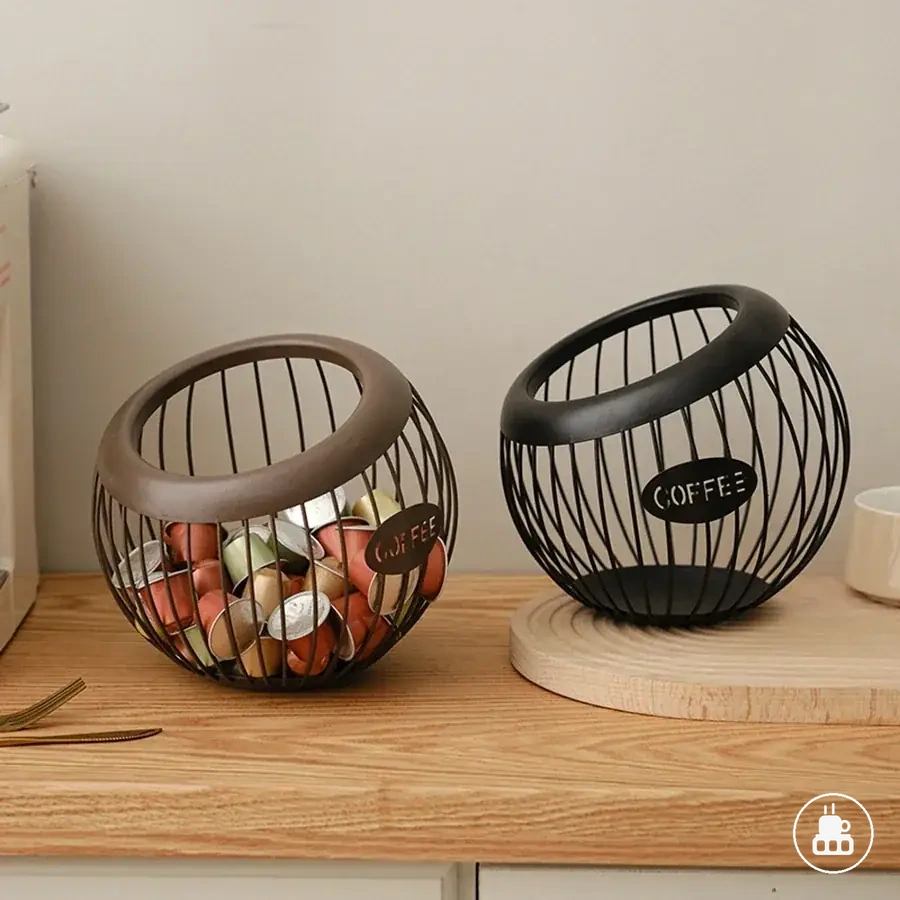
The products below are useful examples for comparing available options. Before buying, check that the compatibility criteria, key features, and product details match your needs.
Common Coffee Station Organizer Mistakes That Add Clutter
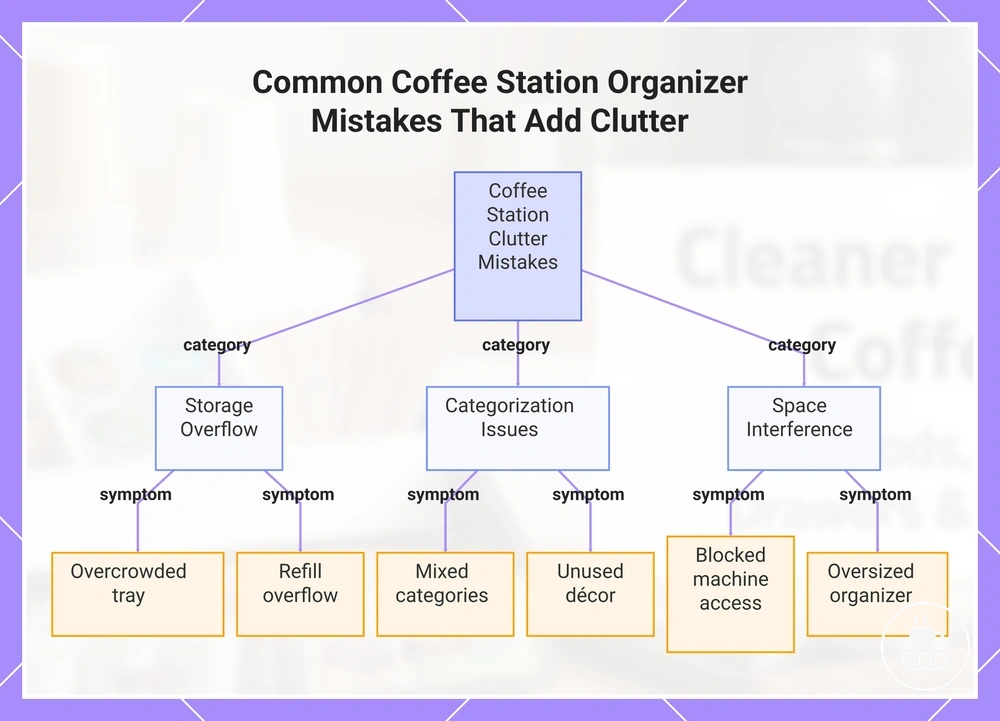
Coffee station organizer mistakes usually add clutter when supplies are grouped poorly, too many visible extras stay on the counter, refill boundaries are weak, or the organizer does not match the routine. A contained station can still look messy when poor grouping, visible extras, blocked machine access, or refill overflow breaks the storage boundary.
An overcrowded tray creates a visible symptom: loose items spread beyond the tray edge or compete for the same small surface. The likely cause is too many daily and backup supplies sharing one zone, so the safer adjustment is to keep only routine items on the tray and move refill extras elsewhere.
Mixed categories can make pods, cups, condiments, and stirrers harder to read as separate groups. The likely cause is weak storage position, so the adjustment is to give each category its own container or boundary before adding more supplies.
Blocked machine access often happens when an oversized organizer sits too close to the coffee machine or takes over counter space needed for the routine. Unused décor can create the same clutter problem when it occupies access space without supporting storage, so the adjustment is to remove items that do not improve grouping, reach, or cleanup.
Common Coffee Station Organizer Mistakes That Add Clutter can be checked by matching each visible symptom with a likely layout cause and a safer adjustment.
- Overcrowded tray: loose items spill outward; move refill extras off the tray.
- Mixed categories: pods and condiments blend together; separate each group by container.
- Blocked machine access: the machine feels crowded; shift the organizer away from the access path.
- Oversized organizer: counter space disappears; use a smaller footprint or fewer visible items.
- Unused décor: signs or accents crowd supplies; keep only items with a storage role.
- Refill overflow: backup supplies stay visible; set refill boundaries away from daily items.
For deeper troubleshooting after these local adjustments, use reduce coffee station clutter to review broader layout and space problems.
This chart categorizes the six common mistakes that cause clutter in a coffee station, helping you identify and address each issue.