Office and Breakroom Coffee Station Organizers
An office coffee station organizer is a shared-use supply control point designed to structure how coffee-related items are stored and accessed in a breakroom environment. It groups cups, lids, pods, stirrers, sugar packets, and creamers into visible compartments on a countertop. Because it serves multiple users, its design is shaped by shared access needs, refill frequency, and durable handling conditions rather than individual preference.
In shared coffee stations, daily traffic creates constant movement around the countertop as different users prepare drinks throughout the day. This increases demand for clear access to supplies and consistent refill habits to prevent interruptions. An office or breakroom coffee station organizer must therefore support predictable access patterns, especially when multiple people use the same space within short time gaps.
Without structured organization, cups, lids, pods, stirrers, sugar packets, and creamers can quickly spread across the countertop and create clutter that slows down self-service. This often leads to inefficient searching, repeated refilling, and reduced clarity around where supplies are stored. A shared-use organizer addresses this by consolidating items into compartments that support faster recognition and easier access without relying on informal placement.
The right setup depends on several conditions, including available countertop space, the mix of supplies being stored, durability requirements, and refill frequency. Different office environments may prioritize accessibility, visibility, or structural strength depending on how intensively the shared coffee station is used. As a result, selection is typically guided by practical usage demands rather than fixed design rules.
Office and breakroom setups also differ from home coffee bar styling because the focus shifts from visual presentation to shared efficiency and repeat usage. In many workplaces, durability and structured access matter more than decorative arrangement since multiple users rely on the same system throughout the day. This distinction helps define how a shared-use organizer should be evaluated within a functional breakroom context.
What makes a coffee station organizer suitable for shared work areas
A coffee station organizer is suitable for shared work areas when it is built around capacity, accessibility, stability, cleanability, and refill visibility. These factors determine how well the coffee station organizer supports shared access to cups, lids, pods, stirrers, sugar packets, and creamers in an office breakroom environment.
Suitability depends on how often the shared work areas are used, how mixed the supplies are, and how easily users can access and refill items during the day. A coffee station organizer in an office breakroom must support consistent self-service without creating confusion at the countertop. Learn more in coffee station organizers as part of broader shared-use setups.
What makes a coffee station organizer suitable for shared work areas becomes clearer when you observe how structured compartments improve access and reduce search time in a busy breakroom.
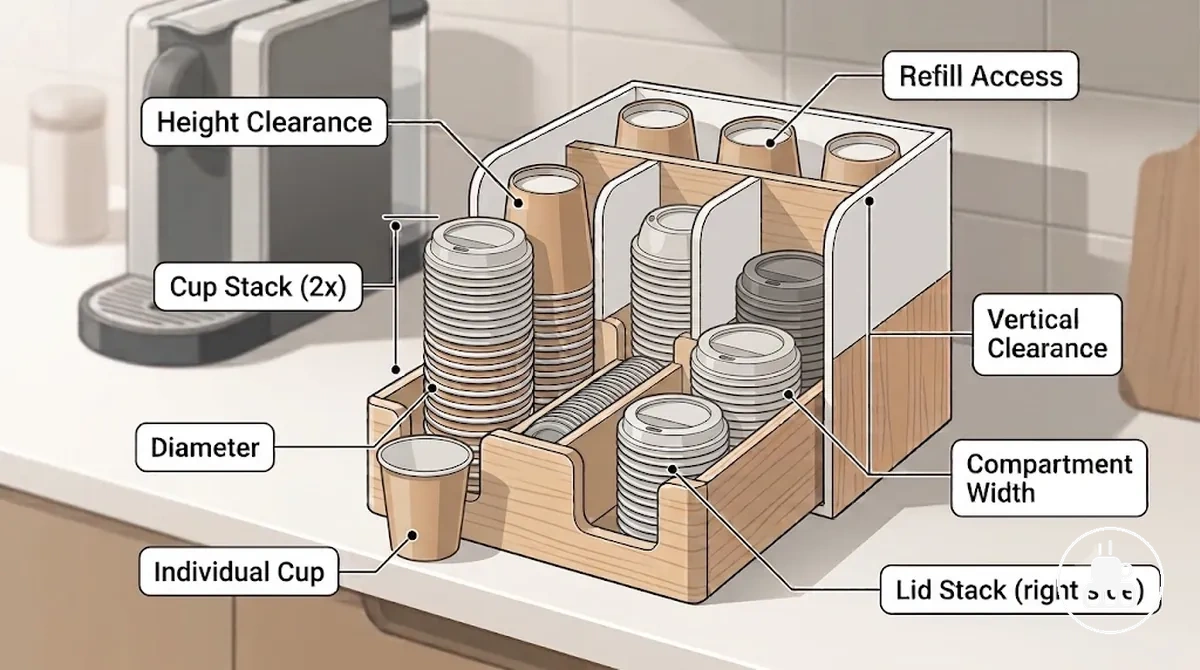 This visual shows how capacity, accessibility, stability, cleanability, and refill visibility work together to support self-service and reduce clutter around shared cups, lids, pods, stirrers, and sweeteners in a coffee station organizer setup.
In smaller offices, a lighter setup with fewer compartments may be sufficient, while high-traffic office breakrooms often require more structured organization to handle frequent use. The suitability of a coffee station organizer depends on how the shared work areas manage refill frequency and daily consumption patterns.
Suitability checklist for shared work areas:
- Capacity aligned with shared usage levels
- Clear access for multiple users
- Stable countertop placement under frequent handling
- Easy-to-clean surfaces for shared hygiene
- Visible refill tracking for supplies
- Proper fit within countertop space
Office breakroom needs versus home coffee bar styling
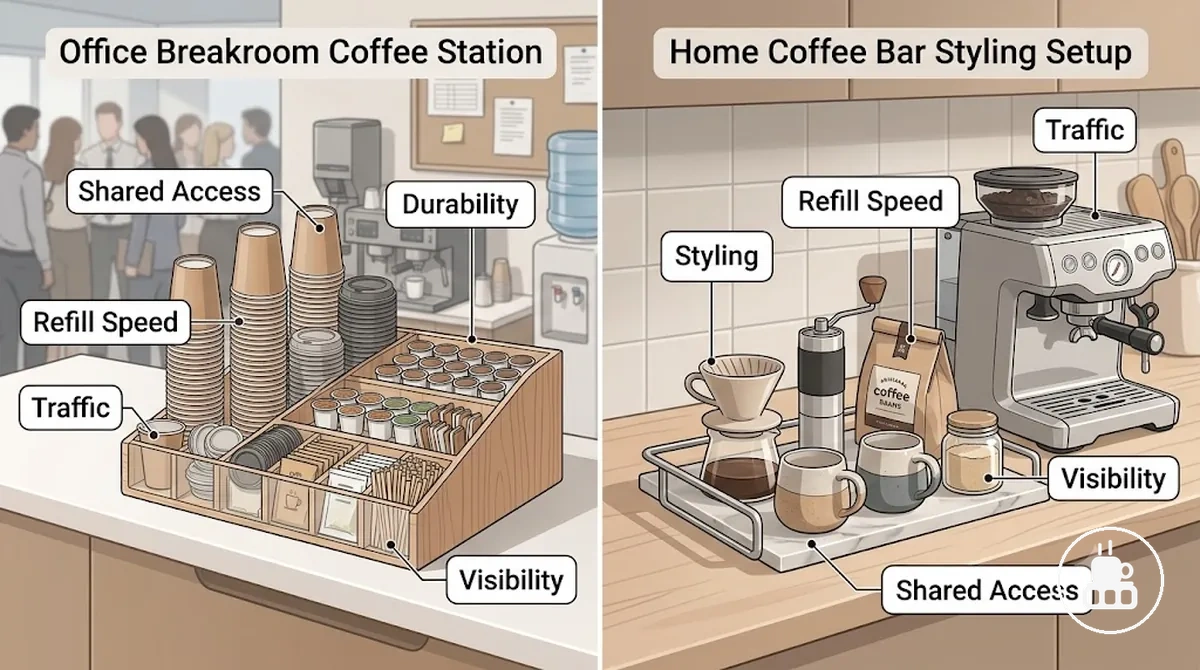
Office breakroom needs versus home coffee bar styling differ mainly in purpose, where office breakroom setups prioritize shared access, durability, visibility, and refill speed, while home coffee bar styling often focuses more on appearance and personal arrangement. This contrast shapes how a coffee station organizer performs in shared environments, especially where multiple users rely on consistent access.
Understanding what changes between office breakroom needs versus home coffee bar styling helps clarify how traffic, supply turnover, and cleaning burden influence organizer design. The comparison below shows how shared access requirements differ from low-traffic styling conditions in everyday use. This visual explanation helps clarify functional priorities in shared work areas.
| Shared work-area need | Home coffee bar styling focus |
|---|---|
| Shared access and quick use for multiple people | Personal arrangement and visual styling |
| High supply turnover with frequent refill speed needs | Lower usage with slower replenishment cycles |
| Stronger durability for daily traffic and handling | Light use with less structural demand |
| Higher cleaning burden due to shared use | Lower cleaning frequency in personal setups |
| Clear visibility for cups, lids, pods, and stirrers | Decorative presentation and styling focus |
In small teams, the gap between office breakroom needs and home coffee bar styling may feel less pronounced, but in high-traffic staff rooms or customer-facing counters, shared access, durability, and refill speed become more critical. These conditions often determine how structured a coffee station organizer needs to be.
A decorative tray alone is often not sufficient for many office breakroom setups because it may not support the level of shared access, visibility, and cleaning demand required. The distinction helps keep the focus on functional requirements rather than styling expectations when designing shared coffee stations.
Shared supply capacity for daily coffee traffic
Shared supply capacity for daily coffee traffic depends on team size, refill cadence, and how cups, lids, pods, capsules, condiment packets, napkins, and stirrers are consumed during office breakroom use. Capacity is not fixed, because daily coffee traffic changes how quickly supplies move through active storage and how often compartments need refilling.
Shared supply capacity for daily coffee traffic is best understood as active storage distribution across cups, lids, pods, capsules, condiment packets, napkins, and stirrers inside compartments. These items behave differently under shared access, so storage balance matters more than total volume. The image below shows how capacity is organized by supply type and refill need.
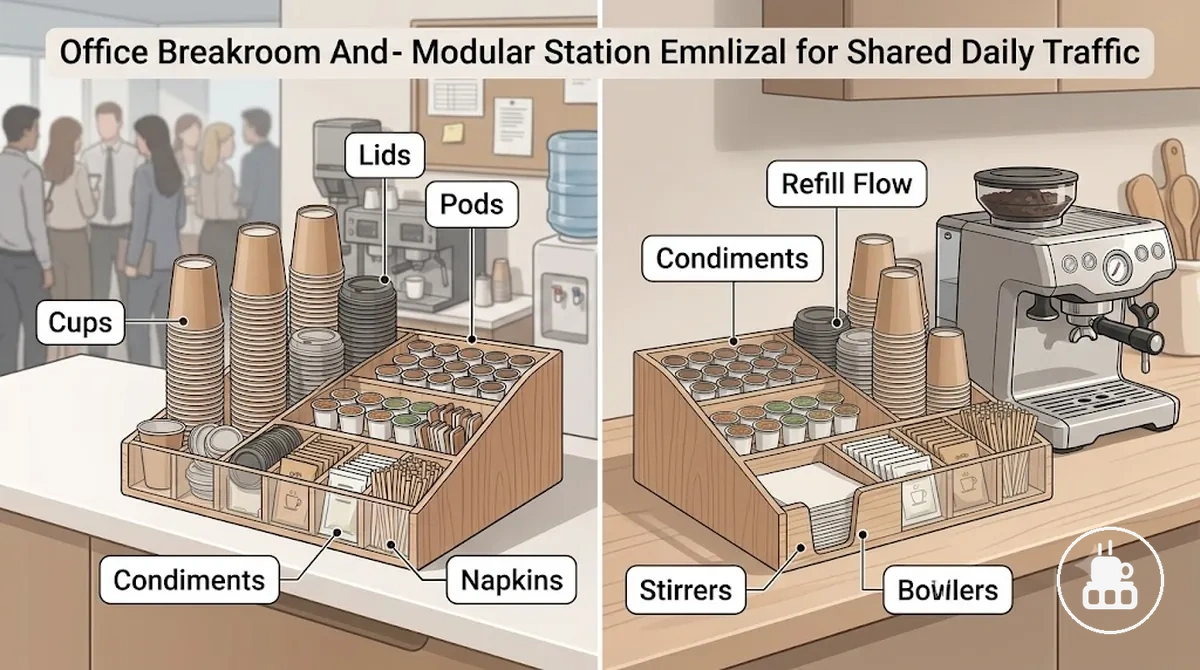
Low, medium, and high daily coffee traffic affect shared supply capacity in different ways without relying on fixed thresholds. Low traffic usually keeps active storage stable with fewer refill cycles, medium traffic requires balanced compartment allocation, and high traffic increases dependency on frequent refill cadence and faster turnover of pods, capsules, and consumables.
When daily coffee traffic increases, high-capacity compartments become more relevant because they support smoother distribution of cups, lids, and other coffee supplies while reducing interruptions caused by frequent restocking. This improves consistency in shared access across the office breakroom.
Shared supply capacity should be treated as active station storage shaped by real usage patterns rather than total stored inventory, since only frequently accessed coffee supplies affect daily workflow and compartment efficiency.
Cups, lids, pods, sweeteners, stirrers, and napkins
Cups, lids, pods, sweeteners, stirrers, and napkins need visible access in a shared coffee station because fast recognition and easy reach support smoother self-service during daily use. When these supplies are clearly arranged in compartments, users can prepare drinks faster and reduce clutter around the breakroom area.
These supply groups work best when each one is assigned a clear storage role based on how often it is used and how quickly it must be reached.
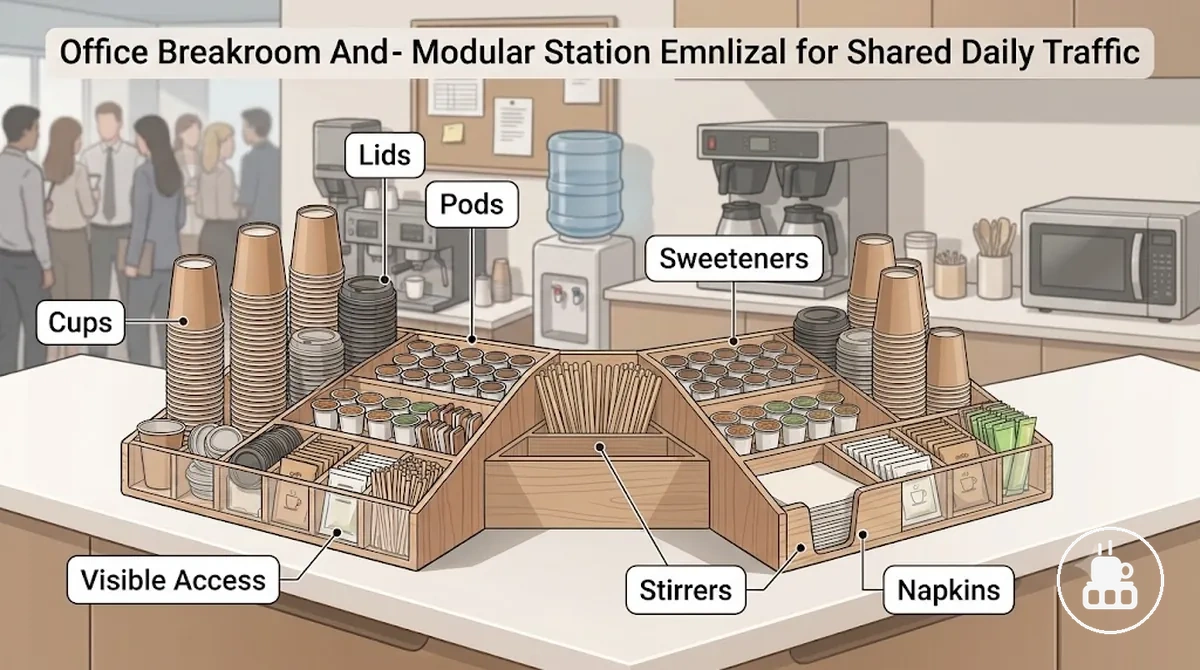
- Cups → need front visible access → stored in open drinkware compartments → improves self-service speed
- Lids → require immediate pairing with cups → placed near cup stacks → reduces spills and delays
- Pods → depend on refill visibility → stored in labeled compartments → supports smooth selection flow
- Sweeteners → need small grouped access → kept in compact trays → reduces mess and search time
- Stirrers → require quick reach access → stored in slim holders → supports faster drink preparation
- Napkins → need constant visibility → placed in side compartments → improves spill control and cleanliness
When reusable mugs or bottled sweeteners are introduced, storage behavior may shift because access patterns change and refill visibility becomes more important for maintaining consistent self-service flow. In structured setups, alignment with pods cups lids and condiments helps maintain clearer organization across shared coffee supplies.
Active station supplies versus backup stock
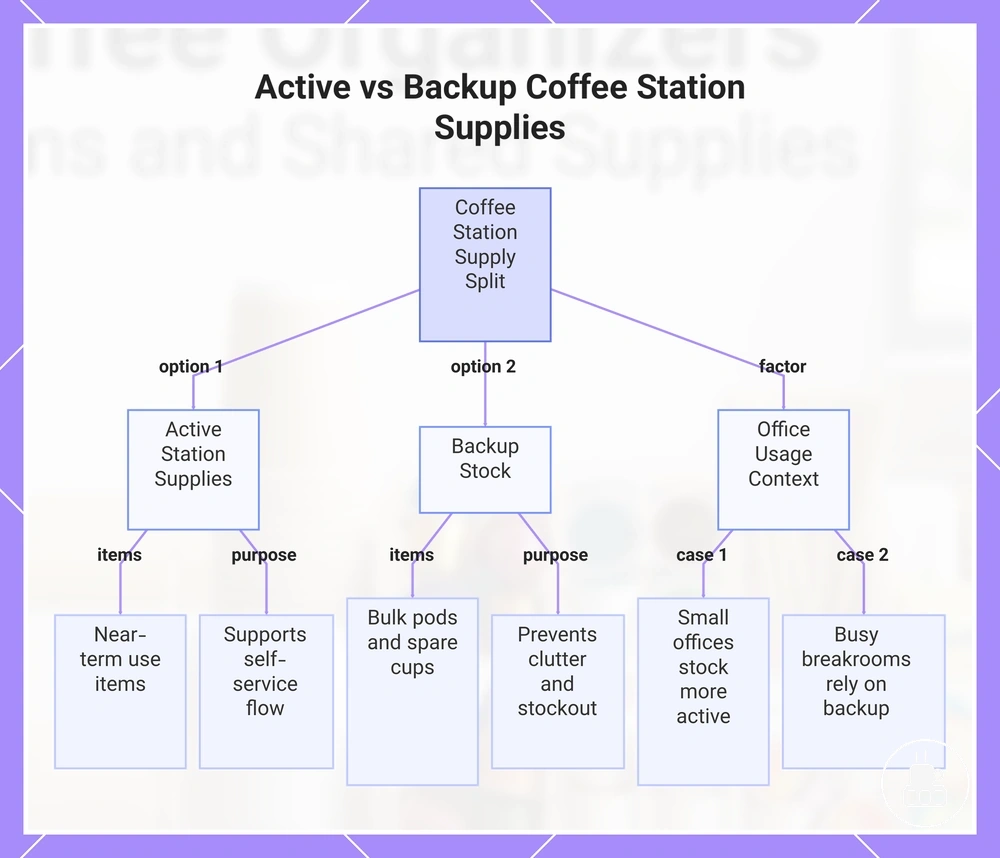
Active station supplies versus backup stock refers to the separation between near-term use items kept in the visible coffee station and reserve items stored outside the organizer. Active station supplies are used for immediate self-service, while backup stock such as bulk pods or spare cups stays outside the station to avoid clutter risk and reduce stockout risk during daily use.
Active station supplies should reflect near-term use, not total inventory, so the visible organizer remains functional and does not become overloaded.
- Keep visible → active station supplies → cups, lids, pods, sweeteners, stirrers, napkins → supports self-service flow
- Refill soon → overflow packets → short-term use → maintains refill role and reduces stockout risk
- Store elsewhere → spare cups, bulk pods → backup stock → prevents clutter risk in compartments
- Remove from station → excess coffee supplies → not immediately needed → keeps visible organizer clear
- Monitor condition → cleaning-adjacent items → separate location → supports mess control and hygiene
Small offices often keep more supplies in the visible station due to limited space and steady usage, while busy breakrooms rely more on backup stock to prevent overcrowding and maintain faster refills. The split depends on usage intensity and available counter space.
This chart illustrates the distinction between active supplies kept in the station for immediate use and backup stock stored elsewhere, along with how office usage context influences the split.
Countertop placement and breakroom traffic flow
Countertop placement in a breakroom should reduce movement, mess, queues, and restocking friction by aligning the coffee machine, water access, and bins with natural breakroom traffic flow. When placement conflicts with how people move through the space, access becomes slower and spills or congestion may increase. The goal is to keep access clear based on how users circulate during daily use.
Breakroom traffic flow connects the coffee machine, water, bins, and refill points into a shared movement path that shapes how countertop placement performs. If these elements are too spread out or block each other, users may cluster in one area, creating queues and slowing self-service while also increasing spill risk and refill delays.
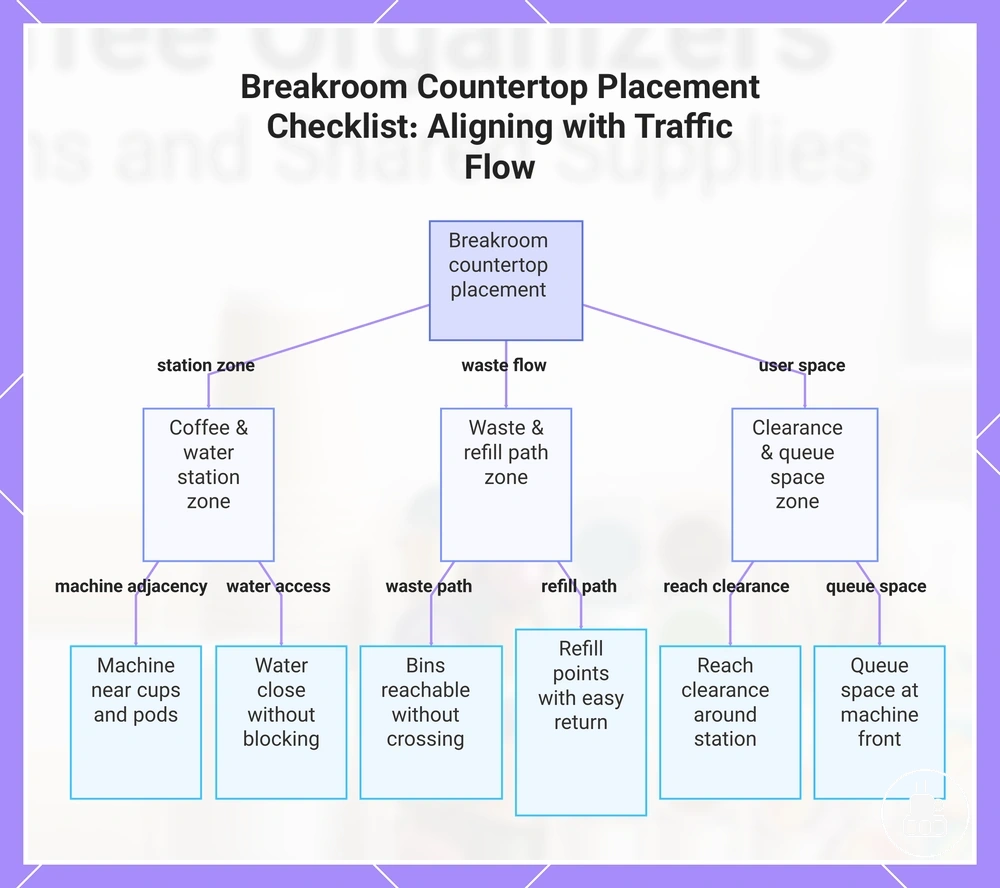
Placement checklist for countertop setup: the layout should support smooth movement between key station points without blocking shared access.
- Machine adjacency → coffee machine → near cups and pods → reduces queues and improves serving flow
- Water access → water → close but not blocking station → supports continuous use without interruption
- Waste path → bins → reachable without crossing traffic → reduces spills and congestion
- Refill path → refill points → easy return access → supports restocking without disruption
- Reach clearance → countertop space → around coffee station → improves self-service movement
- Queue space → front area → near machine output → reduces crowding during peak use
Clearance and access affect multiple users because shared use increases overlapping movement around the coffee machine and refill points. If clearance is limited, queues can form and spills may occur more easily, especially during busy periods. These effects depend on how many people use the station at the same time.
In tight counters or layouts with multiple coffee machines, placement becomes more sensitive because overlapping workflows can restrict movement and slow restocking. Shared sinks or close bin positions can also shift breakroom traffic flow, so placement should adapt to avoid blocking access paths.
Countertop placement should be treated as a usage decision shaped by breakroom traffic flow, where adjustments depend on movement patterns, access needs, and restocking behavior rather than fixed rules.
This chart breaks down the key placement categories and specific checks to align countertop layout with breakroom traffic flow, reducing congestion, spills, and restocking friction.
Placement near coffee machines, water, bins, and refill points
Placement near coffee machines, water, bins, and refill points affects how smoothly users move, access supplies, and complete tasks in a shared coffee station. When proximity is poorly aligned, usability drops through extra movement, slower access, and more frequent congestion during breakroom traffic flow. Each nearby point shapes a different part of daily interaction.
Machine adjacency, water access, bins, and refill points each influence movement patterns around the station, so their position should support clear usability rather than forcing detours. Small misalignment between these points can increase interruptions and reduce efficiency during peak use.
Local placement factors:
- coffee machines → machine adjacency → keeps cups and pods within easy reach → reduces movement between steps
- water → water access → supports direct filling flow → reduces spill risk from long handling routes
- bins → waste path → enables quick disposal → prevents clutter buildup near the station
- packet disposal → stirrers and sweeteners → keeps small waste controlled → reduces mess around counter points
- refill points → restocking path → supports smooth replenishment → reduces delays in active supplies
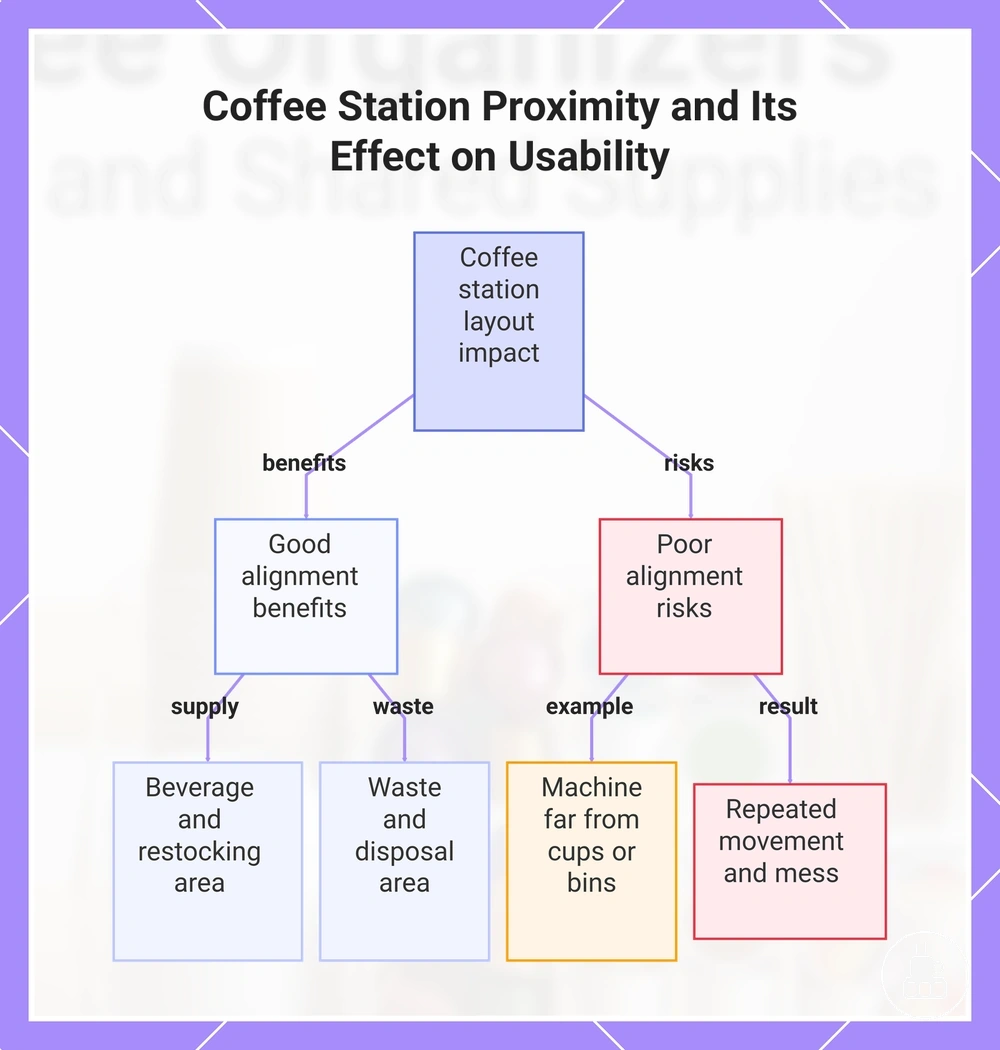
A poor proximity example is placing the coffee machine far from cups or bins, which forces repeated movement and increases mess during busy periods. Aligning machine adjacency, bins, and refill points closer together improves usability and keeps movement more direct under shared use conditions.
This chart illustrates how the proximity of coffee machines, water, bins, and refill points affects user movement and station efficiency, comparing well-aligned and misaligned placements.
Access during peak coffee times
Access during peak coffee times affects how a coffee station organizer supports multiple users when demand is highest in shared breakroom use. During peak coffee times, multiple users often converge on the coffee machine at once, so access needs to stay clear, structured, and uninterrupted to prevent blocking at the station.
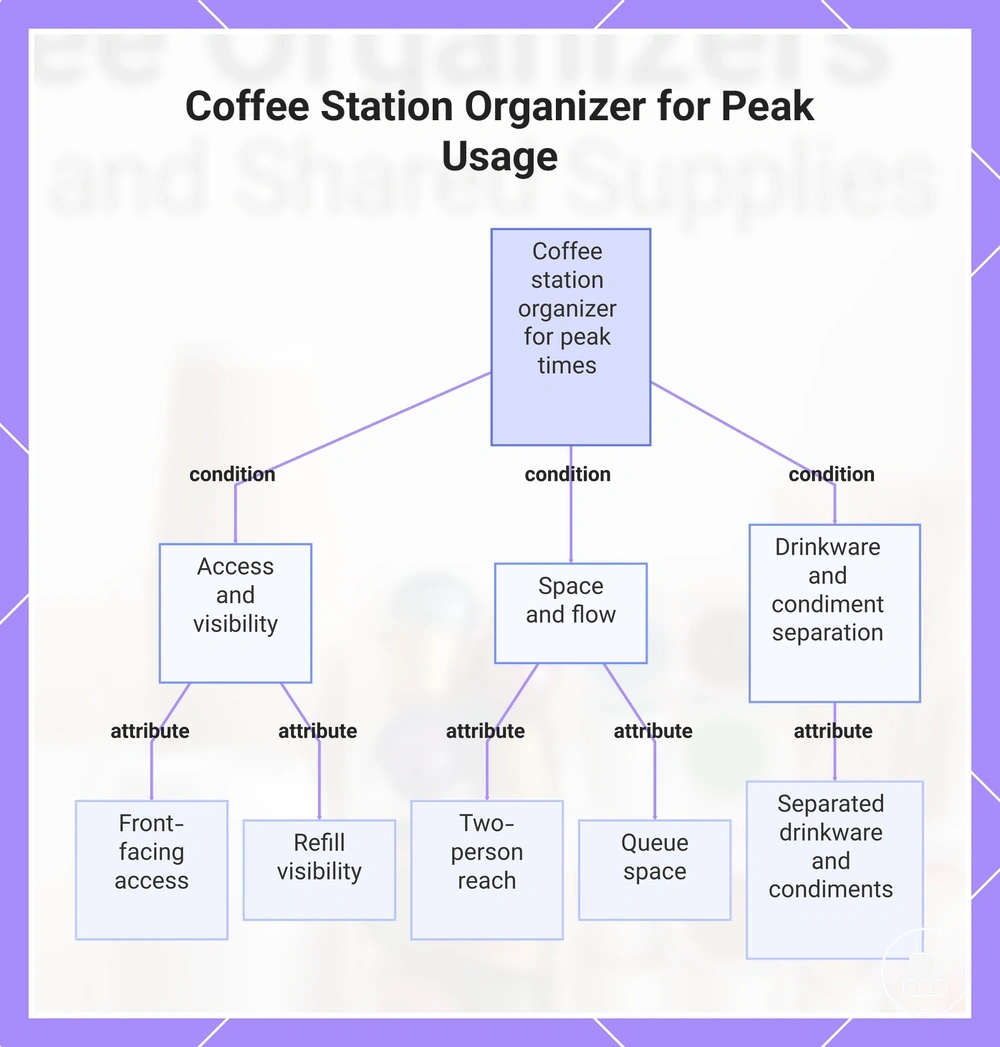
Peak coffee times create shared-access pressure where front-facing access, two-person reach, refill visibility, queue space, and separation of drinkware and condiments all influence usability. The organizer should support these conditions so users can move through the station without unnecessary overlap or delays.
- front-facing access → keeps coffee machines and cups visible → reduces searching and blocking at the station
- two-person reach → allows parallel use of drinkware and condiments → reduces bottlenecks during shared access
- refill visibility → helps identify low stock quickly → reduces interruptions during busy periods
- queue space → preserves movement area in front of the station → reduces crowding during peak use
- drinkware and condiments separation → keeps cups away from stirrers and sweeteners → prevents cross-traffic and clutter
In scheduled breaks, customer waiting areas, or meeting-room coffee points, peak coffee times may concentrate more strongly, so the same organizer setup may require clearer separation and more visible refill zones to maintain usable access during shared flow conditions.
This chart shows the main conditions a coffee station organizer must support to handle high-demand periods in shared breakrooms.
Shared-access organizer formats inside an office station
Shared-access organizer formats inside an office station depend on what employees reach for most during daily use. The most effective setup usually aligns with drinkware, condiments, and refill items that are used repeatedly at the coffee station. When the shared-access organizer formats match these priorities, movement becomes more direct and less fragmented.
In shared office environments, cup and lid dispensers, pod drawers, condiment caddies, tiered organizers, and drawer-plus-shelf formats are used to support different access patterns. Each format shapes how quickly users can reach drinkware, sweeteners, stirrers, and pods during shared use conditions. The comparison below outlines how each format behaves in practice.
| Organizer format | Best shared-use condition | Limitation to check | When to choose it |
|---|---|---|---|
| Cup and lid dispensers | High drinkware turnover and quick access needs | Can limit flexibility for mixed supply types | When cups and lids are the most frequently used items |
| Pod drawers | Structured capsule or pod access with clear visibility | May require frequent refilling in busy periods | When pod selection needs to stay organized and visible |
| Condiment caddies | Shared access to sweeteners, stirrers, and packets | Can become cluttered if overfilled | When condiments are used across multiple users |
| Tiered organizers | Mixed supply visibility in compact counter space | Less suitable for heavy single-item turnover | When space is limited and categories are mixed |
| Drawer-plus-shelf | Combined storage for drinkware and consumables | Can reduce speed if poorly separated by category | When multiple supply types need shared access balance |
Separate formats can work well when one supply type dominates usage, but combined formats may perform better depending on shared-use condition when drinkware, pods, and condiments are used together in the same shared-access flow. The decision depends on how consistently each item is accessed during the day.
A single-purpose holder is usually enough when one category clearly dominates usage and does not compete with other supplies for space. This approach depends on shared-use conditions and may not suit mixed-access stations where multiple items are used together.
Shared-access organizer formats should not be treated as ranked categories, since performance depends on access patterns, counter space, and how employees move through the station.
Cup and lid dispensers for self-serve drinkware
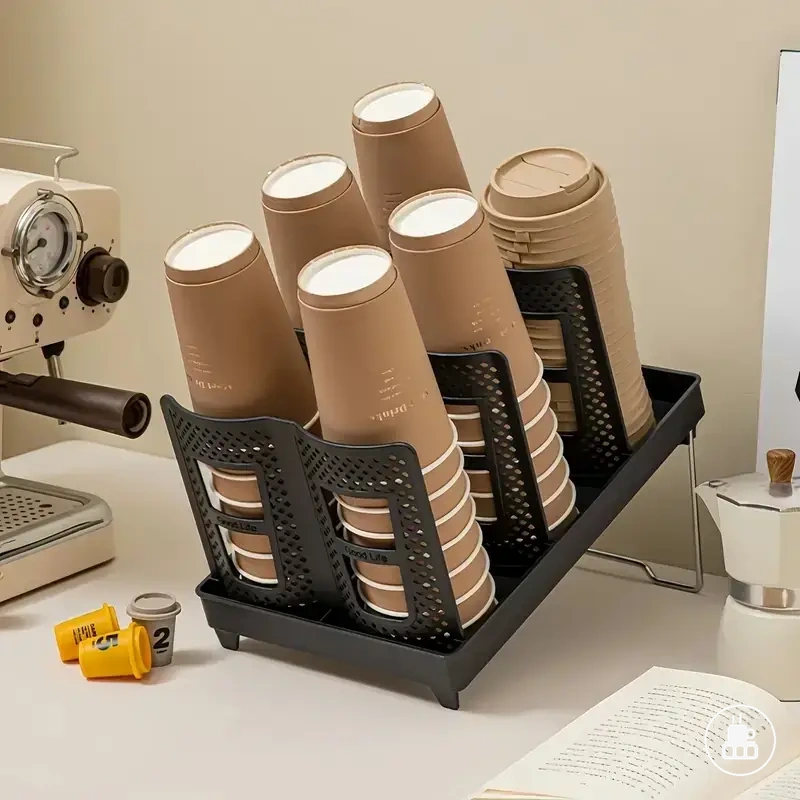
Cup and lid dispensers for self-serve drinkware support structured access when employees need quick and predictable reach to drinkware during shared station use. They are most useful when self-serve drinkware flow must stay organised and easy to navigate, helping maintain speed and tidiness in the coffee station.
These cup and lid dispensers work best when key attributes support stable handling and clear access rather than simply increasing storage volume. Each attribute affects how smoothly users interact with drinkware during peak shared use conditions.
- cup size range → supports different cup dimensions → helps match varied drinkware needs
- lid separation → keeps lid types clearly divided → reduces mix-ups during quick selection
- stack stability → maintains stable cup stacking → prevents disruption during frequent use
- front access → allows direct reach from the station front → reduces blocking and improves flow
- refill visibility → makes low stock easier to notice → supports timely replenishment
Overly tall stacks or mixed lid sizes can reduce usable access, especially when separation becomes unclear or refill visibility is reduced. In such conditions, dispenser performance may decline during shared station use.
Pod drawers and condiment caddies for high-turnover supplies
Pod drawers and condiment caddies for high-turnover supplies support shared stations where K-cups, pods, and small packets are accessed repeatedly throughout the day. They are most useful when high-turnover supplies require fast reach and frequent refilling, especially in busy self-serve drink areas where access speed and order both matter.
Pods and small packets create different access needs because capsule-based items require structured visibility while condiments depend on fast grouping and easy separation. The compact comparison below shows how pod drawers and condiment caddies handle these needs in shared use conditions.
Comparison of high-turnover storage roles:
| Aspect | Pod drawers | Condiment caddies | Limitation |
|---|---|---|---|
| Storage target | K-cups and pods in structured rows | Sweeteners, stirrers, and packets grouped together | Mixing categories can reduce clarity |
| Visibility | Capsule visibility supports faster selection | Packet compartments allow quick scanning | Poor layout can slow access |
| Refill behavior | Higher refill frequency under heavy use | Refill frequency varies by packet usage | Uneven depletion can leave gaps |
| Removable dividers | Adjust spacing for different pod types | Flexible separation for condiment types | Over-segmentation may reduce usable space |
This creates an EAV trade-off where capsule visibility, packet compartments, removable dividers, and refill frequency must align with actual high-turnover supply patterns rather than fixed storage assumptions.
When mixed pod systems and ground coffee use both exist in the same station, organizer choice may shift because access flow changes between capsule-based and non-capsule preparation methods. In these cases, the balance between pod drawers and condiment caddies depends on which supply type experiences higher turnover in daily use.
Durable and easy-clean construction for shared work areas
Durable and easy-clean construction for shared work areas matters because frequent handling, spills, and packet residue change how materials perform in daily office use. In shared work areas, material choice, surface finish, and design detailing directly influence how easily a station can be maintained under repeated contact. This makes durability and easy-clean performance a functional requirement rather than a decorative preference.
Frequent handling, spills, packet residue, and compact shared layouts all place different stress points on a coffee station organizer. Material, surface finish, edges, dividers, drawer movement, and wipe-clean access each affect how quickly residue builds up and how easily it can be removed. The table below summarises these factors through shared-use conditions and their practical effects.
In light-use breakrooms, simpler materials and basic surface finishes may remain sufficient because residue and handling frequency are lower. In high-use shared work areas, durable construction with smoother drawer movement and more accessible wipe-clean access becomes more important to maintain usability. These differences depend on how intensively the station is used rather than decorative preference.
Appearance should remain secondary when frequent handling, spills, and packet residue significantly affect maintenance effort. A visually refined surface that is difficult to clean may reduce practical usability in shared environments. Selection works best when durability and easy-clean performance guide the decision more than styling.
Material performance should not be treated as universal, since durability and cleanability vary by construction quality, surface finish, and design structure. Differences in dividers, edges, and drawer movement can change how effectively a setup handles shared work area conditions over time.
| Feature or material factor | Shared-use condition | Effect on durability or cleanability | Decision cue |
|---|---|---|---|
| Surface finish | Exposure to spills and packet residue | Smoother finishes support easier wipe-clean access | Prefer finishes that reduce residue buildup |
| Edges | Frequent handling in shared work areas | Rounded edges reduce trapped residue and wear | Choose designs with minimal buildup points |
| Dividers | Repeated compartment use | Stable partitions maintain structure under use | Check for easy-clean separation design |
| Drawer movement | High-frequency opening and closing | Smoother movement reduces wear and sticking | Prioritise consistent sliding performance |
| Wipe-clean access | Regular cleaning in shared areas | Open access improves maintenance efficiency | Ensure surfaces are easy to reach and clean |
Materials that tolerate frequent handling
Material suitability depends on frequent handling, moisture, residue, and visible wear in shared work areas. In practice, acrylic, plastic, bamboo, wood, metal, and mixed materials respond differently to these conditions, so durability and cleanability vary by construction and surface finish. The result is a trade-off between maintenance effort, appearance, and long-term wear behavior.
Acrylic, plastic, bamboo, wood, metal, and mixed materials each behave differently under frequent handling, moisture exposure, packet residue, and visible wear. Acrylic often supports clear visibility but may show scratches with repeated handling. Plastic is typically lightweight and easy to wipe clean but can show surface wear over time. Bamboo and wood may suit warmer finishes but can be sensitive to moisture depending on treatment. Metal generally handles frequent handling with higher stability but may show marks or noise. Mixed materials combine these behaviors, balancing trade-offs based on construction and intended use. Selection depends on which condition is most dominant in the breakroom.
In lower-use shared areas, lighter materials like plastic or acrylic may remain practical due to reduced residue and handling frequency. In higher-use stations, metal or mixed materials are often considered when frequent handling and moisture exposure are more constant. Suitability always depends on the operating conditions rather than appearance alone.
Home-style material preferences may prioritize appearance over function, but busy shared areas usually shift the priority toward visible wear resistance and easier maintenance behavior. Selection becomes more reliable when based on real usage conditions instead of decorative expectations.
| Material | Useful condition | Trade-off | Watch point |
|---|---|---|---|
| Acrylic | When visibility and light handling are priorities | Can show scratches under frequent handling | Visible wear over time |
| Plastic | When easy wipe-clean access is needed | May wear with extended heavy use | Surface fatigue |
| Bamboo / wood | When moderate use and natural finish are preferred | Can react to moisture depending on finish | Humidity and residue sensitivity |
| Metal | When frequent handling and stability are required | May show marks or noise | Visible surface wear |
| Mixed materials | When balancing durability and cleanability is needed | Performance depends on combination | Inconsistent wear behavior |
Removable dividers and wipe-clean compartments
Removable dividers and wipe-clean compartments reduce maintenance friction in shared coffee stations by making residue control and spill recovery easier during frequent daily use. They help manage packet crumbs, syrup residue, and creamer residue that build up through repeated handling in shared work areas, improving overall cleanability without adding extra maintenance steps.
Removable dividers and wipe-clean compartments reduce maintenance friction by improving how shared coffee stations handle refill resets, spills, and residue buildup. The following mini-checklist shows how specific design features affect cleaning access and daily maintenance behavior.
- lift-out divider → supports quick removal → improves refill reset after use
- smooth corner → reduces trapped residue → limits buildup from packet crumbs
- residue path → guides syrup residue and creamer residue → reduces cleaning friction
- drawer access → improves reach into compartments → supports spill recovery
- refill reset → restores compartment order quickly → reduces maintenance effort
These features help reduce maintenance friction in shared coffee stations by improving access and limiting buildup in high-touch areas, especially where frequent refilling increases exposure to residue. For broader maintenance guidance, see cleaning shared coffee organizers.
In high-use shared coffee stations, removable dividers and wipe-clean compartments become more valuable because frequent handling increases the chance of spills and residue accumulation. In lighter-use environments, they still improve cleanability but with less impact on overall maintenance load.
Choosing an office coffee station organizer for shared use
Choosing an office coffee station organizer for shared use depends on aligning shared traffic, supply mix, counter space, materials, cleanability, and value with real refill habits. The office coffee station organizer should fit shared use conditions so daily access stays smooth and predictable without unnecessary congestion or maintenance issues.
These decision criteria work together because capacity affects shared traffic flow, access influences queue movement, and footprint limits usable counter space. Materials and cleanability shape long-term maintenance effort, while value reflects how well refill habits are supported in real office conditions. A structured view of these factors helps compare options before choosing an office coffee station organizer.
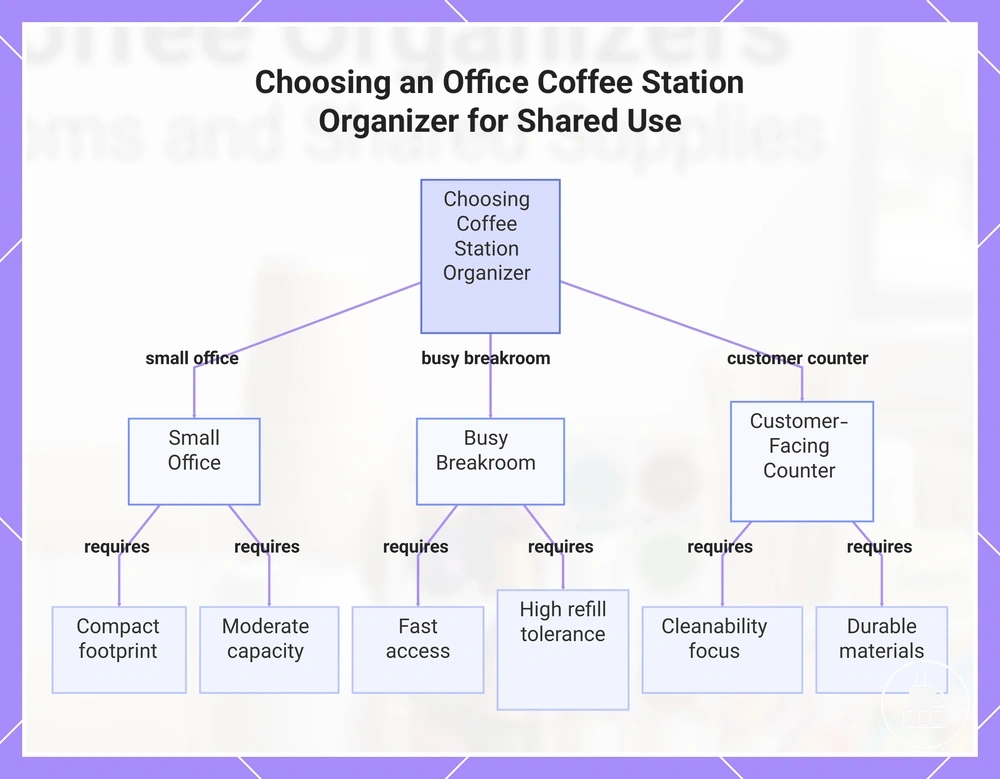
Small offices usually prioritise compact footprint and moderate capacity, while busy breakrooms need faster access and higher refill tolerance to handle frequent use. Customer-facing counters may require stronger focus on cleanability and materials because usage is more unpredictable and continuous. The right configuration depends on how shared use intensity changes across these environments, leading to different trade-offs in capacity, access, and value.
Choosing an organizer for shared use depends on balancing capacity, access, footprint, materials, cleanability, and value rather than focusing on a single factor. This is why choosing an organizer for shared use works best when evaluated as a combined decision process across all criteria.
Office coffee station organizer examples should be treated as illustrative decision support to show how different setups align with shared use needs, rather than as ranked or guaranteed solutions.
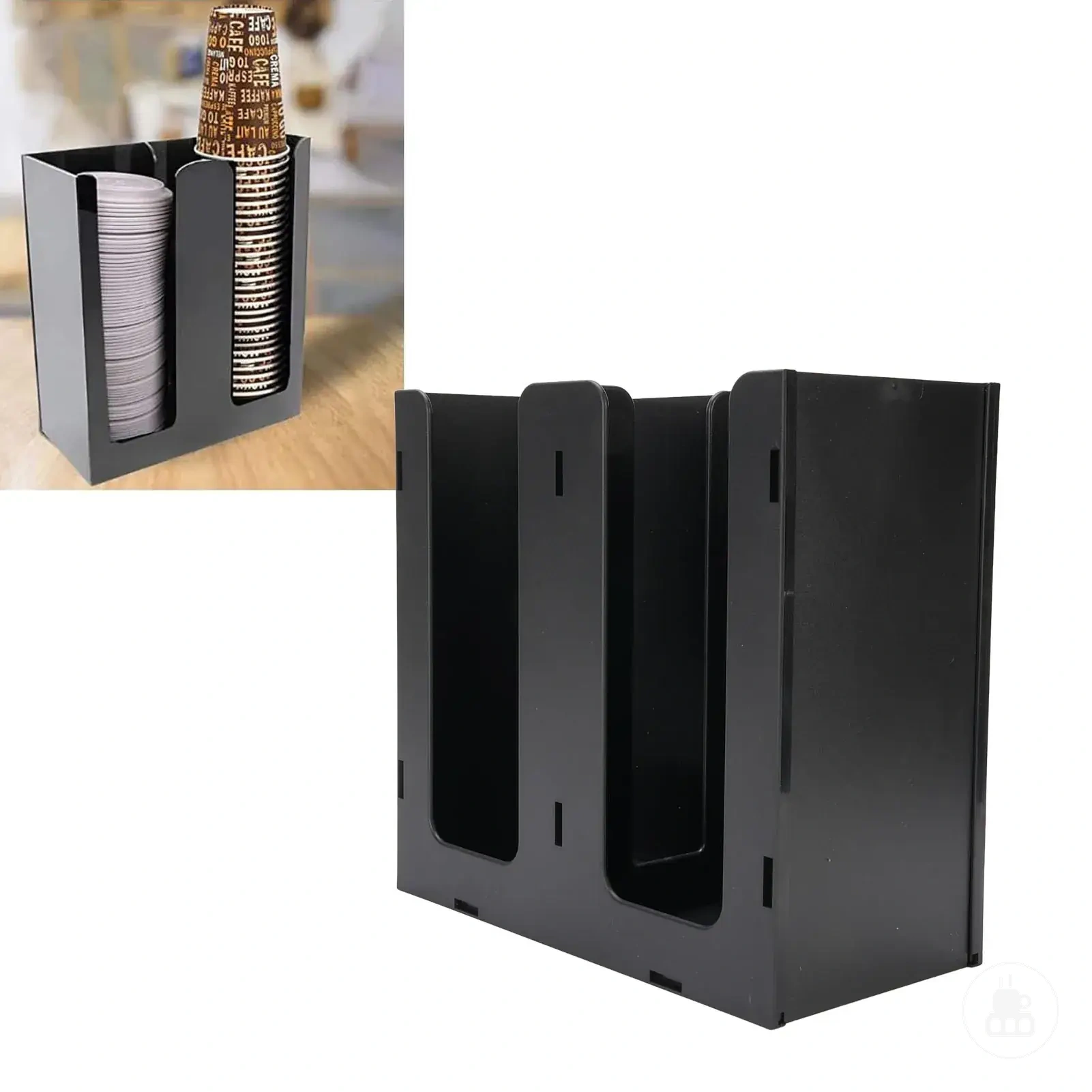
Here are product examples that may make comparison easier. Before buying, always review the compatibility criteria, essential features, and product details.
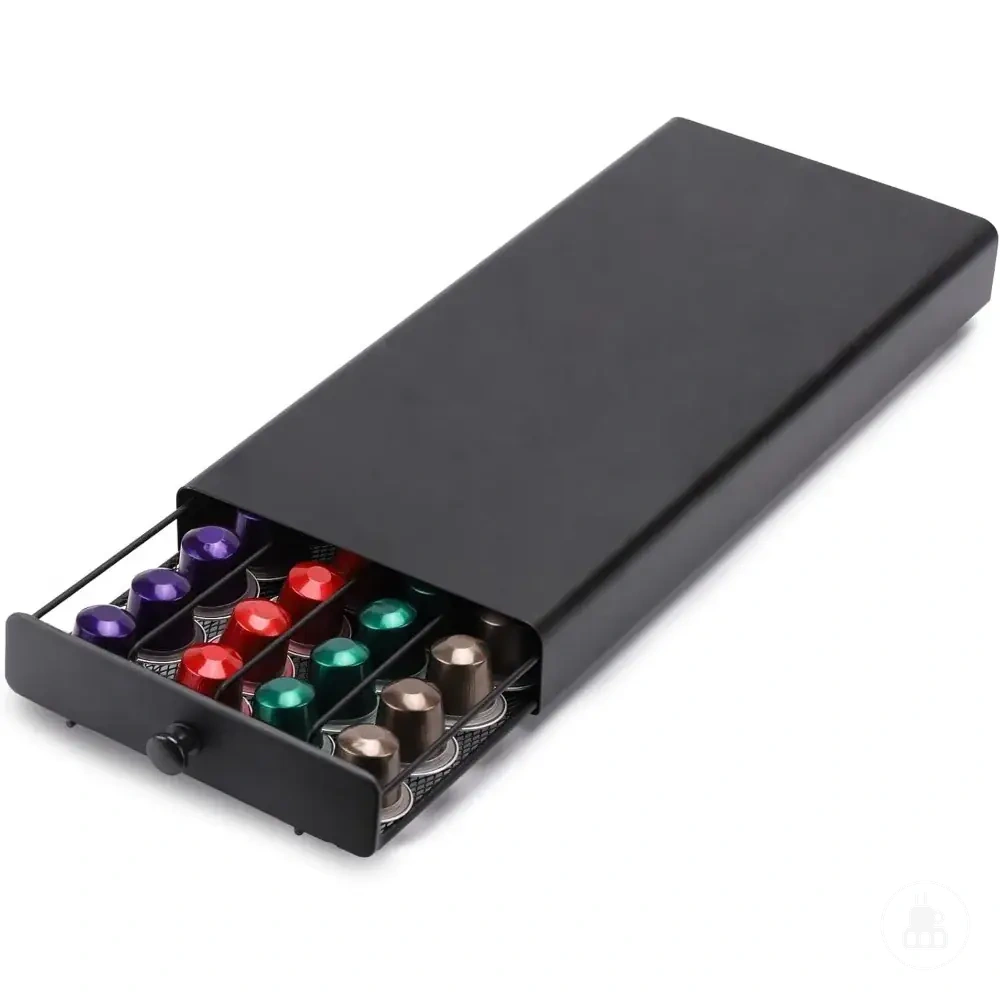
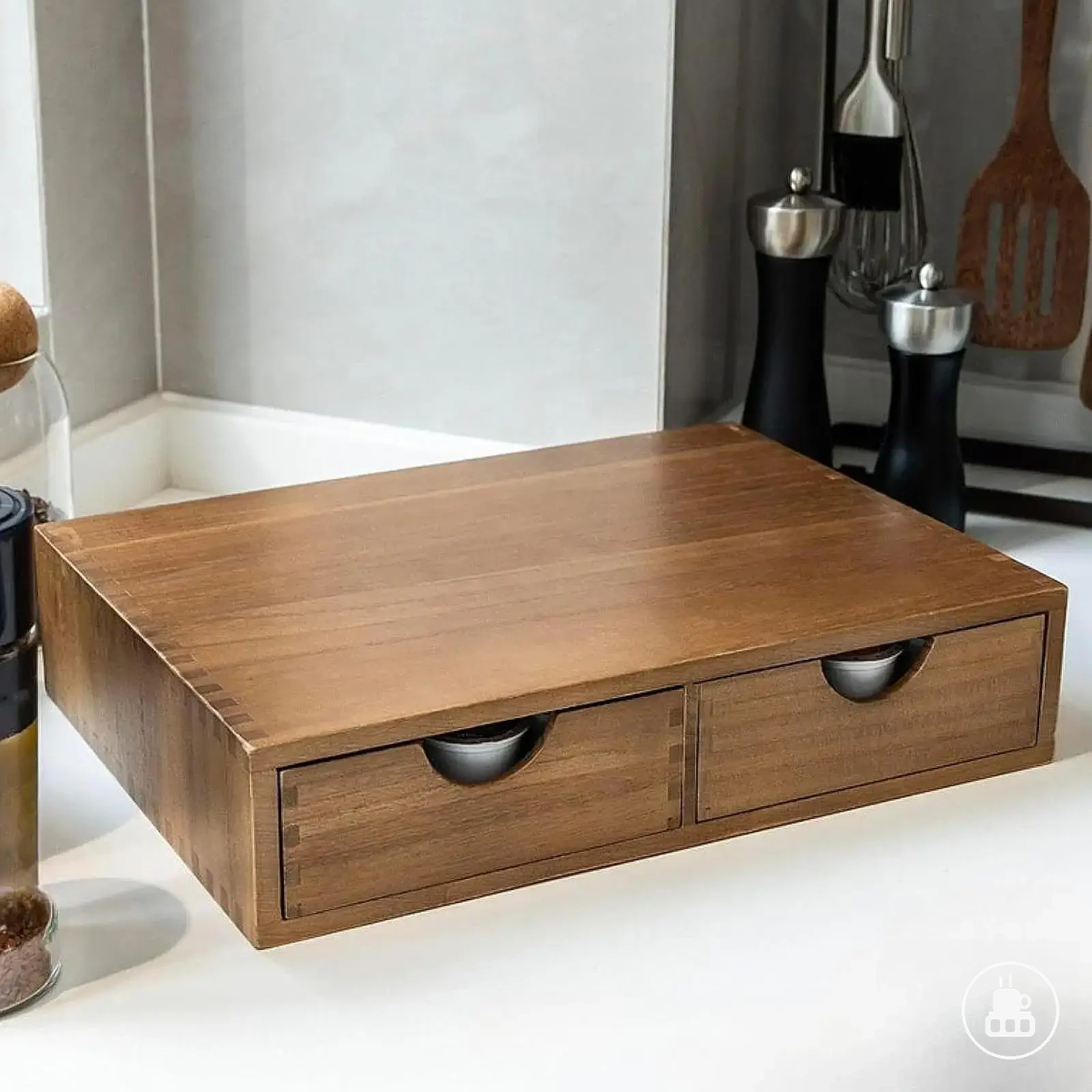
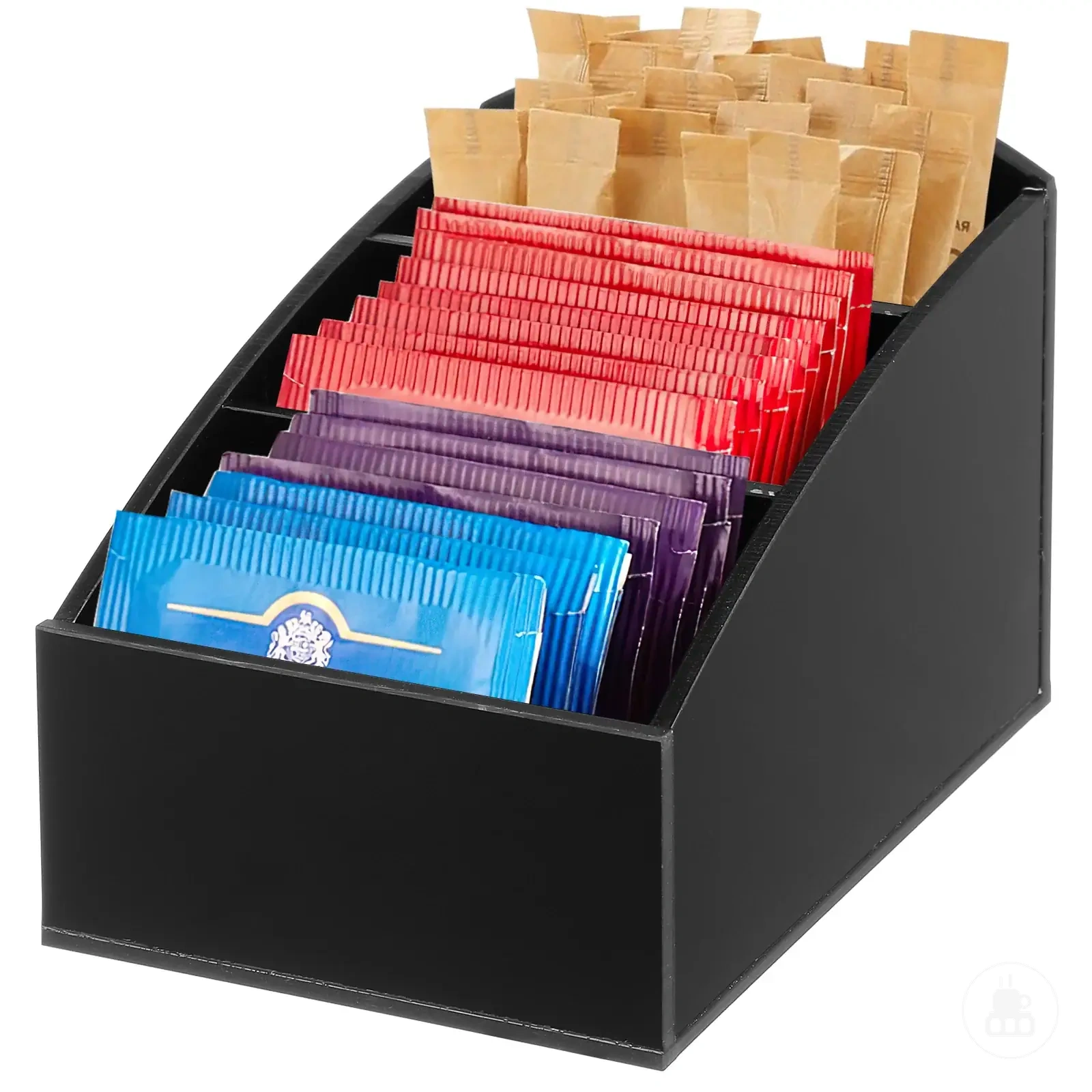
This chart maps how the key decision criteria for an office coffee station organizer vary across small offices, busy breakrooms, and customer-facing counters.
Match capacity to team size and refill frequency
Capacity for a shared coffee station organizer depends on team size and refill frequency rather than a fixed universal count. It should align with how many people use the station and how often supplies are replenished during the day. This makes capacity target a conditional decision based on shared use behavior.
Capacity planning works by translating real usage variables into active storage needs. Staff count and visitors increase demand, while coffee-drinking frequency affects how quickly supplies are consumed. Pod format influences how storage is structured, cup usage impacts front-access demand, and refill schedule determines how often restocking is required. The mini-checklist below connects each variable to its storage implication:
- staff count → higher count → increased capacity target → more active storage required
- visitors → occasional spikes → flexible buffer needed → prevents temporary shortages
- coffee-drinking frequency → high usage → faster depletion → higher refill frequency required
- pod format → capsule system → structured storage needed → defined drawer capacity
- cup usage → frequent serving → higher access demand → supports smoother flow
- refill schedule → infrequent refills → larger storage requirement → prevents interruptions
Small offices usually operate with lower active storage needs due to fewer users and more predictable refill habits. Busy breakrooms require higher capacity targets because turnover is faster and refill frequency must compensate for continuous usage differences.
Balance commercial-style function with counter space and value
Value in choosing an office coffee station organizer comes from balancing commercial-style function with counter space and real shared-use needs, rather than scaling beyond what the station can practically support. The best choice supports shared use without oversizing the setup, which helps maintain practical value in daily operation.
Balancing commercial-style function with counter space and value depends on evaluating durability, capacity, footprint, refill effort, material upkeep, and price-value trade-off in relation to actual use conditions. Durable construction may improve long-term shared-use performance, while compartment count affects organization efficiency. A smaller footprint can preserve counter space, but only if it still supports adequate capacity. Refill effort and material upkeep influence ongoing usability in busy environments. These factors together define how practical value is achieved through design trade-offs.
- durability → higher durability → longer shared-use lifespan → supports stable value over time
- capacity → adequate capacity → prevents overcrowding → maintains functional balance
- smaller footprint → compact design → preserves counter space → improves layout efficiency
- refill effort → lower effort → smoother daily operation → reduces disruption
- material upkeep → easier cleaning → lower maintenance load → improves usability
In some cases, paying more for durability can be justified when shared use is frequent and wear is high, while in smaller setups a smaller footprint may deliver better value if it preserves counter space without reducing essential capacity. Value depends on matching commercial-style function to real conditions rather than selecting the most feature-heavy option.