Coffee Station Organizer Fit Checklist for Countertop Machines and Supplies
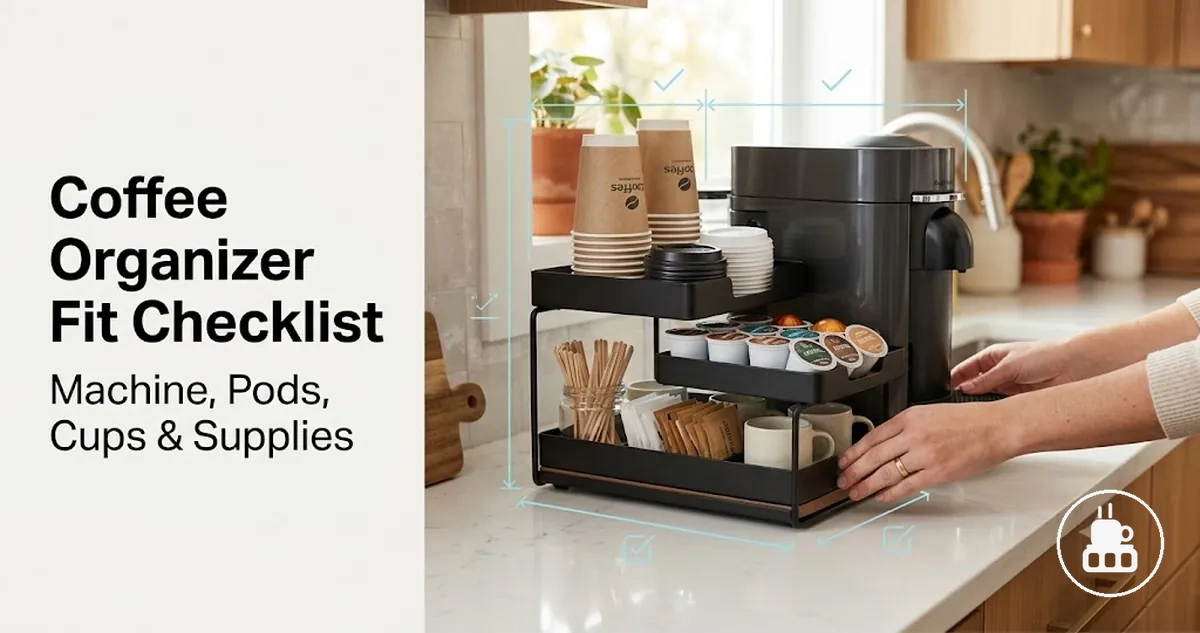
A coffee station organizer fit checklist depends on the counter area, the coffee machine position, the supply mix, and the access path around daily-use items. The purpose is to decide whether a coffee station organizer can sit near the machine, hold the needed supplies, and remain usable without blocking water access, cup reach, cord routing, or drawer movement.
A fit checklist for coffee station organizers is a decision frame, not a universal compatibility promise. Storage fit means the organizer can support the supplies and placement pattern; technical compatibility depends on the brewer layout, pod format, cup size, cabinet clearance, and how the counter is used.
Use the checklist to reject weak fits early, compare likely trade-offs, and keep compact storage conditional. A smaller organizer may help a tight counter, but it can reduce capacity or visibility; a larger organizer may hold more supplies, but it may crowd the machine area or limit daily reach.
What Organizer Fit Means for a Coffee Station
Organizer fit means how well a coffee station organizer matches the available counter space, the coffee machine area, and the supplies used every day. A good fit can support convenient access and efficient storage, while a poor fit may reduce usable workspace or make routine coffee preparation less practical. Organizer fit describes storage suitability rather than technical compatibility with a coffee machine.
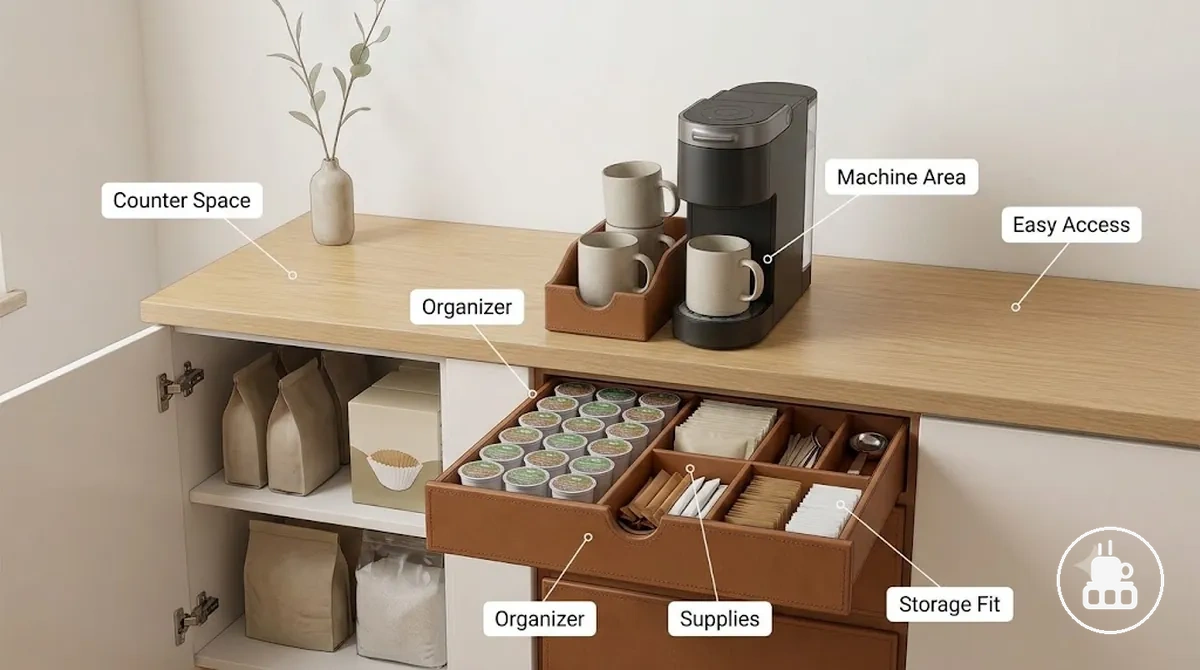
Organizer fit depends on the relationship between the organizer, the surrounding workspace, and the intended storage needs. Counter layout, available clearance, and the size and type of coffee supplies can all influence whether an organizer provides comfortable access or requires compromises in daily use.
This working definition provides the basis for the remaining checklist. Later sections evaluate specific fit conditions, but the purpose here is to establish that organizer fit is determined by storage layout and usability instead of assuming that any organizer suits every coffee station.
Storage Fit Versus Brewer and Pod Compatibility
Storage fit and brewer or pod compatibility refer to different compatibility checks. Storage fit depends on whether a coffee station organizer suits the available counter space, supply layout, and everyday access, whereas brewer or pod compatibility depends on whether a coffee machine is designed for a particular pod format. An organizer can suit a countertop arrangement without affecting how a brewer accepts or uses pods.
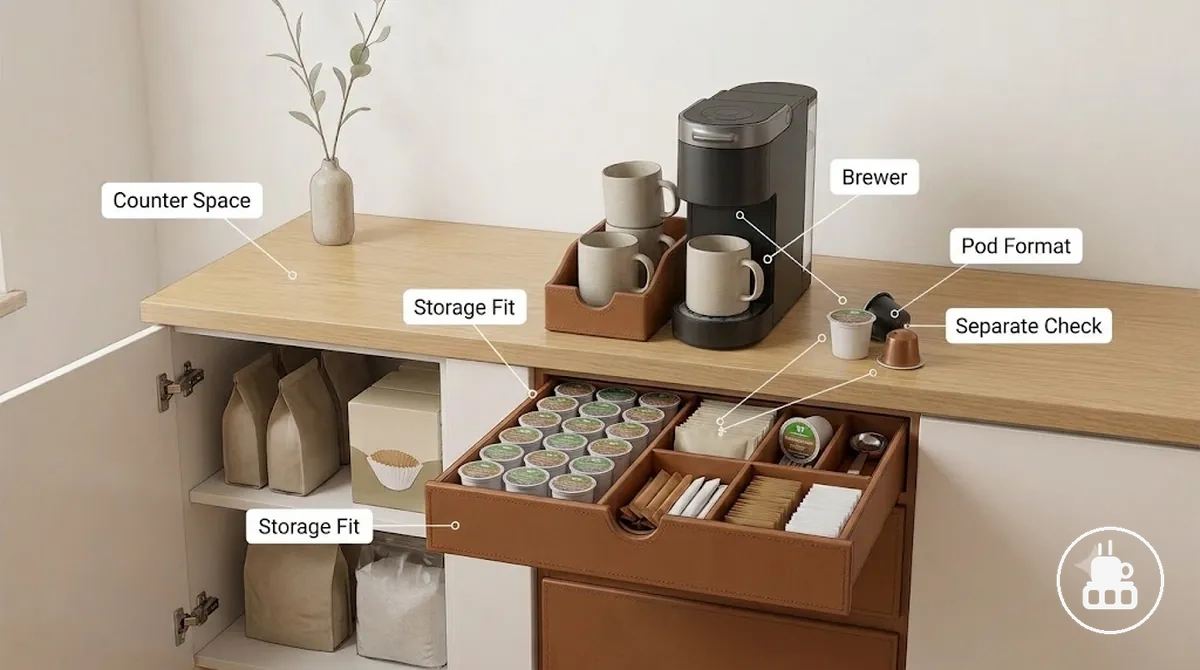
Storage fit may vary with counter layout, available clearance, organizer capacity, and the size of stored supplies. Brewer or pod compatibility may vary with machine layout and pod format, so storing a pod neatly in an organizer does not indicate that every brewer can use that pod.
| Storage Fit | Brewer and Pod Compatibility |
|---|---|
| Evaluates organizer placement and storage usability. | Evaluates whether a brewer accepts a specific pod format. |
| Depends on counter space, access, and supply arrangement. | Depends on machine layout and pod format. |
| Supports an efficient storage layout. | Relates to brewing suitability rather than organizer placement. |
Keeping these checks separate helps avoid confusion during organizer selection. Confirm that the organizer suits the available storage space, then assess brewer and pod compatibility independently when a coffee machine uses a specific pod format.
Countertop and Coffee Machine Area Clearance
Countertop clearance and the coffee machine area should provide enough space for an organizer without obstructing normal use. A suitable layout depends on the available workspace, cabinet clearance, machine design, and access to frequently used supplies. When clearance is limited, organizer placement may need to change to maintain comfortable access around the coffee machine.
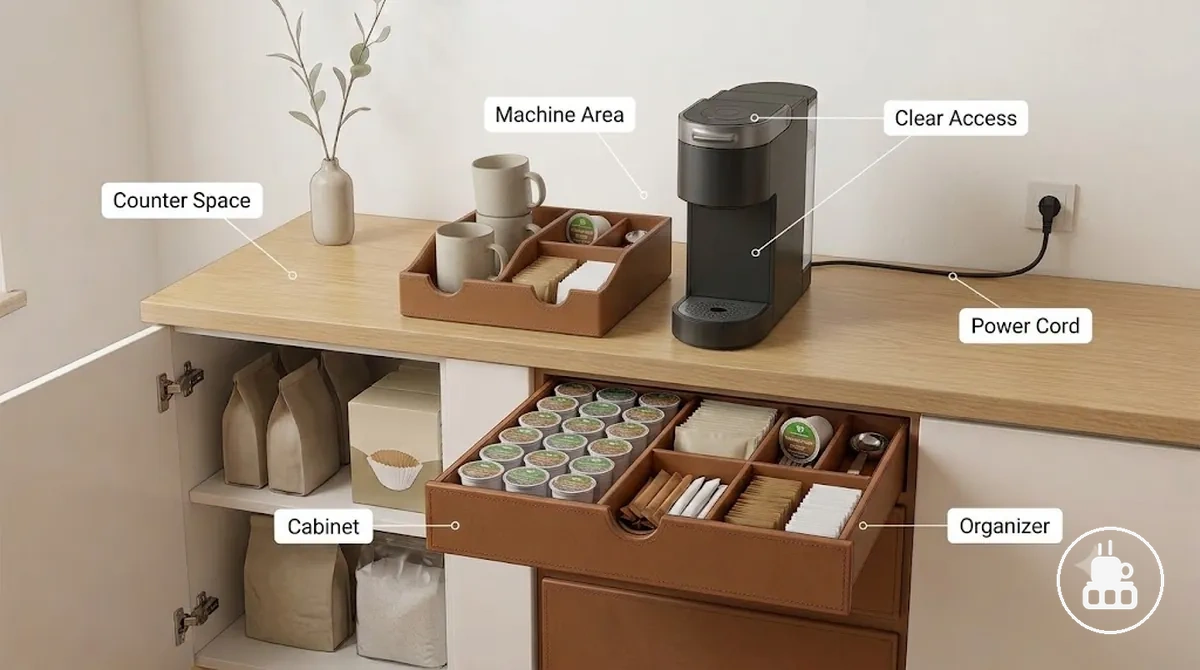
Check that the organizer does not block machine controls, water refilling, cup placement, or access to stored pods and accessories. Also consider cabinet height, power cord routing, and the opening direction of drawers or lids, as these factors can influence usable clearance even when the countertop appears large enough.
Assessing the complete machine area rather than the organizer alone can reduce the chance of obstructed access after setup. A dimensions and fit checklist can help evaluate countertop space, access paths, and organizer placement together without relying on unsupported measurement assumptions.
Footprint, Height, and Side Access
Footprint, height, and side access should be evaluated independently because each can affect placement in a different way. An organizer may fit the available counter footprint while its height limits cabinet clearance or its position reduces comfortable access to the coffee machine from the side.
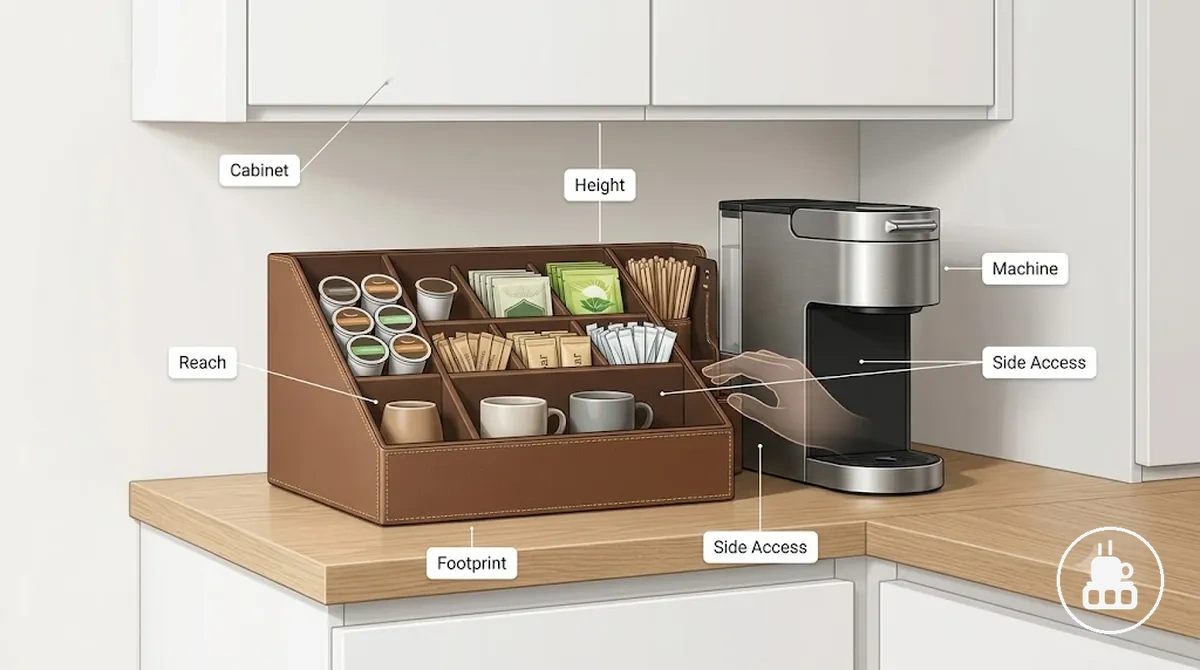
- Footprint: Check that the organizer fits the intended counter position without reducing the working area around the coffee machine.
- Height: Confirm that the organizer leaves sufficient clearance beneath cabinets or shelves and does not interfere with machine components that open upward when applicable.
- Side Access: Ensure there is comfortable reach to controls, water reservoirs, pod compartments, or other side-access areas, as access requirements may vary with machine layout.
Reviewing these three checks together helps identify physical-fit issues that may not appear from overall dimensions alone. A smaller footprint may still require additional height clearance or unobstructed side access depending on the countertop position and surrounding layout.
Water Tank, Power Cord, and Daily Reach Space
Access to the water tank, power cord, and daily reach space depends on how the organizer is positioned beside the coffee machine. An organizer may fit the available space but still reduce convenience if it limits water refilling, crowds the power cord route, or makes frequently used controls and supplies harder to reach.
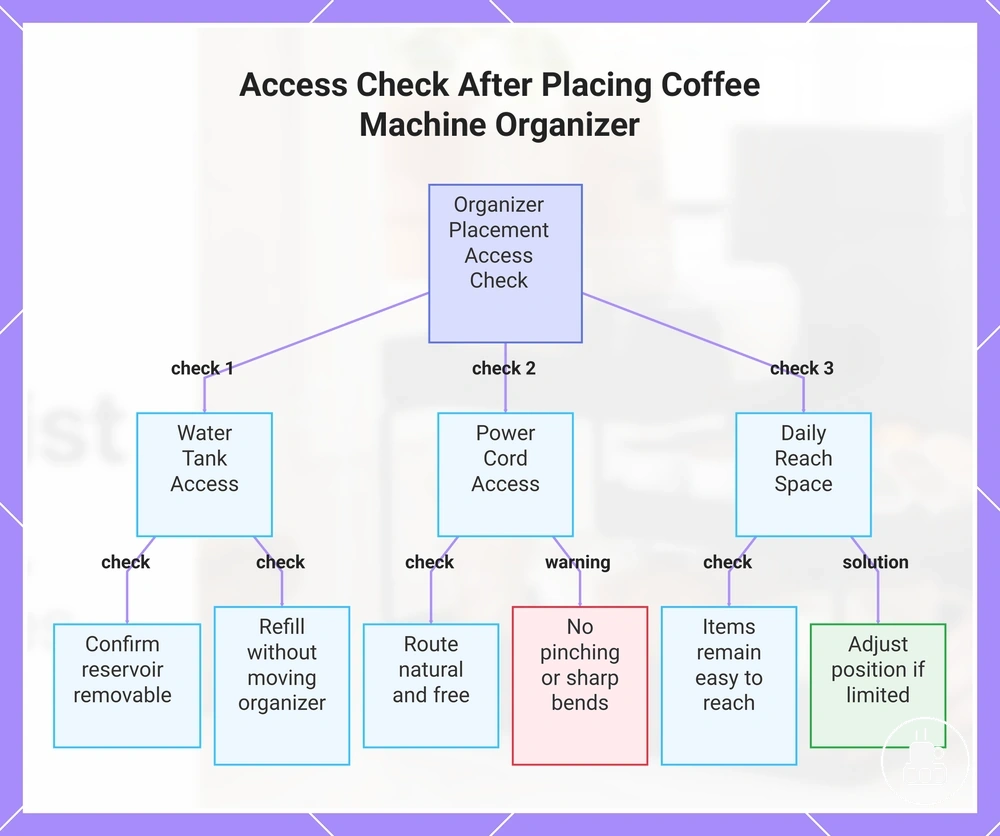
After placing the organizer, check these access points:
- Water Tank: Confirm that the reservoir can be removed, refilled, or opened without moving the organizer when the machine design requires regular access.
- Power Cord: Check that the cord follows a natural route without being pinched, sharply bent, or obstructed by the organizer. Cord paths can vary with counter layout and machine position.
- Daily Reach Space: Ensure cups, controls, pods, or other frequently used items remain easy to reach without stretching around the organizer. Access requirements may vary with coffee machine design and countertop layout.
If the organizer limits any of these access points after placement, adjusting its position may improve everyday usability even when the overall dimensions appear suitable.
This chart shows the three key access points to verify after placing an organizer beside a coffee machine to ensure everyday usability.
Supply Fit for Pods, Cups, Lids, and Condiments
Supply fit depends on whether the organizer matches the size, shape, quantity, and daily use of pods, cups, lids, and condiments. A suitable layout keeps frequently used supplies accessible, while storage efficiency may vary when item dimensions or refill patterns differ.
Evaluate each supply group separately instead of assuming one compartment arrangement suits every item. Pod dimensions, cup stack height, lid diameter, condiment containers, and the number of items stored can all influence how well an organizer supports everyday use.
| Supply Type | Primary Fit Check | What May Vary |
|---|---|---|
| Pods | Compartment size and access | Pod format, quantity, and refill frequency |
| Cups | Stack height and diameter | Cup size and nesting shape |
| Lids | Storage diameter and separation | Shape and matching cup size |
| Condiments | Container size and retrieval | Packet, sachet, or small container dimensions |
When supplies differ in size or are used at different rates, assigning separate storage areas can make access more consistent without assuming universal compatibility across organizer designs. For a more detailed review of individual storage considerations, see pods cups and condiments compatibility.
Pod and Capsule Storage Fit
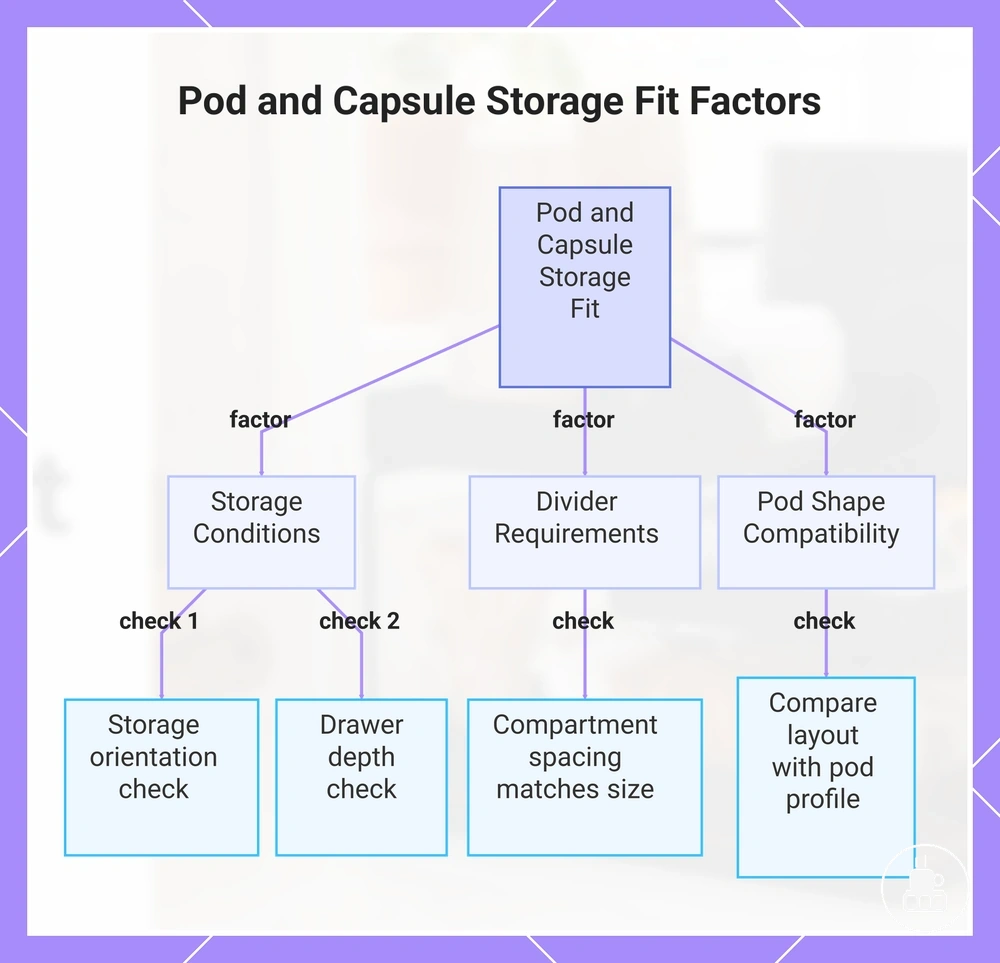
Pod and capsule storage fit depends on whether the organizer accommodates the shape, size, and storage orientation of the items being stored. Storage suitability may vary with pod shape, capsule diameter, drawer depth, divider width, and how frequently pods or capsules are accessed.
- Storage Orientation: Check that pods or capsules can be stored in the intended horizontal or vertical position without making retrieval less convenient.
- Divider Width: Confirm that compartment spacing matches the pod or capsule size instead of assuming one divider layout suits every format.
- Drawer Depth: Ensure the storage area provides enough depth for the selected storage orientation while keeping items accessible.
- Pod Shape: Compare the organizer layout with the pod or capsule profile, as different shapes may influence storage efficiency and access.
Reviewing these conditions together can help identify storage-fit differences between pod and capsule formats without assuming universal compatibility across coffee station organizers.
This chart shows the key factors that determine whether a coffee station organizer fits different pod and capsule formats, along with the checks for each factor.
Cup, Lid, and Stirrer Stack Fit
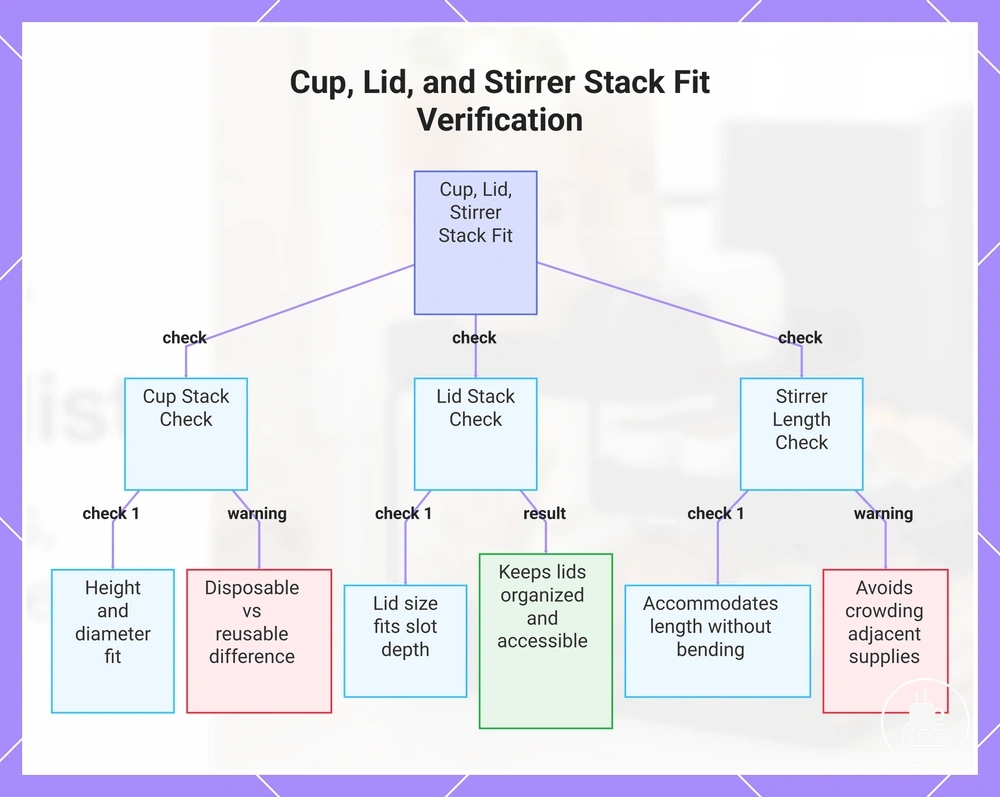
Cup, lid, and stirrer stack fit depends on whether the organizer supports stable storage while keeping frequently used supplies easy to reach. Storage suitability may vary with cup diameter, cup height, lid size, slot depth, stirrer length, and how often each item is used.
- Cup Stack: Check that stacked cups fit the available compartment height and diameter without becoming unstable or difficult to remove.
- Lid Stack: Confirm that lid storage matches the lid size and slot depth so lids remain organized and accessible.
- Stirrer Length: Ensure the storage space accommodates stirrer length without bending or crowding adjacent supplies.
- Access Pattern: Position frequently used cups, lids, and stirrers where they can be reached without disturbing nearby stacks.
Disposable cup stacks and reusable mugs may require different storage approaches because their shapes and stacking behavior can differ. Reviewing each supply type separately can help identify a practical organizer layout without assuming universal compatibility.
This chart shows the key checks for ensuring that cups, lids, and stirrers stack fit properly in an organizer, including dimension fits and usage considerations.
Condiment and Small Supply Fit
Condiment and small supply fit depends on whether the organizer provides enough visibility, separation, and refill access for frequently used items. Storage suitability may vary with item size, compartment depth, and refill frequency, so compatibility should be evaluated by the supplies being stored rather than by the organizer alone.
- Visibility: Store small supplies where individual items remain easy to identify without searching through deep compartments.
- Separation: Keep different condiments or small accessories in dedicated compartments to reduce mixing and simplify retrieval.
- Compartment Depth: Check that shallow items remain accessible, as deeper compartments may make smaller supplies harder to reach.
- Refill Access: Position frequently replenished items where they can be added or removed without disturbing nearby supplies.
Reviewing these conditions together can help maintain organized storage for loose items while recognizing that compatibility varies by item size, compartment layout, and refill frequency rather than assuming one coffee station organizer suits every accessory.
Compartment Layout and Access Checks
Compartment layout should be evaluated by how it supports visibility, reach, refill access, and the intended supply mix. A suitable layout depends on compartment arrangement, access direction, refill frequency, and whether fixed compartments, dividers, drawers, or tiers match everyday use rather than any single layout style.
| Layout Feature | Primary Attribute | Usability Effect |
|---|---|---|
| Fixed Compartments | Dedicated storage positions | Can keep frequently used supplies separated when item sizes remain consistent. |
| Adjustable Dividers | Flexible compartment width | May adapt to changing supply mixes and different item sizes. |
| Drawers | Enclosed storage | Can reduce surface clutter, although deeper compartments may reduce visibility for smaller items. |
| Tiered Sections | Layered organization | May improve visibility when frequently used supplies remain within comfortable reach. |
When comparing layouts, consider refill frequency, reach direction, and whether different supplies remain visible without crowding adjacent compartments. For a broader evaluation of storage volume and organization, see compartments and storage capacity.
Removable Dividers and Adjustable Sections
Removable dividers and adjustable sections provide value when storage requirements change over time. Their usefulness depends on changing supply sizes, mixed items, and refill patterns, while fixed compartments may remain more practical when the same supplies are stored in consistent quantities.
- Removable Dividers: Can create or remove compartments to reduce unused space when stored items vary in size.
- Adjustable Sections: May accommodate changing combinations of supplies without requiring a fixed compartment arrangement.
- Mixed Supplies: Flexible layouts can help separate different item sizes, although the benefit depends on the supplies stored most often.
- Fixed Compartments: May provide more predictable organization when supply sizes and refill patterns remain consistent.
Choose adjustability based on how frequently storage requirements change rather than assuming removable divider systems provide a better fit for every coffee station organizer.
Drawer and Pull-Out Clearance
Drawer clearance and the pull-out path depend on whether the organizer can open and close without contacting nearby objects after placement. Compatibility should be evaluated by pull direction, handle space, cabinet edges, the coffee machine base, and the weight of stored supplies rather than by drawer dimensions alone.
- Pull Direction: Check that the drawer can travel through its intended opening path without being obstructed by the coffee machine or surrounding items.
- Handle Space: Confirm there is enough room to grip and pull the drawer comfortably after the organizer is in position.
- Cabinet Edge: Ensure cabinet edges or adjacent surfaces do not restrict drawer movement during opening or closing.
- Machine Base: Verify that the coffee machine base does not interfere with the drawer's pull-out path when the organizer is positioned beneath or beside it.
- Stored Weight: Drawer movement may vary with the amount and distribution of stored supplies, so clearance is best checked under typical everyday use.
Testing drawer movement after the organizer is positioned can help identify clearance issues that are not obvious from footprint or compartment dimensions alone.
Compact Fit Trade-Offs for Small Coffee Areas
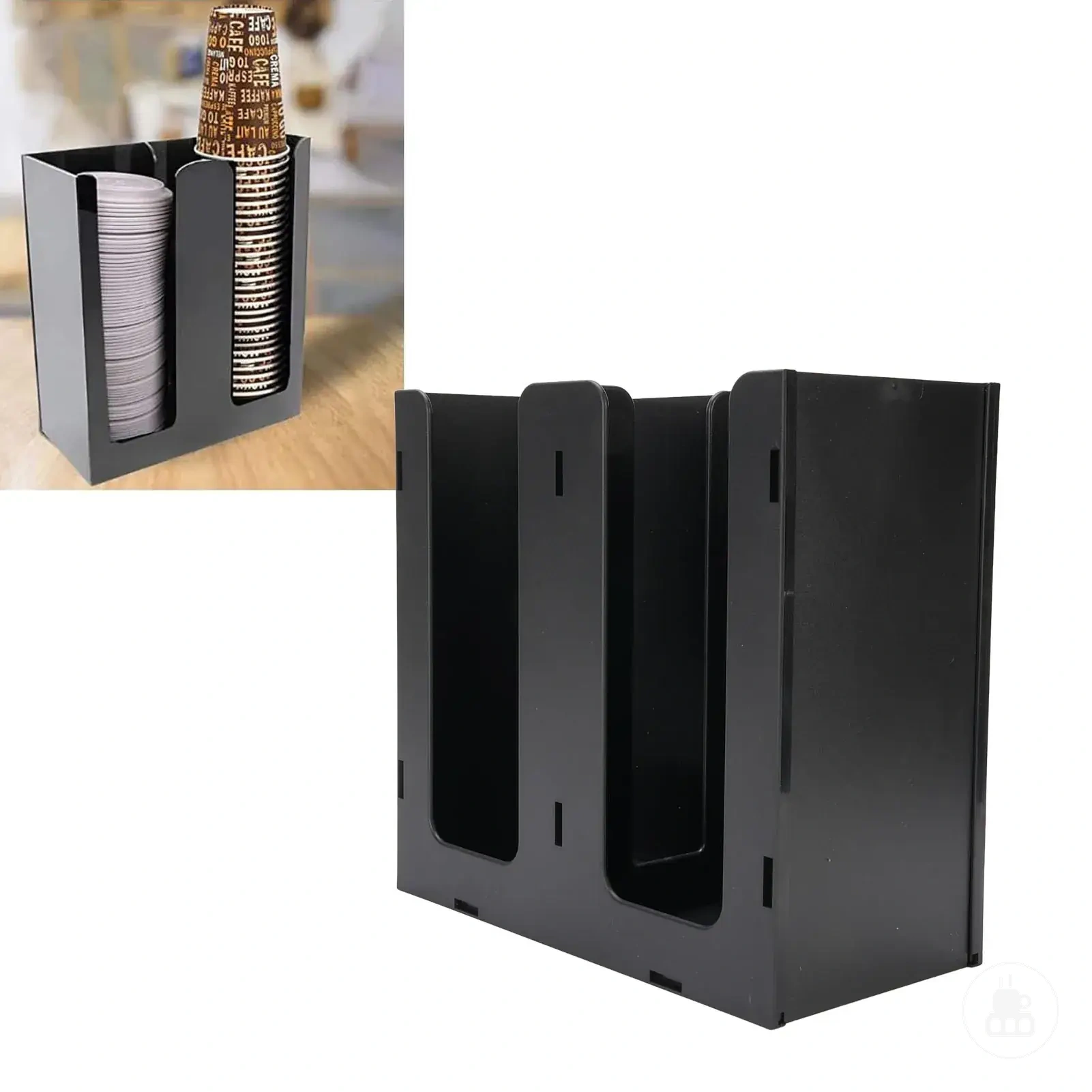
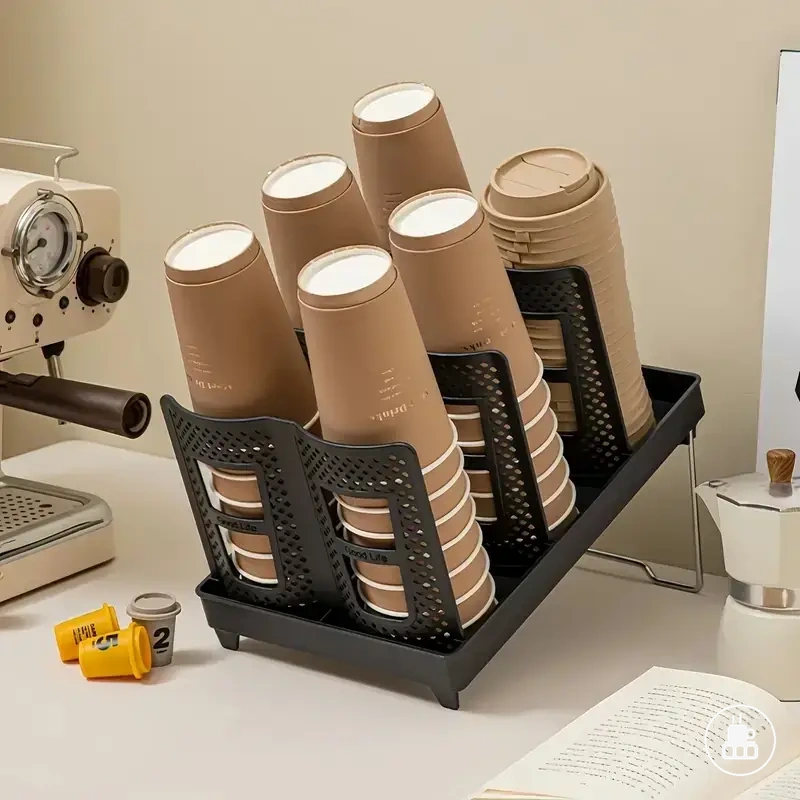
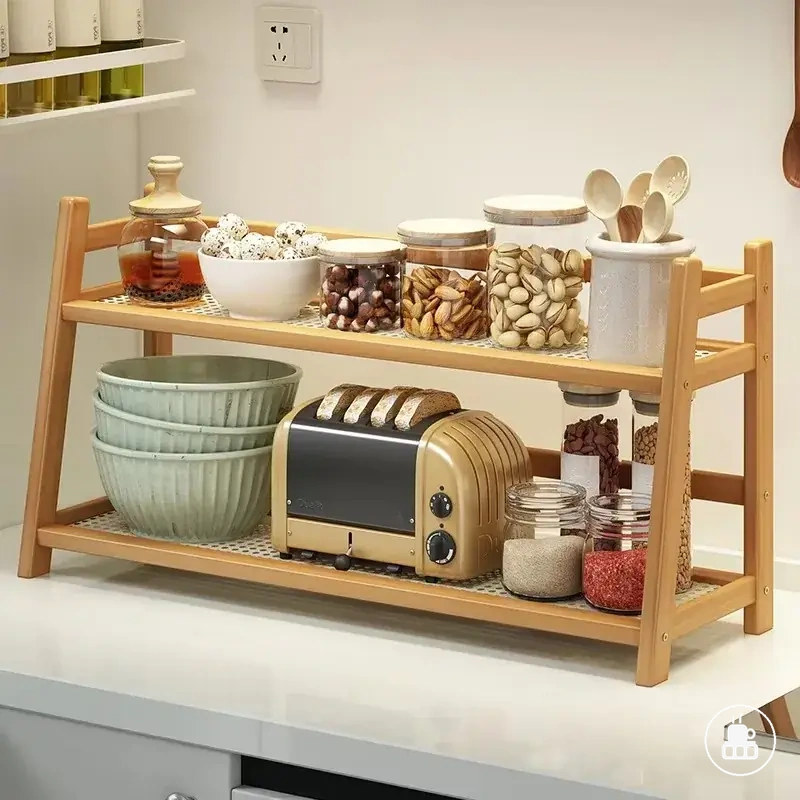
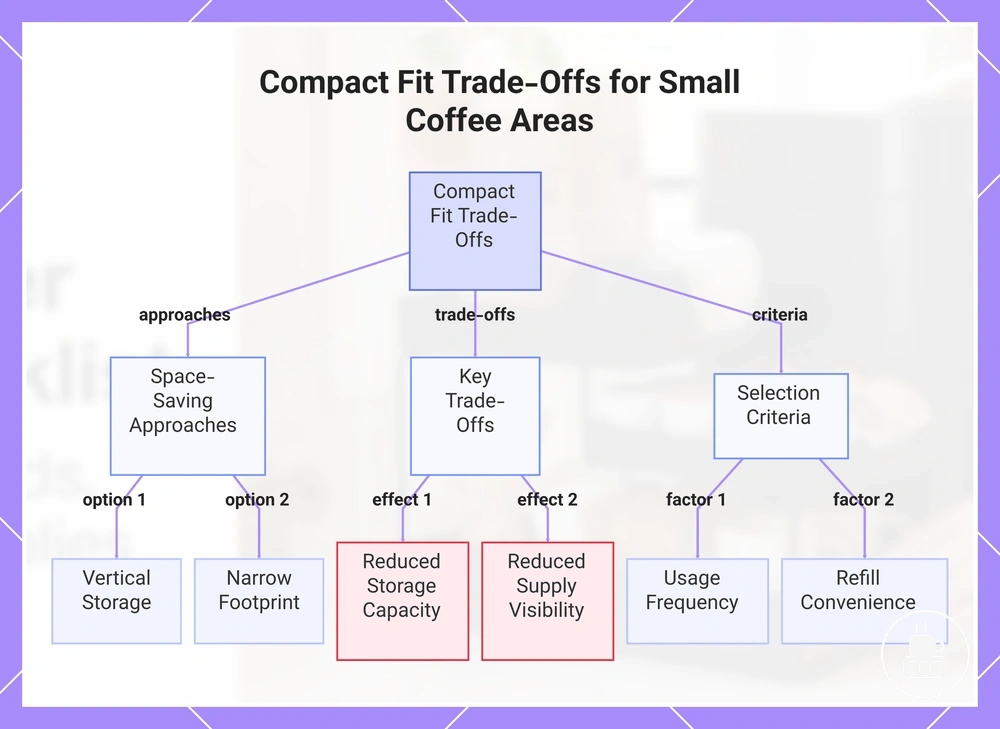
Compact fit depends on balancing available space with everyday usability rather than choosing the smallest organizer. A narrower footprint or vertical storage layout may suit a limited countertop, but the acceptable trade-off depends on supply priorities, refill tolerance, visibility, and access requirements.
Vertical storage can make better use of unused height when overhead clearance allows, while a narrow footprint may preserve more working space around the coffee machine. These space-saving approaches can also reduce storage capacity or make frequently used supplies less visible, depending on the organizer layout.
Reduced capacity may be acceptable when only a small quantity of pods, cups, or condiments is kept on hand and refills are convenient. If many supplies are used throughout the day, a larger organizer or a layout with greater visibility may reduce the need for frequent restocking.
Choose the compact option that supports the daily routine rather than the smallest available design. Consider how often supplies are accessed, whether vertical storage affects visibility, and how much capacity is needed before choosing a compatible organizer.
The products below are useful examples for comparing available options. Before buying, check that the compatibility criteria, key features, and product details match your needs.
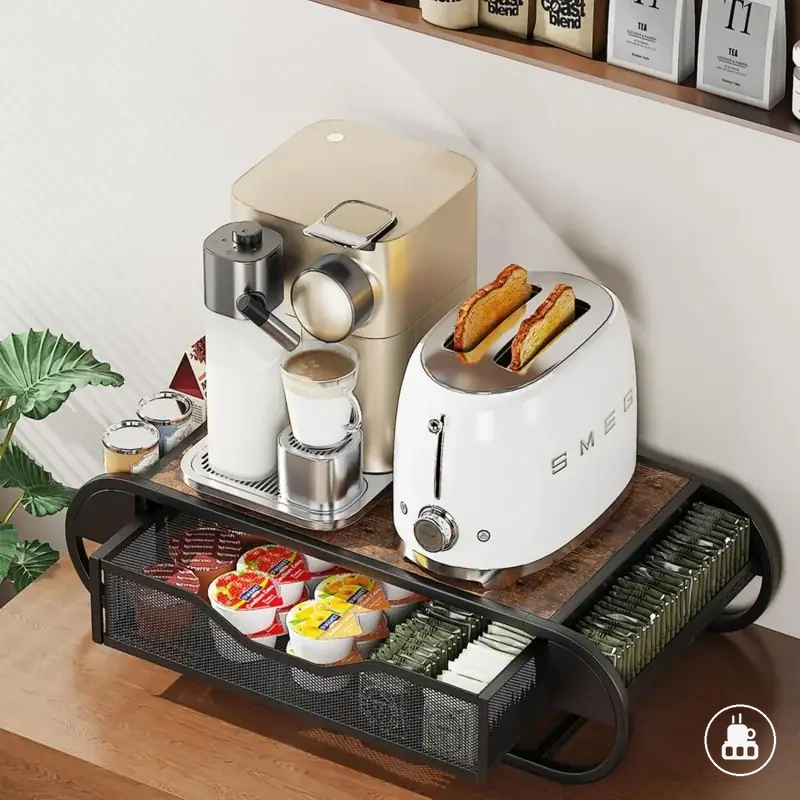
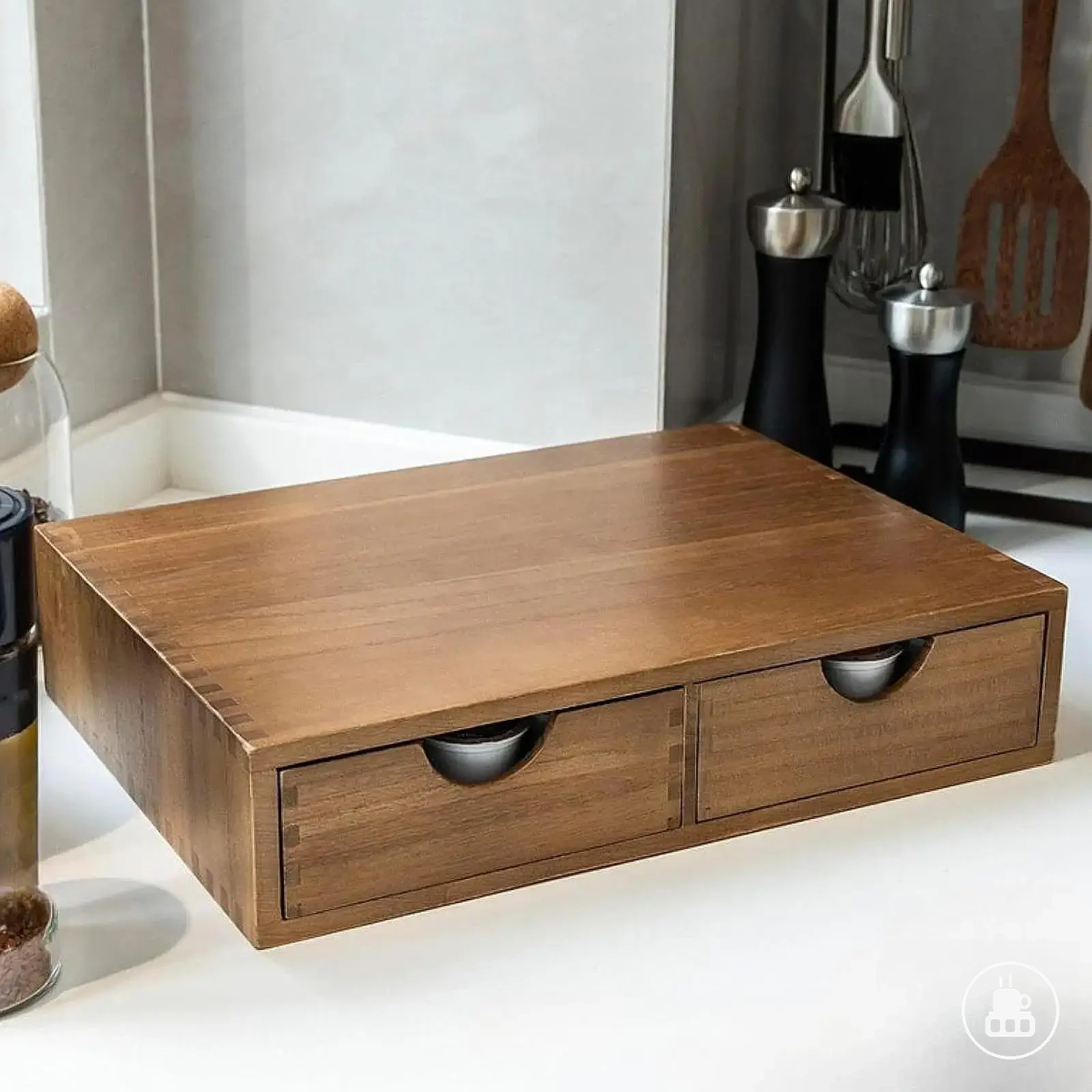
This chart shows the main space-saving approaches, key trade-offs, and selection criteria for choosing a compact organizer in small coffee areas.
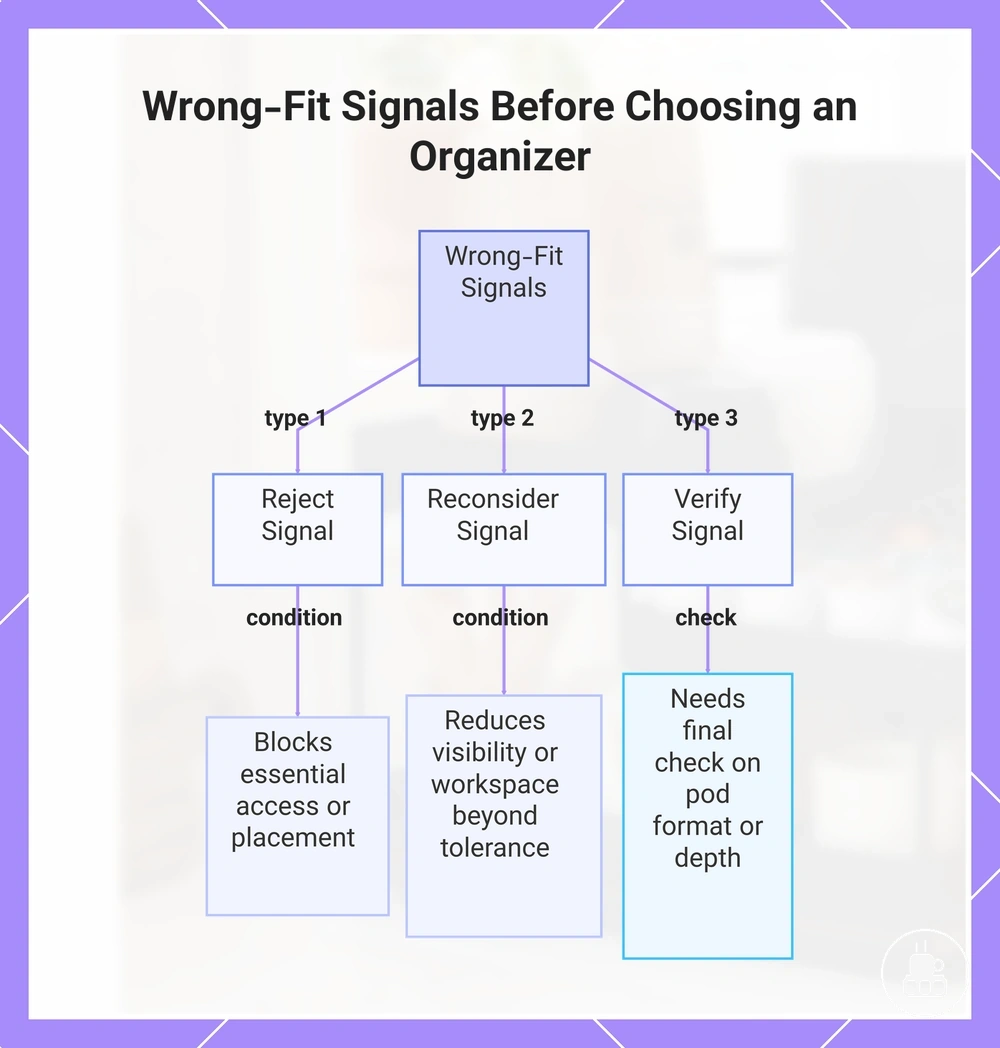
Wrong-Fit Signals Before Choosing an Organizer
Wrong-fit signals are observable conditions that suggest a coffee station organizer should be rejected, reconsidered, or verified before selection. A signal does not always mean the organizer is unusable, but it can indicate likely fit risk when space, access, supply size, or daily movement would be compromised.
- Reject: The organizer blocks machine access, drawer movement, water refilling, or normal cup placement in the intended position.
- Reconsider: The organizer fits the counter but reduces visibility, supply access, or usable workspace more than the layout can tolerate.
- Verify: The organizer appears suitable, but pod format, cup stack shape, compartment depth, or refill frequency still needs a final check.
Use these signals as a final decision threshold after reviewing clearance, supply fit, and compartment access. If multiple warning signs appear together, the layout may create poor fit and space problems even when the organizer looks compact or visually tidy.
The products below are useful examples for comparing available options. Before buying, check that the compatibility criteria, key features, and product details match your needs.
This chart shows the three types of wrong-fit signals—reject, reconsider, and verify—that help evaluate a coffee station organizer's suitability.