Coffee station organizer vs tray for counter storage and daily access
A coffee station organizer usually fits better when supplies need separation, while a tray can work when visible grouping and movement matter more. The right choice depends on how many pods, cups, sweeteners, and small items you keep near the coffee machine. Supply load, counter space, movement, and clutter tolerance are the main variables.
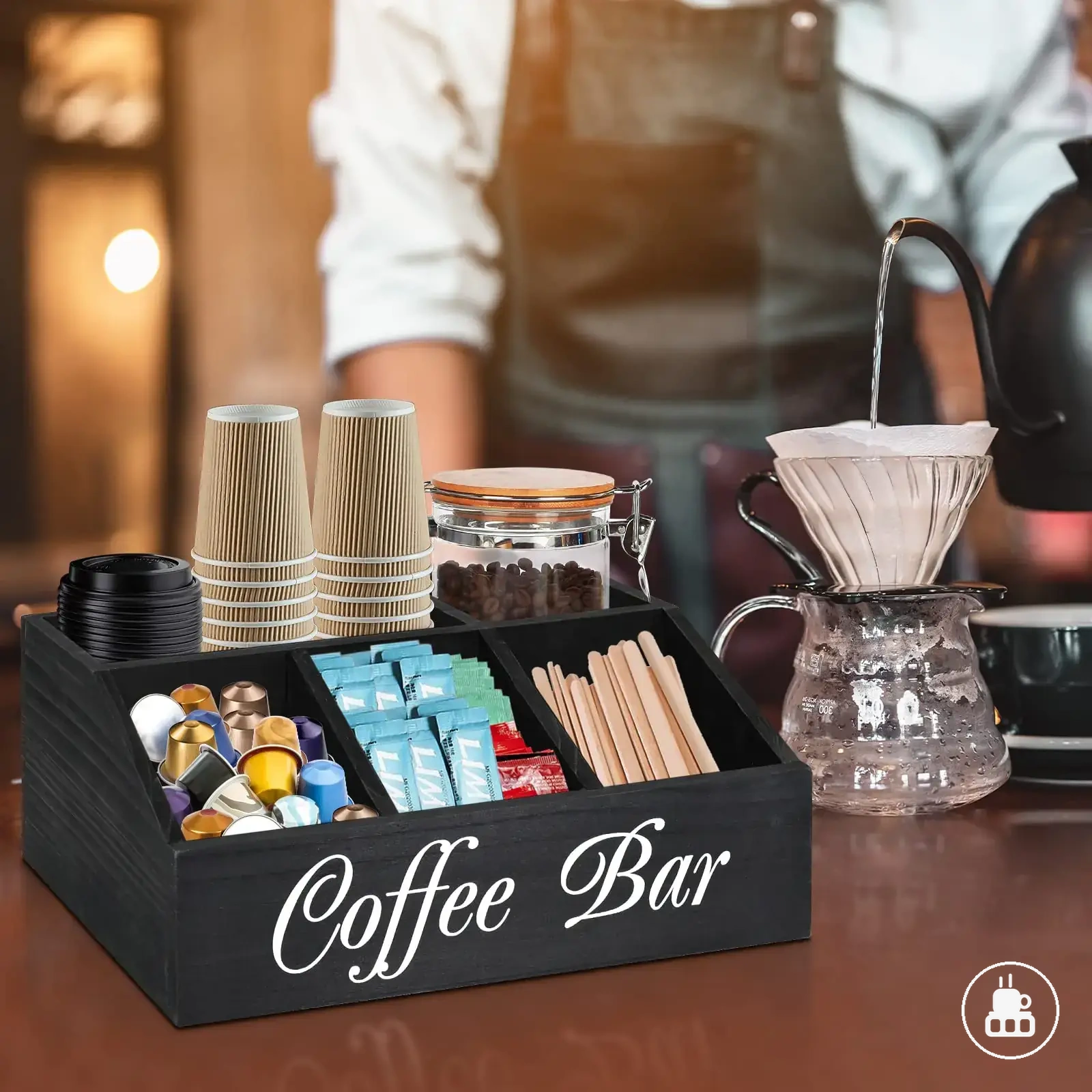
A coffee station organizer is a countertop storage setup that uses compartments, caddy sections, drawers, or tiered organizer space to keep coffee supplies separated for daily access. It can help pods, cups, stirrers, and sweeteners stay easier to see and refill when the station serves more than one person or holds more than light supplies. A tray keeps items together on an open surface, while an organizer separates supplies by function and access point. For the broader category, compare coffee station organizers by type, fit, storage behavior, and counter use.
For a light coffee corner, a tray with handles may be enough when grouped supplies need to move from the countertop to another area. For a busier station, a caddy, compartments, or tiered organizer may make daily access more controlled when refill needs and shared use increase. Counter fit still matters because footprint, clearance, and the coffee machine area can change whether separated storage feels helpful or crowded. Recommendations should stay conditional because the better setup depends on the supplies, users, movement pattern, and available counter space.
What separates a coffee station organizer from a coffee station tray
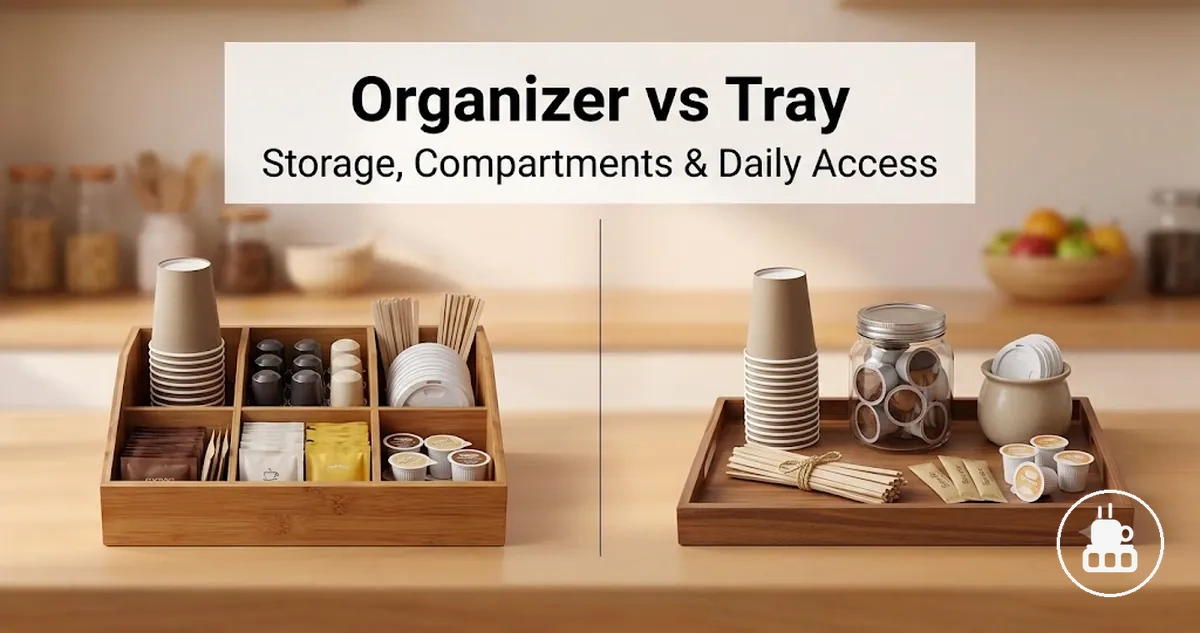
A coffee station organizer is a countertop storage setup with contained storage, while a coffee station tray is an open grouping surface for visible supplies. The core difference is contained storage versus open grouping.
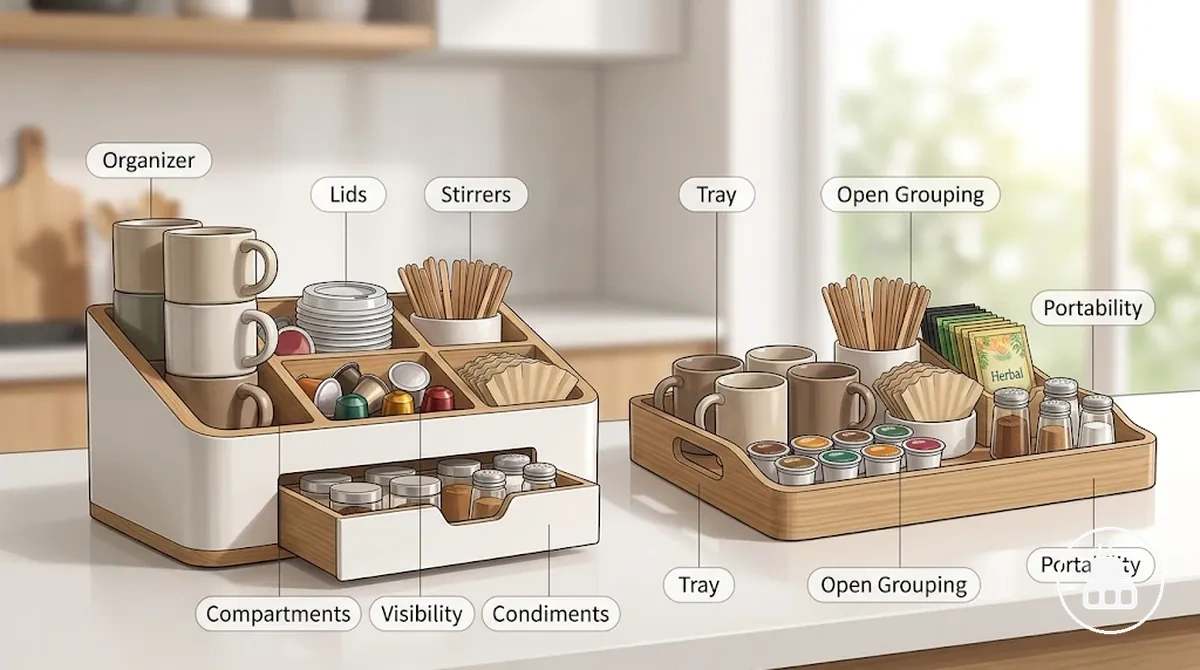
A coffee station organizer uses compartments, dividers, or caddy sections to separate pods, cups, sweeteners, and small supplies. A coffee station tray uses a flat boundary, handles, or an open tray surface to keep grouped items visible and easier to move when the load stays light. This storage form changes counter storage by affecting daily access, clutter control, supply grouping, visibility, and portability.
| Setup type | What it controls |
|---|---|
| Organizer | Contained storage, compartments, and supply separation for repeated access |
| Caddy | Grouped compartments, visibility, and refill points for shared counter use |
| Tray | Open grouping, portability, and visible item placement on the counter |
A tray can support an organizer setup when mugs, jars, or a small condiment organizer need one visible boundary. It does not replace compartment storage in every use case because loose items may still mix when supplies increase. For a clearer boundary between caddies, trays, and compartment layouts, compare tray and organizer types.
Storage control in organizers, caddies, and trays
Storage control depends on how an organizer, caddy, or tray separates and presents coffee supplies. Organizers use compartments, while trays rely on an open surface and caddies combine grouped sections with easier access. Storage control depends on separation, capacity, visibility, and spill containment.
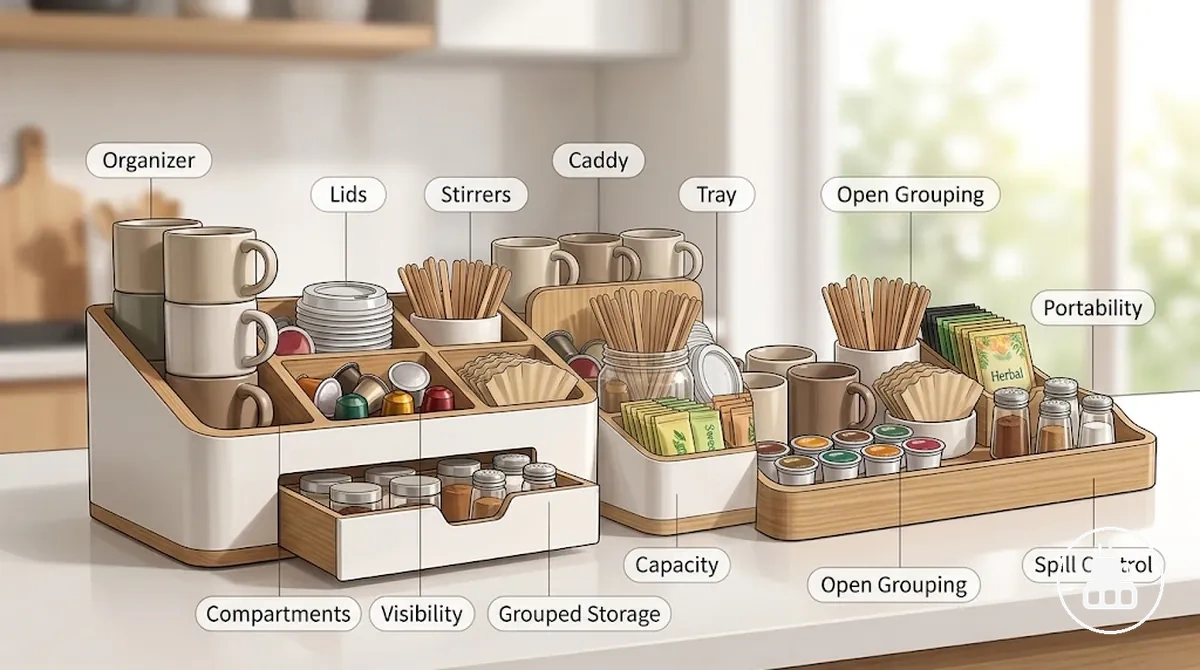
The comparison below highlights how each setup changes storage behavior rather than simply naming product styles. It compares organizer, caddy, and tray layouts by separation, visibility, capacity behavior, and best-fit conditions.
| Setup | Separation | Visibility | Capacity behavior | Best-fit condition |
|---|---|---|---|---|
| Organizer | Multiple compartments for separated supplies | High when items stay in assigned sections | Supports structured storage as supplies increase | When pods, cups, stirrers, and sweeteners need consistent separation |
| Caddy | Grouped compartments for related items | Good balance of separation and visibility | May suit shared counter use and regular refills | When coffee supplies are shared but still benefit from organization |
| Tray | Open grouping without fixed compartments | High because items remain fully visible | Depends on how many supplies are grouped together | When a few frequently used items benefit from quick access and portability |
Organizers provide the strongest separation because divided compartments keep pods, cups, stirrers, and sweeteners in dedicated spaces, while trays leave grouped supplies on an open surface. Caddies combine moderate separation with easy visibility, which may suit shared coffee stations. Spill containment and clutter control can vary with layout and the amount of stored supplies. For a closer comparison of compartment layouts and organization options, see storage capacity differences.
When only a few mugs and coffee supplies are used each day, open grouping may be enough for convenient access. When supplies expand or mixed items become harder to manage, separated compartments may offer more consistent storage control. The better choice depends on the level of separation, visibility, capacity, and spill containment your coffee station requires.
Compartment organizers for pods, cups, sweeteners, and stirrers
When coffee supplies are used often or refilled regularly, a compartment organizer can keep small items separated for quicker access. The value of dividers depends on supply count and access frequency.
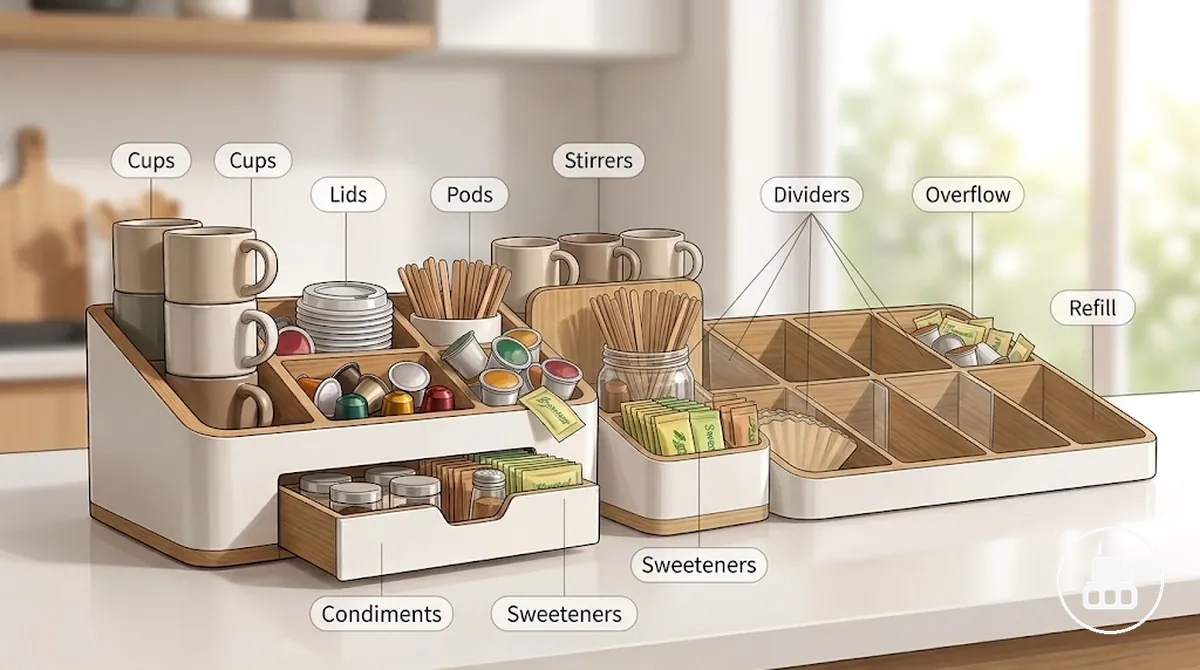
A compartment organizer assigns each supply group to its own section instead of sharing one open space. If one compartment fills before the others, overflow may reduce tidiness and increase refill effort. The points below connect each supply group to compartment fit and storage behavior.
- Pods: Dividers can keep pods separated for faster selection, although overflow may occur when one compartment fills sooner than others.
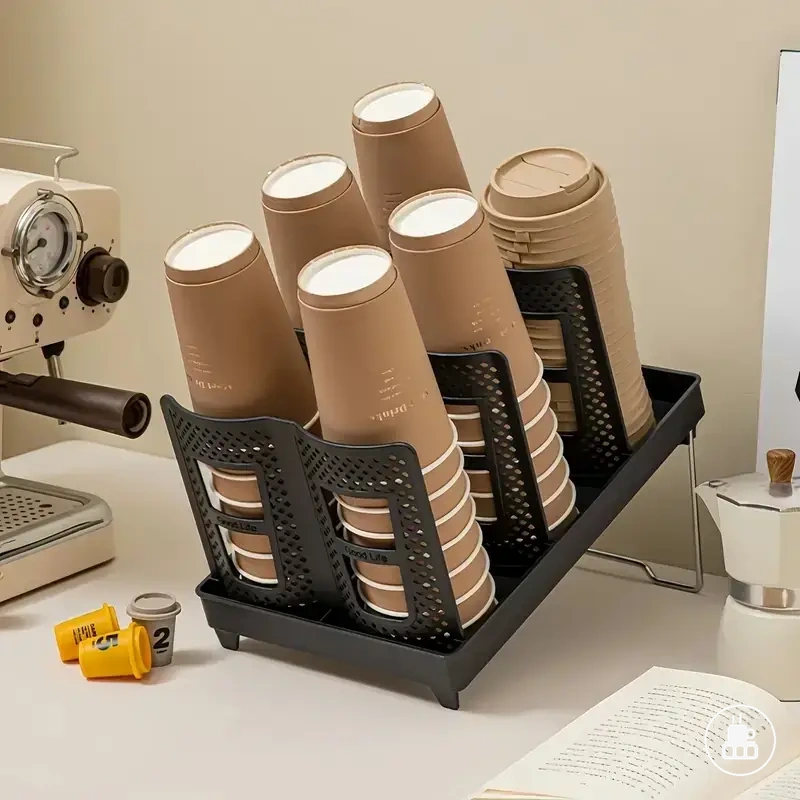
- Cups and lids: A dedicated compartment may keep matching items together, but larger stacks can require additional space to avoid overflow.
- Sweeteners: Small packets are easier to separate in individual sections, which may reduce refill effort during regular use.
- Stirrers: A narrow compartment caddy can keep stirrers upright and apart from other small supplies, helping maintain tidiness.
- Condiment supplies: A condiment organizer can group related packets until individual sections become full, at which point overflow may reduce separation.
Open trays for grouped supplies, mugs, and decor
When only a small collection of coffee items needs to stay together, an open tray can keep visible items within one defined area while leaving the coffee-station surface flexible for daily use. Open trays prioritize grouped supplies and visibility.
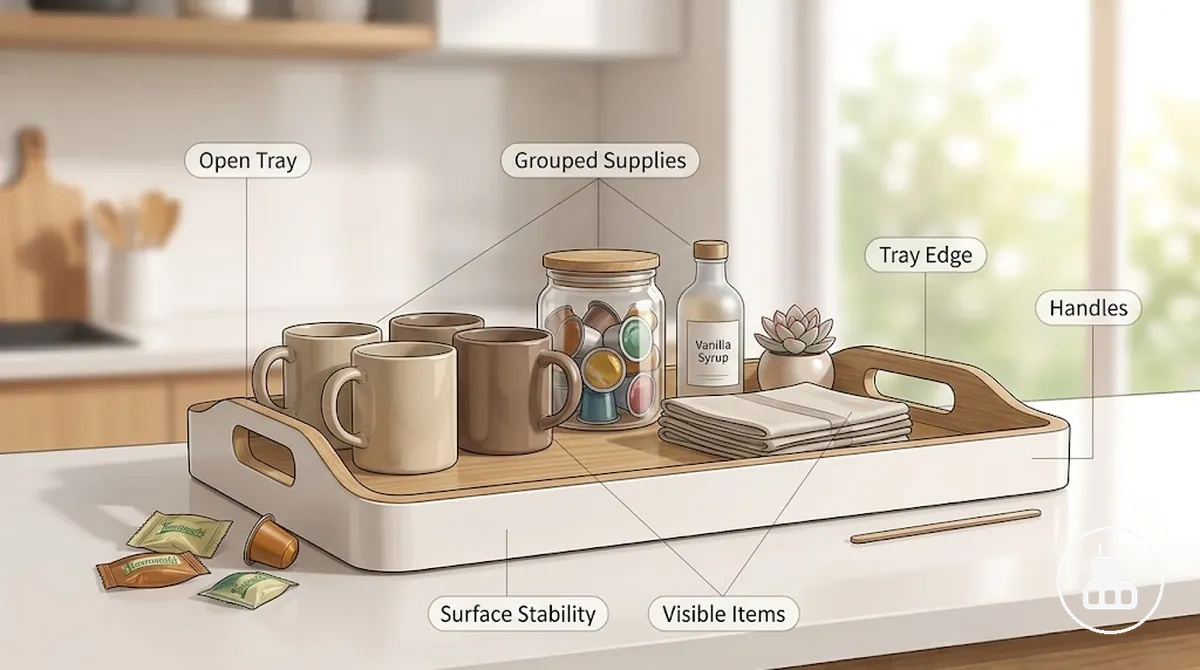
An open tray groups mugs, jars, syrups, napkins, and small decor on one open surface instead of separating them into compartments. As loose items increase, open grouping may become less organized, so it helps to verify the tray conditions below before relying on this layout.
- Confirm the item count remains suitable for one open tray without excessive crowding.
- Check that the tray edge helps keep grouped supplies in place during normal movement.
- Choose handles only when the tray is likely to be moved between locations.
- Place the tray on a counter with good surface stability to reduce shifting when mugs or jars are added or removed.
- Keep visible items grouped by regular use so the open tray remains practical as supplies change.
Counter fit and footprint tradeoffs between organizers and trays
Counter fit depends on how organizers and trays use horizontal and vertical space around a coffee machine. Each setup occupies space differently, and whether that space works well depends on footprint, height, depth, handle clearance, vertical space, and machine-side clearance.
The comparison below focuses on space tradeoffs rather than exact dimensions. It compares footprint factor, clearance risk, and the counter conditions where each setup may be more practical by considering footprint, height, depth, handle clearance, and usable surface.
| Setup | Footprint factor | Clearance risk | Best-fit counter condition |
|---|---|---|---|
| Tray | Uses more usable surface across the countertop footprint | Handle clearance may matter when the tray is moved | Wide counters with open machine-side clearance |
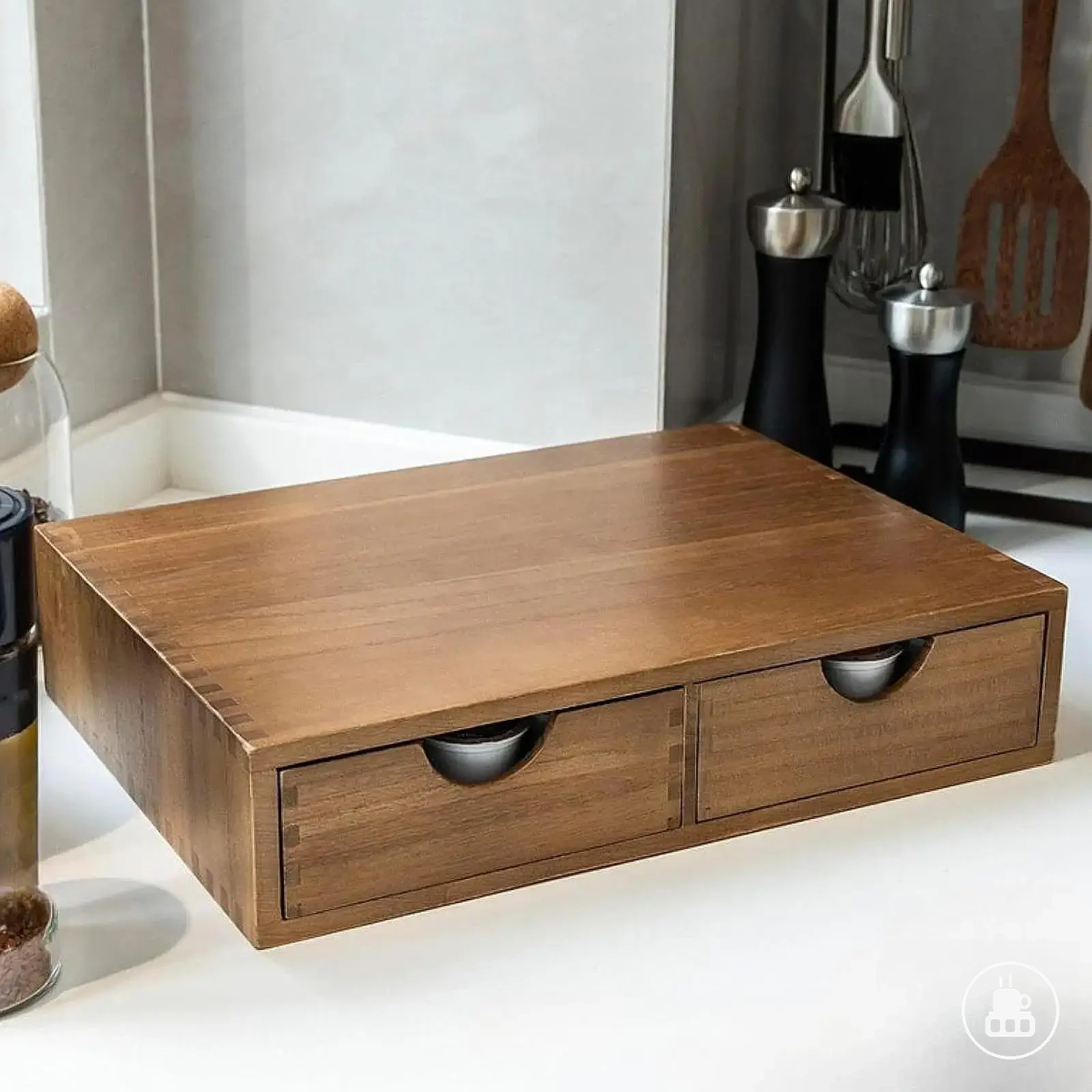
| Compartment organizer | Groups supplies within a defined footprint | Depth may affect machine access and refilling | Tight counters where organized storage is preferred |
| Caddy | Moderate footprint with grouped storage | Clearance depends on placement beside the coffee machine | Medium counter space with regular access needs |
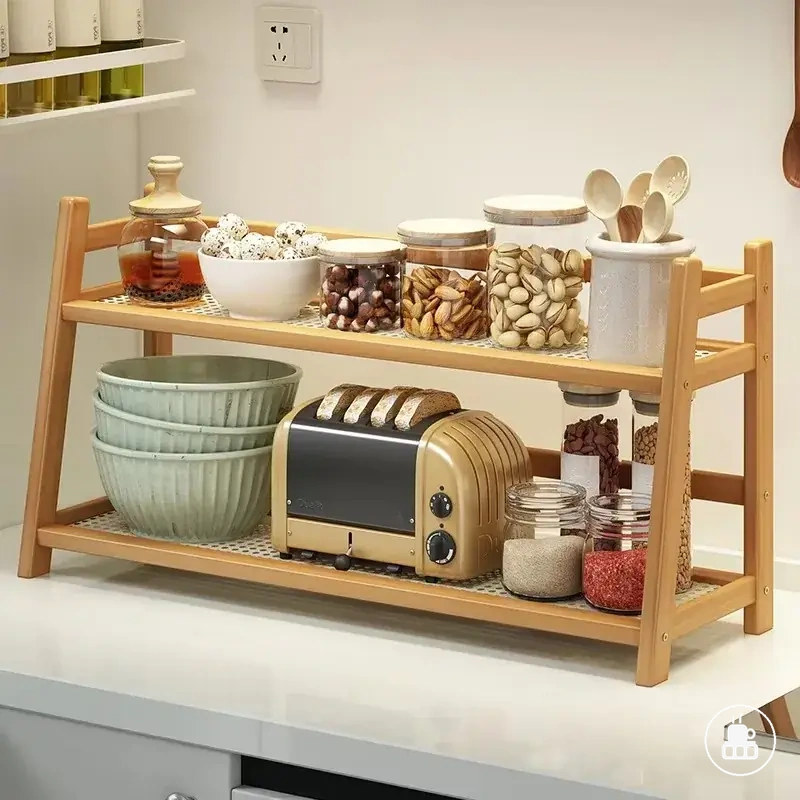
| Tiered organizer | Uses vertical space to reduce horizontal footprint | Height may limit under-cabinet clearance | Counters with sufficient vertical space |
Counter fit changes how easily supplies can be reached, how simple refilling feels, and how much usable surface remains beside the coffee machine. A larger footprint may increase counter clutter, while additional height can influence under-cabinet placement. Greater depth or limited machine-side clearance may also reduce access depending on the layout. For a more detailed fit check, see counter fit and footprint.
Tight counters may benefit from layouts that preserve machine-side clearance and control footprint, while wider counters can often accommodate broader trays or larger organizers. The better choice depends on available counter space, vertical clearance, and everyday use rather than universal dimensions.
Daily access and movement around the coffee station
Daily access depends on how often coffee supplies are reached, restocked, and moved around the coffee station. Organizers and trays support different usage patterns, and the more practical option usually depends on movement frequency.
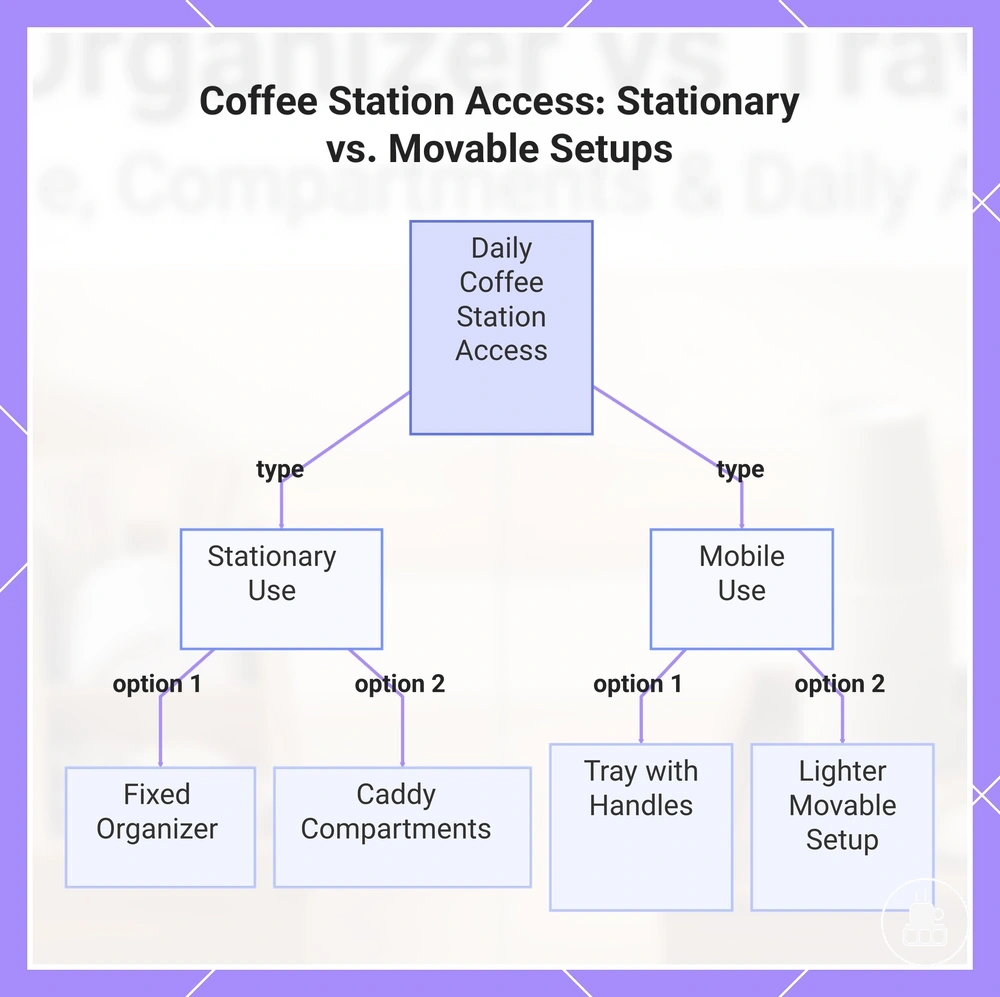
Reach, restocking, and cleaning can change as supplies move between the counter, table, or pantry. Fixed placement keeps frequently used items in one location, while caddy compartments help separate supplies for repeated access. Tier access supports vertical organization, and trays with handles may suit setups that move regularly. Spill risk and cleaning effort can also vary with the supply load and whether the setup remains fixed or movable.
Movement needs can change which setup is more suitable during everyday use. The scenarios below compare access needs across common situations rather than recommending one layout for every coffee station.
- Home routine: A fixed organizer may suit repeated daily access when supplies usually stay beside the coffee machine.
- Shared counter: Caddy compartments may help when multiple people restock and use the same coffee station.
- Compact counter: A tray with handles may suit supplies that often move between the counter and a table or pantry.
- Frequent movement: A lighter movable setup may reduce repeated carrying, while spill risk can increase when more loose items are transported.
Daily access should reflect how often supplies move and how frequently they need restocking rather than relying on one fixed layout. When movement between locations is limited, fixed placement may remain practical, while regular carrying may favor a movable setup with appropriate handles. For a broader view of everyday organization, see coffee station setup workflow.
This chart compares two main access patterns—stationary and mobile—and their typical scenarios for daily coffee station use.
Handled trays for movable coffee station setups
When coffee supplies move together between the counter and another location, a handled tray may be more practical than an open tray without handles. Handles matter most when grouped supplies are carried as part of a movable setup.
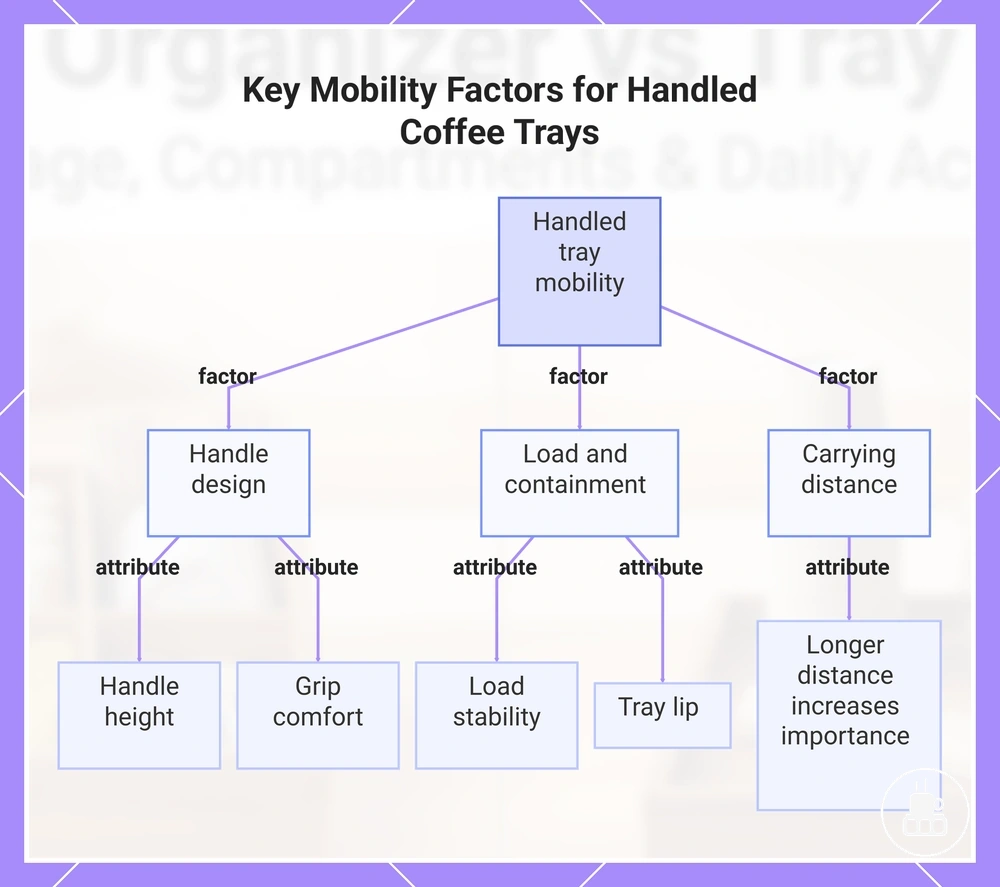
Handles on a handled tray affect how grouped supplies are carried, but movement still depends on carrying distance, tray lip design, grip comfort, and load stability. These features become more important as supplies move farther from the coffee station. The points below highlight the local handle variables that influence mobility.
- Handle height: Suitable handle height may provide a more comfortable grip when lifting a handled tray.
- Grip comfort: Comfortable handles can help during longer carrying distance when grouped supplies move together.
- Load stability: Stability depends on the load arrangement and becomes more important as the tray carries heavier grouped supplies.
- Tray lip: A raised tray lip may help reduce spill risk by keeping grouped supplies more contained during movement.
- Carrying distance: Longer carrying distance can make handle design and load stability more important than short counter-to-table movement.
This chart shows the main groups of variables that affect how easily a handled tray can be carried when moving coffee supplies.
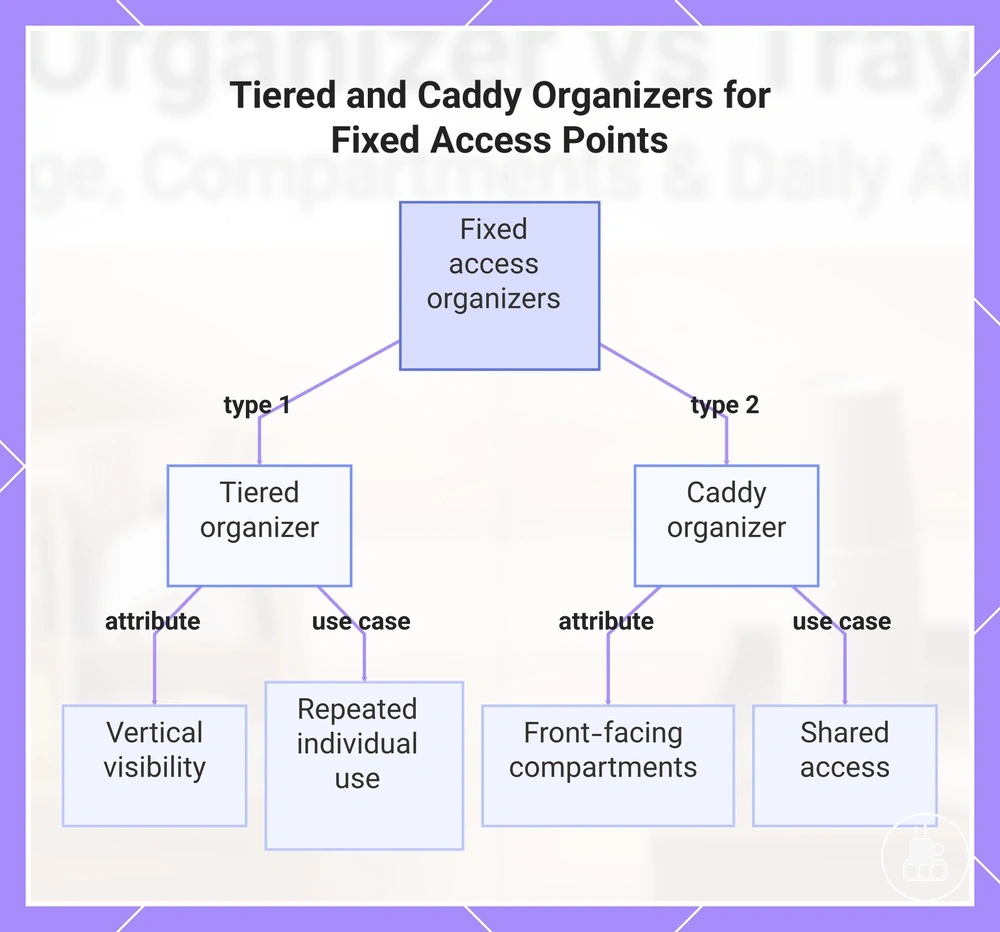
Tiered and caddy organizers for fixed access points
When coffee supplies remain beside the coffee machine, a tiered organizer or caddy organizer may provide a more consistent fixed access point than a movable setup. Fixed access depends on vertical visibility, repeated reach, and keeping commonly used items in predictable locations.
A tiered organizer uses stacked tiers that improve vertical visibility while helping users stay aware of available space under cabinets. A caddy organizer uses front-facing compartments that support item separation and create clear refill points, which may help when the coffee station is shared. The use cases below show when each organizer style may better support fixed daily access.
- Repeated individual use: A tiered organizer may suit a fixed access point when the same coffee supplies are reached throughout the day and vertical visibility is important.
- Shared access: A caddy organizer with front-facing compartments may help when multiple users return items to consistent refill points.
- Item separation: Either organizer style may improve repeated reach when compartments keep related supplies separated on the counter.
This chart compares the two main organizer styles—tiered and caddy—and their use cases for creating consistent fixed access points at a coffee station.
Choosing the better setup by supply load and use case
The better setup depends on the use case rather than on one storage option alone. A tray, compartment organizer, caddy, or tiered organizer may each suit different situations when supply load, user count, counter size, and movement need are considered together. These four criteria provide the most useful starting point for selection.
The decision matrix below organizes the main choosing criteria into practical use conditions. It compares supply load, user count, counter size, and movement need to help identify a more suitable storage setup.
| Use condition | Better-leaning setup | Reason | Watch-out |
|---|---|---|---|
| Light storage | Tray | May suit a small supply load when movement need is higher. | Open grouping can become harder to manage as supplies increase. |
| Moderate supply load | Compartment organizer | May improve compartments, refill organization, and item separation. | Counter size and footprint can limit placement. |
| Shared use | Caddy | May support repeated refill points and multiple users through organized compartments. | User count can increase refill frequency. |
| Clutter-prone setup | Tiered organizer | May improve separation while using vertical space more efficiently. | Available height and cabinet clearance can influence suitability. |
A light use case may lean toward a tray when only a few supplies move together. A moderate supply load may favor a compartment organizer or caddy when refill activity and user count increase. A clutter-prone coffee station may benefit from a tiered organizer when counter size is limited and additional separation is helpful. The recommended setup always depends on the combination of criteria rather than a fixed ranking.
Selection can change as supply load, counter size, movement need, or user count changes over time. Reviewing these criteria together often provides a more reliable decision than focusing on a single feature. For broader guidance, see choosing the better setup.
Use the decision matrix as a practical starting point, then adjust the storage setup as daily use changes. A conditional approach is usually more useful than applying one solution to every coffee station.
Simple counters, decor-led stations, and light daily storage
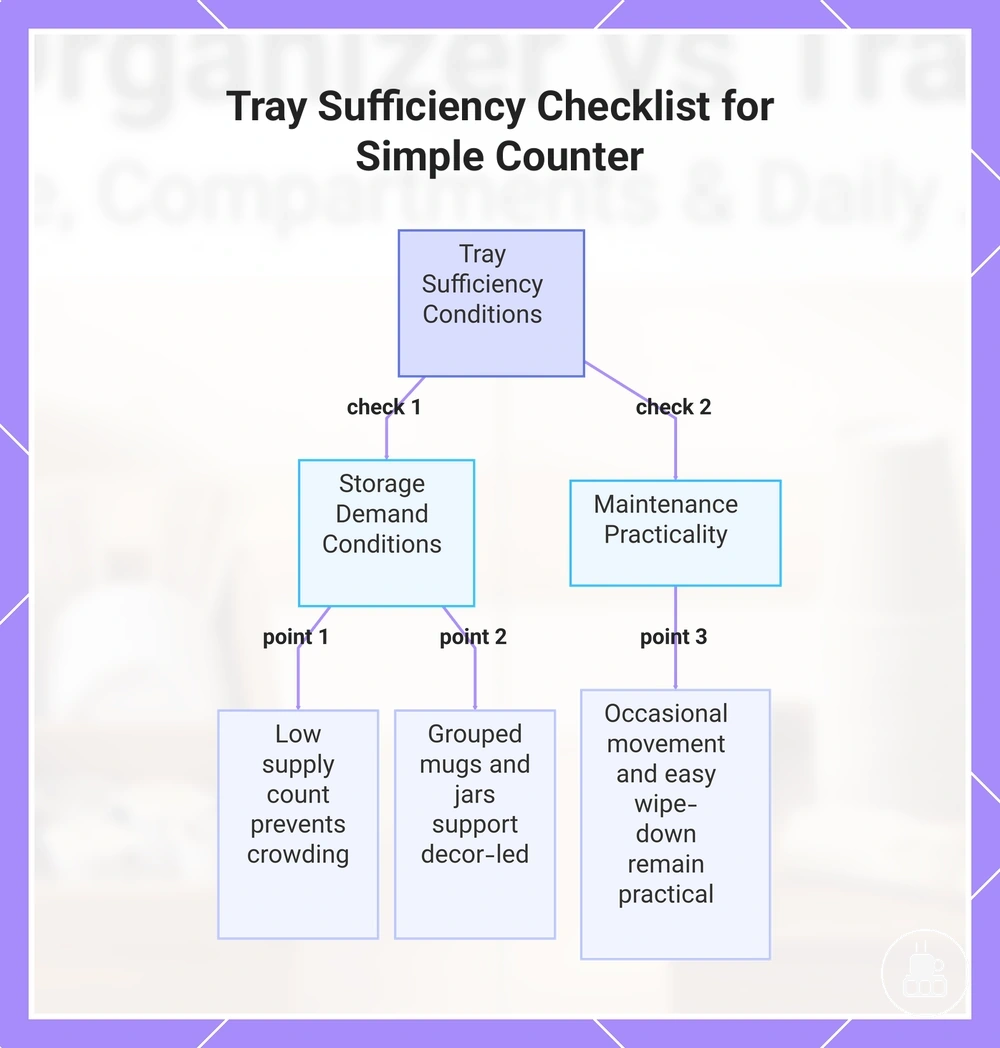
A tray may be sufficient for a simple counter or decor-led station when light daily storage keeps visible items few and easy to manage. It is generally more suitable when low supply count, grouped mugs, and occasional movement define the use case, making a tray sufficient under those conditions.
Light daily storage usually works when visible items remain organized on an open surface without requiring additional compartments. Grouped mugs or jars can support a decor-led station while maintaining visibility, and an easy wipe-down may remain practical when the tray holds only a limited number of items. Use the checklist below to confirm whether a tray matches the storage demand.
- Confirm the low supply count allows visible items to stay organized on one open tray without crowding.
- Check that grouped mugs or jars support the decor-led station without increasing storage needs beyond light daily storage.
- Choose a tray when occasional movement and an easy wipe-down remain practical for the simple counter.
This chart shows the key conditions to check when deciding if a tray is sufficient for a simple counter or decor-led station.
Larger supply sets, shared use, and clutter-prone stations
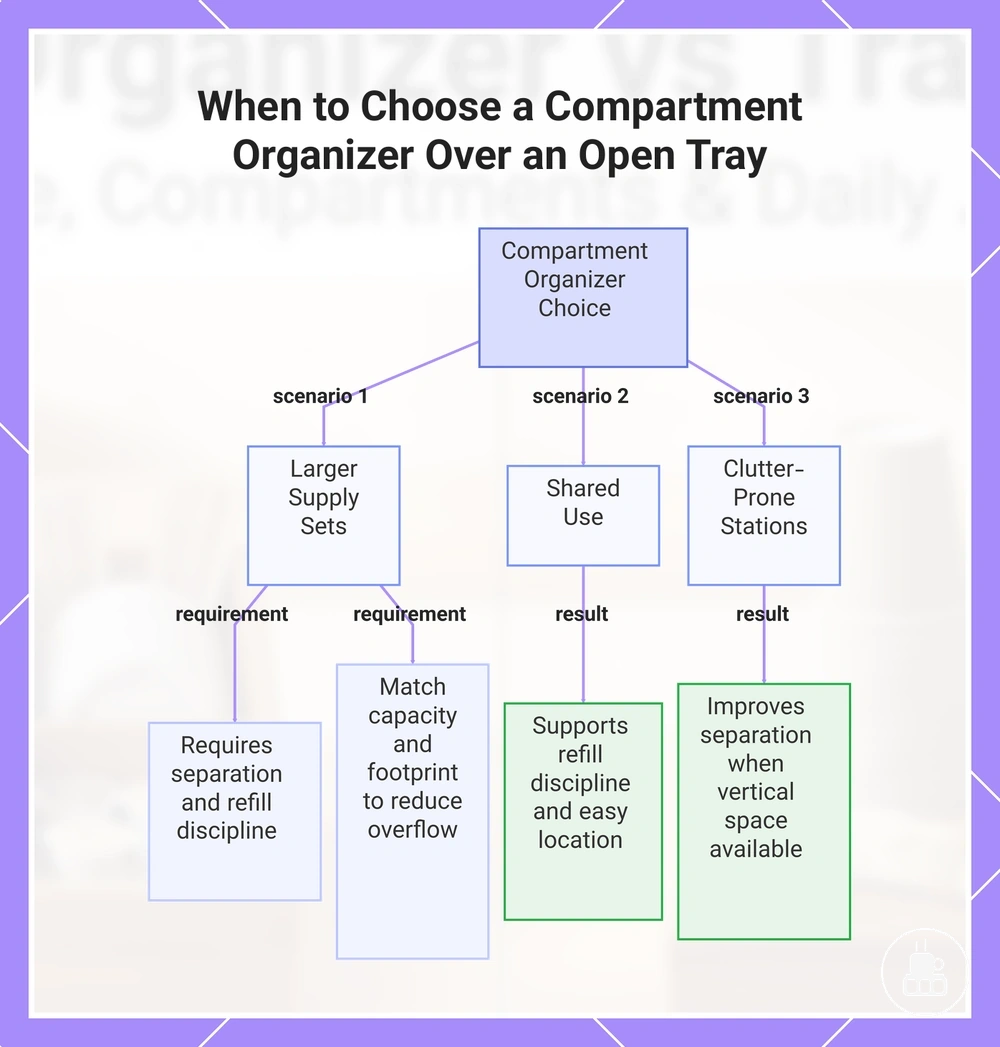
A compartment organizer, caddy, or tiered organizer may become the safer choice when larger supply sets need more separation than an open tray can comfortably provide. These options are generally more suitable when heavier use includes multiple users, pod variety, cup and lid storage, condiment packets, and frequent refills.
Larger supply sets often benefit from compartments that support separation and refill discipline instead of placing every item on one open surface. A caddy or tiered organizer may help organize pod variety, cups, lids, and condiment packets, while removable dividers can make the layout easier to adjust as storage needs change. Matching the organizer's capacity and footprint to the supply load helps reduce overflow risk, as shown in the scenarios below.
- Shared use: When multiple users access the same coffee station, a caddy with compartments may support refill discipline and keep cups, lids, and condiments easier to locate.
- Pod variety: When different coffee pods and related supplies need separate storage, a compartment organizer with removable dividers may provide a more suitable direction.
- Clutter-prone stations: When larger supply sets continue to grow and vertical space is available, a tiered organizer may improve separation, provided its capacity and footprint match the storage demand.
This chart shows the three main scenarios where a compartment organizer, caddy, or tiered organizer is a safer choice than an open tray for coffee station organization.
Value tradeoffs between simple trays and compartment organizers
Value tradeoffs depend on how well the setup matches storage needs rather than on price alone. A simple tray and a compartment organizer provide different levels of capacity, storage control, and maintenance burden. Long-term value depends on fit and friction reduction, not price alone.
The comparison below organizes value through everyday use instead of purchase cost. It compares each setup by its main value driver, limitation, and best-fit condition.
| Setup | Value driver | Limitation | Best-fit condition |
|---|---|---|---|
| Simple tray | Light storage with flexible placement | Lower storage control as supplies increase | Low supply count and occasional movement |
| Compartment organizer | Higher capacity and improved storage control | May require more space and a larger footprint | Growing supply load with frequent refills |
| Caddy | Grouped access with organized compartments | Layout may become less suitable if storage needs change | Shared use with cups, lids, and condiments |
| Tiered organizer | Uses vertical space while increasing storage capacity | Height and access may depend on available space | Clutter-prone counters with available vertical clearance |
Feature value is influenced by both design and material condition. More structured setups can improve storage control and reduce friction during refilling, while a simple tray keeps access straightforward for lighter storage needs. Cleanability and durability may vary with construction and everyday use, so long-term value depends on matching capacity and storage demands instead of adding features that remain unused.
Maintenance burden and decision risk often increase when the setup does not match the supply load. Choosing more capacity than needed may use extra counter space, while choosing too little capacity can increase upgrade need as coffee supplies expand. Evaluating cleanability, durability, and storage control together can reduce uncertainty.
Use value criteria to compare how each setup reduces daily friction instead of focusing only on initial cost. The better long-term choice usually depends on capacity, durability, maintenance burden, storage control, and the likelihood of future upgrade need.
Here are product examples that may make comparison easier. Before buying, always review the compatibility criteria, essential features, and product details.